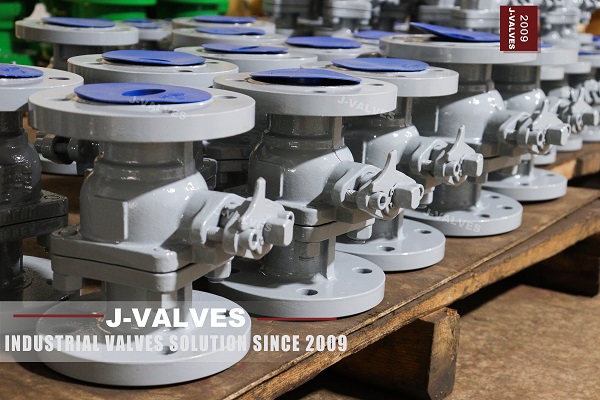
Introduction
In modern industrial systems, safe isolation is essential for protecting equipment, improving operational safety, and reducing the risk of process interruptions. Industries such as oil & gas, LNG, petrochemical, and power generation often require valves that can provide reliable shut-off under demanding operating conditions.
The DBB Ball Valve (Double Block and Bleed Ball Valve) is widely recognized as a high-performance Critical Isolation Valve due to its double isolation structure, leakage prevention capability, and support for safer maintenance operations.
J-VALVES specializes in manufacturing advanced DBB ball valve solutions designed for critical pipeline applications where safety, reliability, and long service life are required.
What Is a DBB Ball Valve?
A DBB Ball Valve integrates two independent sealing barriers and a bleed function into a single valve body. Unlike traditional isolation valves, the DBB design allows operators to isolate the upstream and downstream pipelines while monitoring or releasing trapped pressure inside the valve cavity.
The main structure includes:
Double sealing seats
Floating or trunnion mounted ball design
Independent isolation chambers
Bleed and vent system
Fire-safe sealing structure
This design provides enhanced safety performance for critical isolation applications.
Why DBB Ball Valves Are Used for Critical Isolation
1. High Safety Requirements
In industries involving hazardous or high-pressure media, reliable isolation is a key requirement.
A Critical Isolation Valve must provide:
Reliable shut-off performance
Reduced leakage possibility
Safe equipment maintenance conditions
Improved process safety
DBB ball valves provide two independent sealing points, creating an additional safety barrier compared with conventional single isolation valves.
They are commonly used in:
Gas transmission pipelines
LNG facilities
Refinery systems
Offshore platforms
2. Preventing Media Cross Contamination
One of the major advantages of DBB ball valves is preventing unwanted media mixing between different pipeline sections.
During maintenance or system switching, the double block function helps:
Isolate upstream and downstream pressure
Prevent fluid migration
Improve process control reliability
The bleed function allows operators to verify that the valve cavity is completely isolated before performing maintenance work.
This feature is especially important in applications involving:
Flammable fluids
Toxic media
High-pressure gas systems
3. Supporting Online Maintenance Operations
Industrial plants often require continuous operation with minimal downtime.
A DBB Ball Valve allows safer maintenance procedures by providing:
Pressure monitoring capability
Cavity pressure release
Isolation confirmation
Compared with installing multiple conventional valves, an integrated DBB design can reduce installation space and simplify pipeline layouts.
Advantages include:
Lower maintenance complexity
Reduced equipment footprint
Improved operational efficiency
4. Reducing Leakage Risks
Leakage prevention is a critical factor in modern valve selection.
DBB ball valves reduce leakage risks through:
Dual sealing systems
Precision machined sealing surfaces
Pressure-assisted seat design
Reliable stem sealing structure
For applications requiring high integrity isolation, DBB ball valves provide greater confidence in long-term operation.
Applications of DBB Ball Valves
Oil and Gas Pipeline Systems
DBB ball valves are widely used for:
Main pipeline isolation
Compressor station systems
Metering stations
Gas processing facilities
Their reliable isolation performance helps improve pipeline safety.
LNG and Cryogenic Systems
In LNG applications, DBB ball valves provide:
Safe fluid isolation
Reliable low-temperature sealing
Reduced leakage risks
They are commonly installed in:
LNG terminals
Storage facilities
Loading and unloading systems
Offshore Oil and Gas Platforms
Offshore environments require valves that can withstand:
Corrosive atmosphere
High pressure operation
Limited maintenance conditions
DBB ball valves help improve platform safety through dependable isolation and long service capability.
J-VALVES Advantages in DBB Ball Valve Manufacturing
As a professional industrial valve manufacturer, J-VALVES provides high-quality DBB ball valve solutions for global energy and industrial projects.
1. Advanced DBB Valve Design Capability
J-VALVES develops DBB ball valves according to different application requirements, including:
Floating ball design
Trunnion mounted ball design
Forged or cast body options
Manual and actuated operation
2. Strict Quality Control
Each DBB ball valve is manufactured with comprehensive inspection procedures, including:
Material verification
Pressure testing
Seat leakage testing
Functional operation testing
These processes ensure reliable performance in critical isolation applications.
3. Customized Solutions for Industrial Projects
J-VALVES provides customized options including:
Different pressure classes
Various materials
Fire-safe design
Anti-static structure
Double block and bleed configuration
Products can be designed according to international standards such as:
API 6D
ASME B16.34
ISO 17292
Conclusion
The DBB Ball Valve has become an important solution for Critical Isolation Valve applications due to its double isolation capability, leakage prevention performance, and maintenance advantages.
By providing reliable sealing, safer operation, and reduced system risks, DBB ball valves are widely used in oil & gas, LNG, petrochemical, and offshore industries.
With professional engineering experience, advanced manufacturing technology, and strict quality management, J-VALVES delivers reliable DBB ball valve solutions designed for critical industrial applications worldwide.