


Introduction
In high-pressure industrial pipeline systems, safe isolation and reliable sealing performance are essential for protecting equipment and ensuring continuous operation. The DBB Ball Valve (Double Block and Bleed Ball Valve) has become a preferred solution for critical isolation applications due to its advanced sealing structure, compact design, and enhanced safety performance.
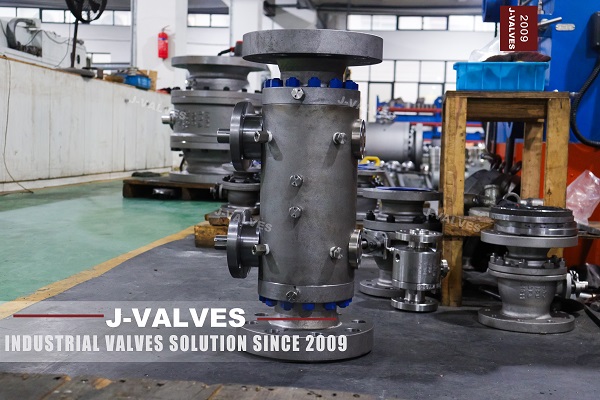
The valve shown in the image is a 4” 900LB LF2 DBB Ball Valve manufactured by J-VALVES. With a low-temperature carbon steel body, high-pressure class design, and double block and bleed function, this valve is suitable for demanding applications such as oil & gas pipelines, LNG facilities, petrochemical systems, and energy projects.
What Is a DBB Ball Valve?
A DBB Ball Valve is a specialized isolation valve that combines two independent shut-off barriers and a bleed function within one valve body.
Unlike conventional single isolation valves, the DBB design allows operators to:
Isolate upstream and downstream pressure
Release trapped pressure inside the valve cavity
Confirm sealing performance
Perform safer maintenance operations
The main components include:
LF2 carbon steel valve body
Trunnion mounted ball structure
Double sealing seats
Stem sealing system
Bleed and vent connection
This design provides higher safety levels for critical pipeline systems.
Advantages of LF2 DBB Ball Valve
1. Reliable Performance Under High Pressure
The valve shown in the image adopts a 900LB pressure class design, making it suitable for high-pressure industrial applications.
The LF2 material provides:
Excellent mechanical strength
Good low-temperature toughness
Reliable pressure resistance
Stable performance in harsh environments
High-pressure DBB ball valves are widely used where safe isolation and long-term operation are required.
2. Double Block and Bleed Function
The main advantage of a DBB Ball Valve is its independent isolation capability.
The double block function provides two sealing barriers, while the bleed system allows pressure monitoring and cavity pressure release.
Benefits include:
Reduced leakage risks
Safer equipment maintenance
Improved process control
Higher system reliability
This makes DBB ball valves ideal for critical pipeline sections.
3. Enhanced Safety for Maintenance Operations
In oil & gas and energy industries, maintenance often needs to be performed without completely shutting down the system.
DBB ball valves help operators achieve safer maintenance by allowing:
Pressure verification between sealing points
Controlled cavity venting
Safer valve inspection
Compared with multiple traditional valves, an integrated DBB design can reduce installation complexity and save space.
Structural Features of LF2 DBB Ball Valve
1. Trunnion Mounted Ball Design
For high-pressure applications, the trunnion mounted ball structure provides improved mechanical stability.
Advantages include:
Reduced operating torque
Better support under high pressure
Extended seat service life
Reliable opening and closing performance
2. Low Temperature Material Selection
LF2 carbon steel is commonly selected for applications requiring good toughness at low temperatures.
Typical applications include:
LNG systems
Cryogenic auxiliary systems
Low-temperature pipeline environments
The material selection helps maintain structural integrity under demanding conditions.
3. Compact Integrated Design
The DBB structure integrates multiple isolation functions into one valve body.
Advantages include:
Reduced pipeline installation space
Lower maintenance requirements
Simplified system design
Improved operational efficiency
Applications of LF2 DBB Ball Valves
Oil and Gas Pipeline Systems
DBB ball valves are commonly installed in:
Main transmission pipelines
Metering stations
Compressor stations
Process isolation systems
They provide reliable isolation for high-pressure fluid transportation.
LNG and Energy Projects
Due to excellent low-temperature performance, LF2 DBB ball valves are suitable for:
LNG storage facilities
Gas processing plants
Cryogenic pipeline systems
Their reliable sealing capability helps improve operational safety.
Petrochemical Industry
In petrochemical plants, DBB ball valves are used for:
Process isolation
Equipment maintenance
High-pressure fluid control
J-VALVES Advantages in DBB Ball Valve Manufacturing
J-VALVES focuses on providing professional DBB ball valve solutions for global industrial projects.
1. Professional Engineering Experience
J-VALVES designs DBB ball valves according to different operating requirements, including:
Pressure class selection
Material selection
Valve size customization
Manual or actuated operation
2. Strict Quality Control
Each DBB ball valve undergoes comprehensive inspection procedures, including:
Material verification
Dimensional inspection
Shell pressure testing
Seat leakage testing
Functional testing
These processes ensure reliable performance in critical applications.
3. Customized Industrial Solutions
J-VALVES provides DBB ball valves with options including:
LF2 carbon steel construction
Stainless steel materials
Duplex materials
Fire-safe design
Anti-static structure
Different pressure ratings
Products can be manufactured according to international standards such as:
API 6D
ASME B16.34
ISO 17292
Conclusion
The LF2 DBB Ball Valve provides a reliable solution for high-pressure and critical isolation applications. With its double block and bleed function, low-temperature material capability, and robust sealing structure, it helps improve pipeline safety and operational reliability.
Through professional design capability, advanced manufacturing technology, and strict quality management, J-VALVES delivers high-performance DBB Ball Valve solutions for oil & gas, LNG, petrochemical, and industrial pipeline applications worldwide.


