
INDUSTRY SOLUTIONS·LNG & CRYOGENIC
API 6D
API 607 / ISO 10497 fire-safe
ISO 15848-1 low emission
NACE MR0175
ISO 9001 / 14001 / 45001
EN 10204 3.1
-196°C
MSS SP-134
DN15-DN1400
Class 150-2500
Liquid N2 / He
2 plants
| Target market | What your market usually requires | What J-VALVES provides | Evidence in the documentation package |
| European Union | CE marking under the Pressure Equipment Directive, material certificates to EN 10204, technical file | CE / PED conforming valves, EU-format material certificates, declaration of conformity and technical file support | CE declaration of conformity, EN 10204 3.1 certificates, pressure test records |
| United Kingdom | UKCA marking as the post-Brexit route for pressure equipment | UKCA-aligned marking and documentation support where both UK and EU markets are served | UKCA declaration and supporting technical documentation |
| North America (US / Canada) | API product standards, ASME B16.34 design, CRN registration in some Canadian provinces | API 6D, API 608, API 600 and API 602 products, ASME-compliant design, CRN documentation support | API certification records, ASME design data, CRN submission support |
| Gulf and Middle East | API-certified products, operator vendor listing, SASO / G-mark where applicable | API certified products, vendor-listing support, NACE MR0175 sour service materials, third-party inspection | API certificates, NACE material records, TPI reports |
| Russia and CIS | EAC / TR CU conformity for customs union entry | EAC conforming products and documentation for the customs union market | EAC certificates and technical passports |
| Latin America | Local conformity where regulated (for example INMETRO in Brazil), plus full project documentation | Project documentation packages, third-party inspection coordination, translated labelling on request | Conformity support documentation, TPI reports, translated labels |
| Australia and Asia-Pacific | Project specifications, water authority approvals for potable service, AS alignment | AS-aligned design review, potable-water material options, complete project documentation | Material and coating certificates, potable-water compliant material records |
| Application | Recommended valve | Body / trim material | Design reference |
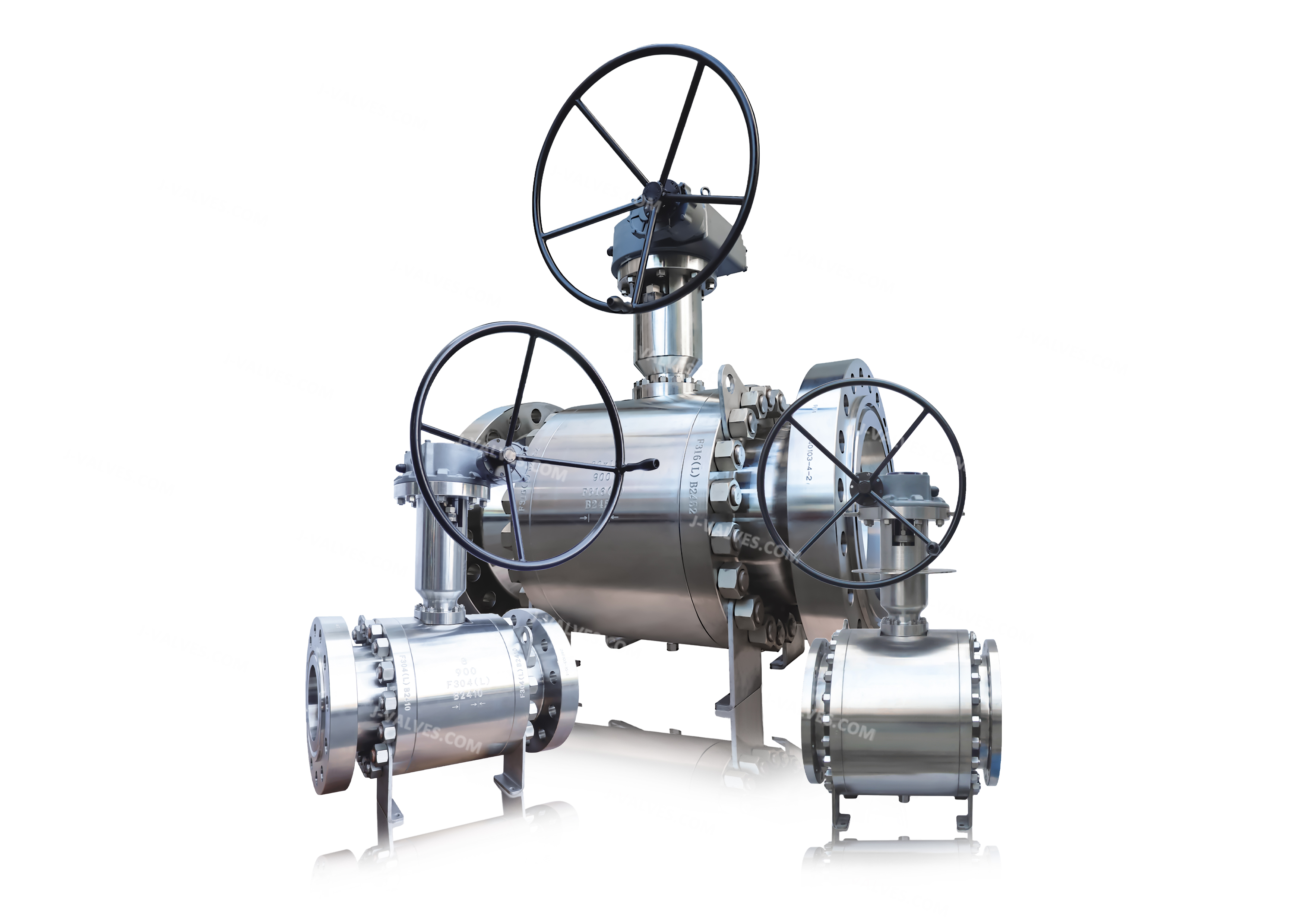
| LNG liquefaction & send-out lines | Trunnion mounted, extended bonnet | A351 CF8M, A182 F316, A352 LC3 | API 6D, ISO 28921-1, BS 6364 |
| LNG storage tank piping & BOG | Trunnion or floating, extended bonnet | CF8M / F316 with reinforced PCTFE seat | API 6D, MSS SP-134 |
| LNG carrier cargo & fuel systems | Floating / trunnion, compact execution | CF8M, antistatic design, fire-safe | API 608 / API 6D, API 607 |
| Regasification terminal send-out | Trunnion, metal or PTFE seat | F316 / CF8M, low-leakage seat options | API 6D, ISO 15848-1 |
| Air separation & LN2 distribution | Floating or trunnion, extended bonnet | F316 / CF8M, cleaned for oxygen service on request | API 608, ISO 28921-1 |
| Cryogenic test / pilot skids | Floating, small bore, instrumented | SS316 body and trim | API 608, project test procedure |
| LNG fueling & satellite plants | Floating, compact, actuated | CF8M with PCTFE seat | API 608, ISO 5211 |
Class 150-2500 · -196°C service
Shipboard · compact · fire-safe
ASU · -196°C · cleanliness
1/2inch to 36inch · fast delivery
01
02
03
| Item | What we do |
| Extended bonnet length | Bonnet column sized per size, class and insulation thickness so stem packing stays above 0°C, keeping seal elasticity and preventing ice formation around the stem - referenced to MSS SP-134 practice |
| Materials at temperature | Austenitic stainless (CF8M, F316), low-temperature carbon steel (LCB, LC3, LF2) and nickel steels selected for impact toughness at service temperature, with impact test records where specified |
| Seat and seal design | Reinforced PTFE or PCTFE seats for tight shutoff with metal backup, or metal seated designs where fire-safe and high-cycle duty demand it; seat loading designed to compensate thermal contraction |
| Antistatic and fire-safe | Ball-stem antistatic spring maintaining electrical continuity, and fire-safe construction to API 607 / ISO 10497 for hydrocarbon cryogenic service |
| Moisture and ice control | Assembly in controlled conditions, dry nitrogen purging and dew-point verification before shipment to prevent internal ice formation on first cool-down |
| Cryogenic test protocol | Stepwise cool-down to -196°C, seat leak measurement at temperature, stem seal check, operating torque measurement, controlled warm-up and drying before packing |
LNG · Trunnion · Cryogenic test
LNG carrier · Fire-safe · Antistatic
ASU · Oxygen service · Cleaning
| Failure mode | Root cause | J-VALVES countermeasure |
| Seat leakage after cool-down | Different thermal contraction rates between ball, seat and body opening the sealing contact | Spring-energized or backed seat design with pre-load calculated for the temperature range; seat leak test performed at cryogenic temperature, not only at ambient |
| Stem icing and jamming | Moisture freezing around the stem and packing area in a short bonnet | Extended bonnet geometry keeping packing above 0°C, dry nitrogen purging and dew-point verification, and insulation guidance in the O&M manual |
| Brittle fracture of body or trim | Material not qualified for low-temperature impact toughness | Austenitic stainless or low-temperature carbon steel with impact test records; material certificate traceable to heat number and test temperature |
| Packing leakage on thermal cycling | Packing relaxation as the stem column contracts and expands | Live-loaded gland arrangement and packing selected for cryogenic cycling, with stem seal verification during the cryogenic test |
| Ice blockage inside the valve cavity | Residual moisture in the cavity freezing and obstructing ball movement | Controlled assembly conditions, dry nitrogen purging before packing, sealed and desiccated end protection for shipment |
| Incorrect actuator torque at temperature | Actuator sized from ambient torque data only | Operating torque measured at cryogenic temperature and reported to the actuator supplier; actuator selection with safety factor verified for cold start |




What makes a ball valve suitable for LNG service?
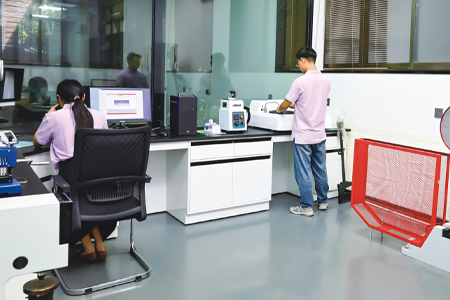
An LNG ball valve needs low-temperature materials (stainless steel, low-temperature carbon steel or nickel alloys), an extended bonnet that keeps stem packing above 0 degrees C, antistatic and fire-safe design, and cryogenic testing that proves seat tightness at -196 degrees C. J-VALVES cryogenic ball valves combine all four, tested in our own low-temperature laboratory.
How does J-VALVES test cryogenic ball valves?
Which LNG applications do you supply ball valves for?
How long should the extended bonnet be?
Do you supply metal seated cryogenic ball valves?
What is the difference between -196°C testing and -162°C LNG service temperature?
How do you prevent moisture and ice problems before shipment?
Can cryogenic testing be witnessed by our inspector?