Introduction
In industrial pipeline systems, protecting pumps, valves, flow meters, and other critical equipment from solid particles is essential for maintaining stable operation. The Y Strainer is one of the most widely used filtration devices due to its compact design, efficient filtration performance, and easy maintenance.
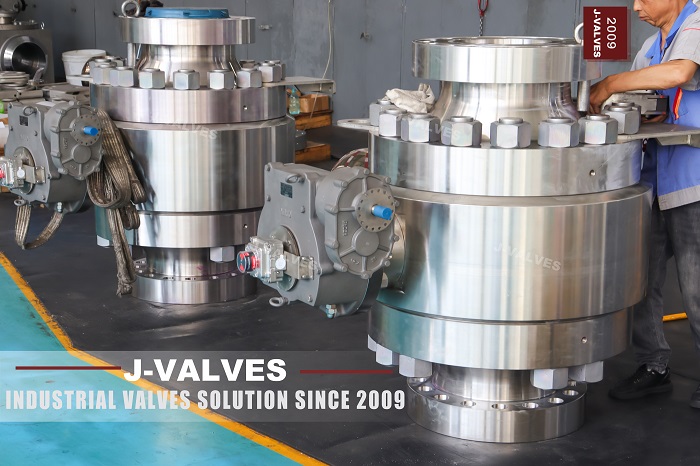
The Y strainer shown in the image is manufactured with a WCB carbon steel body and flanged connection design, providing reliable filtration performance for oil & gas, chemical processing, power generation, and water treatment applications.
J-VALVES specializes in manufacturing industrial valve and filtration solutions, delivering high-quality WCB Y Strainers designed for demanding pipeline environments.
What Is a Y Strainer?
A Y Strainer is a pipeline filtration device designed to remove unwanted solid particles from flowing media.
The filter element is installed at an angle inside the Y-shaped body. During operation, fluid passes through the filter screen, while impurities are trapped inside the strainer chamber.
Main components include:
WCB carbon steel body
Stainless steel filter screen
Bolted cover
Drain connection
Flanged end connections
Compared with other filtration equipment, Y strainers offer a compact structure and are suitable for continuous pipeline operation.
Key Advantages of WCB Y Strainers
1. Strong WCB Carbon Steel Construction
The valve body shown in the image adopts WCB carbon steel material, which provides excellent mechanical strength and pressure resistance.
Advantages include:
High structural strength
Good durability under industrial conditions
Suitable for medium and high-pressure pipelines
Cost-effective material solution
WCB Y Strainers are widely used where reliable filtration and long service life are required.
2. Efficient Particle Filtration
The main function of a Y Strainer is to protect downstream equipment by removing solid contaminants.
Typical applications include:
Pump inlet protection
Valve protection
Heat exchanger protection
Instrument protection
The optimized filter screen design provides:
Effective particle removal
Low pressure loss
Stable flow performance
Easy cleaning capability
3. Compact Design and Easy Maintenance
One of the major advantages of Y strainers is their compact installation structure.
Benefits include:
Small installation space requirement
Simple pipeline integration
Convenient filter screen cleaning
Reduced maintenance time
The removable cover design allows operators to quickly access the filter element without replacing the entire unit.
Applications of Y Strainers
Oil and Gas Systems
Y strainers are commonly installed in:
Oil pipelines
Gas processing systems
Pump suction lines
Equipment protection systems
They help prevent solid contaminants from damaging important pipeline components.
Chemical and Industrial Processing
In chemical plants, Y strainers provide continuous filtration for:
Process pipelines
Cooling systems
Liquid transfer systems
The WCB body offers reliable performance in general industrial environments.
Water Treatment and Power Industry
Y strainers are widely applied in:
Cooling water systems
Circulating water pipelines
Pump protection systems
Their simple structure makes them suitable for long-term operation.
J-VALVES Advantages in Y Strainer Manufacturing
As a professional industrial valve manufacturer, J-VALVES provides customized Y Strainer solutions for global industrial applications.
1. Professional Design Capability
J-VALVES develops Y strainers according to customer requirements, including:
Pressure class selection
Connection standards
Filtration accuracy
Material selection
2. Strict Quality Control
Each Y Strainer is manufactured under strict inspection procedures, including:
Material verification
Casting quality inspection
Pressure testing
Dimensional inspection
This ensures reliable performance during operation.
3. Customized Industrial Solutions
J-VALVES can provide:
WCB Y Strainers
Stainless steel Y Strainers
High-pressure Y Strainers
Special alloy filtration solutions
Products can be designed according to international standards such as:
ASME B16.34
ASME B16.5
API-related requirements
Conclusion
The WCB Y Strainer is an efficient and reliable filtration solution for protecting industrial pipeline equipment. With its compact Y-shaped structure, strong carbon steel body, low pressure drop, and easy maintenance design, it is widely used in oil & gas, chemical, power, and water treatment industries.
With professional manufacturing experience, advanced production technology, and strict quality management, J-VALVES provides high-performance Y Strainer solutions designed for long-term industrial applications.