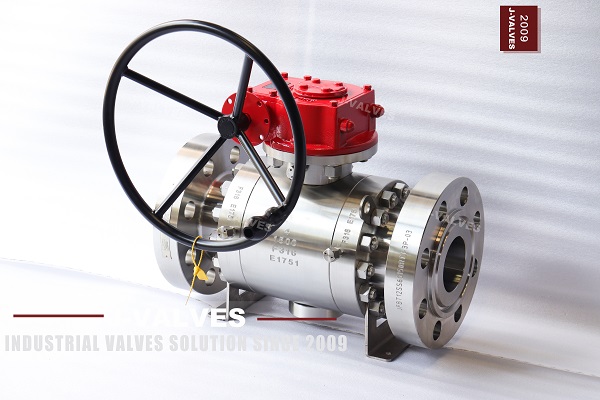


When API‑6D floating ball valves leave Chinese valve factories, they go through container sea freight, multiple transshipment and loading‑unloading operations before arriving at overseas refinery, petrochemical and oil‑gas construction sites. Packaging is far more than simple box‑filling; it acts as a complete product protection system. Quite a few overseas project failures stem not from valve body defects, but flange face scratches, salt‑fog corrosion and component damage caused by long‑distance ocean transit. Damaged valves delay construction schedules and trigger extra financial losses.
Since 2009, J‑VALVES has specialized in industrial valve export, serving oil‑gas, petrochemical and water‑treatment projects worldwide. We firmly believe that high‑quality floating ball valves must be matched with seaworthy export‑grade packaging, so factory‑tested valve performance can be fully preserved until end‑user site acceptance.
I. What Transport Hazards Do Export Floating Ball Valves Face?
Critical machined components of floating ball valves, including flange sealing faces, ball and valve seats, are extremely sensitive to impact, moisture and salt spray. Ocean‑going shipments bring multiple risks:
1. Physical impact & continuous vibration: Container shaking, terminal lifting and stacking may cause valves to collide with each other. Even minor scratches on flange sealing surfaces will ruin sealing performance.
2. Marine salt‑fog corrosion: High humidity and salt‑laden air inside shipping containers accelerate rusting on carbon steel and stainless‑steel machined surfaces. Qualified valves can become unusable upon arrival due to corrosion.
3. Shifting & friction damage: Poor internal securing allows valves to slide inside crates, damaging handwheels, valve stems and flange edges.
4. Rough handling risks: Harsh lifting and stacking at ports or job sites may deform crates and squeeze valve bodies.
Many buyers focus only on pressure class, material grade and API‑6D certification, while overlooking packaging specifications. They only discover cosmetic or functional damage when goods arrive at destination.
II. Complete Export Packaging Workflow for J‑VALVES Floating Ball Valves, Multi‑Layer Protection (Insert the provided factory packing photo)
Step 1: Dedicated Flange Protectors — The First Critical Barrier
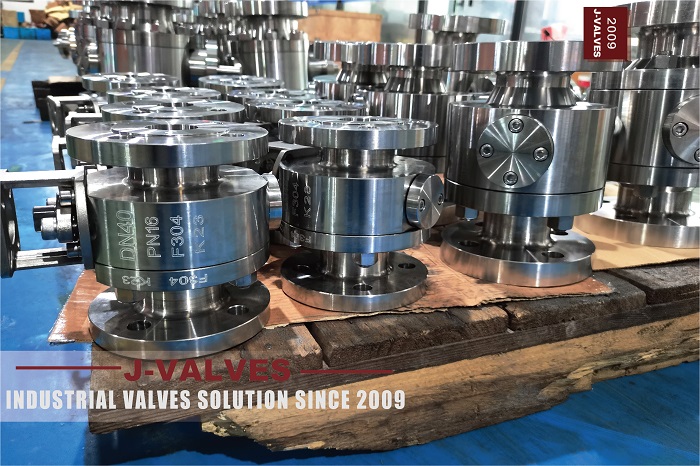
As shown in our on‑site factory photo, every flanged floating ball valve is fitted with rigid blue plastic flange protectors before crating. These covers fully shield flange sealing faces and bolt holes.
This procedure prevents dust, knocks and surface scratches during handling. Each valve is wrapped with stretch plastic film to isolate moisture and salt‑fog in marine transit. Even when valves sit closely together inside the crate, protectors and stretch film deliver cushion separation and avoid direct metal‑to‑metal contact.
Step 2: Internal Anti‑Rust & Moisture‑Proof Treatment Against Marine Salt‑Fog
All exposed machined metal surfaces receive anti‑rust treatment. Desiccants are placed inside crates to absorb residual humidity. For stainless‑steel floating ball valves, we take extra precautions to mitigate pitting corrosion caused by container condensation. Valves are set to proper transit position to avoid permanent deformation of soft seats from long‑term compression, maintaining original sealing performance at site.
Step 3:Neat Layout & Internal Cushioning inside Crates
As demonstrated in the picture, floating ball valves of identical sizes are neatly stacked. Buffer gaps and filling materials eliminate free movement inside the crate, preventing collision during ocean vibration. Zero unnecessary shifting is the core principle for valve export packing.
Step4:Fumigation‑Free Plywood Export Crates Compliant with Global Shipping Rules
Outer crates adopt fumigation‑free multi‑layer plywood, meeting customs quarantine requirements for most countries, with no extra fumigation certificate required for smooth customs clearance. Crates are structurally reinforced for stacking and lifting. International shipping marks conform to ISO 780 standards, marking valve model, material, gross/net weight, PO number and country of origin, simplifying receiving and inventory work for overseas warehouses.
III. Smart Packaging Helps Cut Total Project Costs
Some purchasers treat heavy‑duty packaging as extra procurement expense. In fact, qualified seaworthy packaging reduces overall project cost:
1. Avoid rejection and rework cost: Scratched flanges or rusted bodies may lead to cargo rejection, return shipment or costly emergency spare‑part air freight, which costs far more than proper packaging.
2. Ready‑to‑install condition upon arrival: Valves can go straight to pressure test and pipeline assembly after unpacking at overseas construction sites, saving project lead time.
3. Long‑term warehouse storage: Complete protective packaging keeps valves in factory‑new condition for months in client storage facilities.
Industry reference: API‑6D valve standard explicitly requires end‑face and machined‑surface protection during transportation to prevent transport‑induced valve failure.
IV. Checklist: Confirm Export Packaging Requirements with Your Valve Supplier
For overseas floating ball valve procurement, define packaging requirements within technical agreements. Key items to verify:
✅ Plastic flange protectors fully covering sealing faces
✅ Anti‑rust coating, desiccant and moisture‑proof measures for sea‑going transport
✅ Fumigation‑free plywood crate for export customs compliance
✅ Internal cushioning and securing structure preventing valve shifting
✅ Complete shipping marks including PO, model and material specifications
V. Conclusion: Deliver Full‑Spec Quality, Beyond Valve Manufacturing Alone
A qualified floating ball valve is not merely qualified after hydrostatic and seat‑sealing tests at factory. Its quality must remain intact all the way to unpacking at overseas project sites.
From assembly and pressure test inside Chinese workshop, through careful protective packing and trans‑ocean shipping, to safe opening on‑site, seaworthy packaging forms an indispensable segment of overall valve quality. J‑VALVES sticks to full‑range protective packing standards, delivering floating ball valves in perfect condition for global industrial projects.