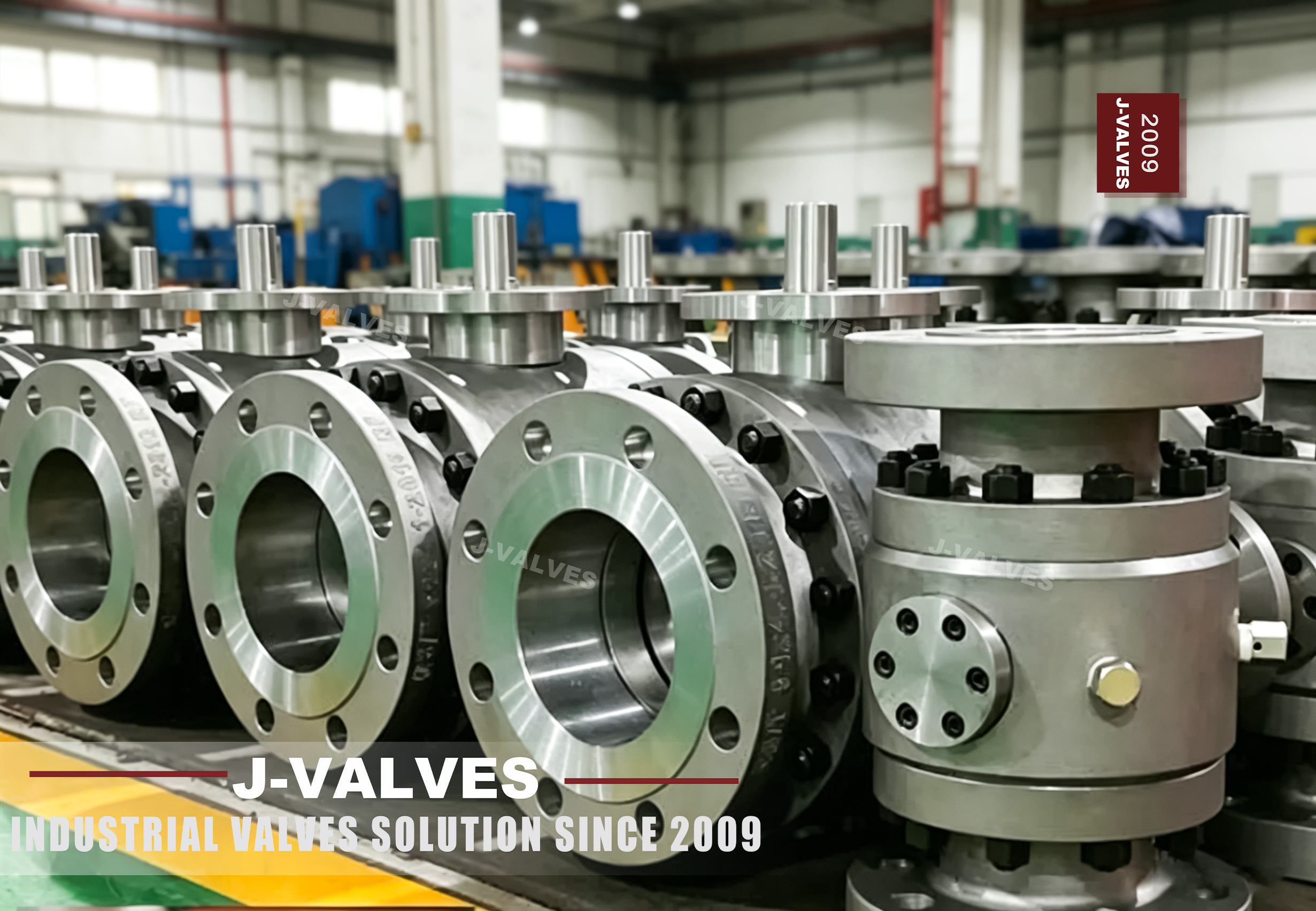
In chemical, oil and gas, power generation, municipal water supply, new energy and other engineering projects, pipeline valves are core components that control medium flow and ensure overall system safe operation. Common valve problems such as leakage, failure, aging and insufficient pressure resistance may easily cause medium spillage, fire, explosion and production shutdown, seriously threatening project safety and long-term operational stability.
Compared with traditional floating ball valves, cast iron valves and ordinary globe valves, stainless steel trunnion ball valves feature high safety, superior stability, long service life and low maintenance. Designed for harsh industrial working conditions, they fully meet the core demands of modern engineering projects for safe operation. This article explains the comprehensive safety advantages of stainless steel trunnion ball valves in plain language and a detailed comparison table, providing reliable selection guidance for engineering procurement and operation maintenance teams.
1. Structural Advantages: Eliminate Hidden Dangers from the Root
The safety and stability of valves depend largely on structural design. Stainless steel trunnion ball valves adopt a top and bottom shaft fixed ball structure. The ball is firmly fixed inside the valve body without displacement under medium pressure, which is the key safety feature different from ordinary floating ball valves.
Ordinary floating ball valves rely on medium pressure to push the ball against the valve seat for sealing. Under high-pressure and large-diameter working conditions, the ball is prone to offset, causing uneven stress on the valve seat, sealing deformation and leakage during long-term operation. In contrast, trunnion ball valves transfer medium pressure to professional bearings, ensuring uniform stress and minimal deformation of the valve seat. This structural design fundamentally avoids safety hazards such as high-pressure displacement, sealing failure and medium leakage, making it suitable for high-pressure, large-flow and non-stop operation scenarios.
2. Material Safety Advantages: Corrosion Resistance for Harsh Conditions
Engineering pipelines usually transport complex media including acid-base liquids, oil and gas, and work in humid and high-temperature environments. Corrosion and aging of ordinary valves often lead to valve damage, leakage and malfunction, triggering serious safety accidents. Stainless steel trunnion ball valves are mainly made of 304 and 316 stainless steel, with excellent corrosion resistance, oxidation resistance and rust resistance, far superior to cast iron and carbon steel valves.
They maintain complete structural stability in corrosive chemical environments, coastal salt-fog humid areas and flammable oil and gas transportation scenarios. The stainless steel material effectively prevents perforation and structural damage caused by corrosion, eliminating pipeline leakage and equipment failure risks. Meanwhile, the non-toxic material adapts to municipal water purification and biomedical projects without secondary pollution risks.
3. Sealing Safety Advantages: Bidirectional Zero Leakage Protection
Pipeline leakage is the most common and dangerous hidden danger in engineering operation, which may cause medium waste, environmental pollution, even explosion and poisoning accidents. Stainless steel trunnion ball valves are equipped with a spring pre-tensioned floating valve seat and double sealing structure, realizing reliable bidirectional self-tightening sealing regardless of medium flow direction.
Equipped with professional fire-proof sealing design, when the soft sealing material is damaged by high temperature or fire in emergency conditions, the built-in spring pushes the metal valve seat to closely fit the ball, forming a secondary sealing barrier. This design completely avoids fire and explosion risks caused by leakage of flammable and explosive media. Compared with ordinary valves with unidirectional sealing, easy aging and high-pressure leakage defects, it greatly improves sealing safety and stability for 24/7 safe operation.
4. Explosion-proof & Anti-static Advantages for High-risk Scenarios
In high-risk engineering projects such as oil, gas and chemical industries, static accumulation generated by medium flow and valve switching friction may easily produce sparks and trigger explosions, which is a key safety control difficulty. Stainless steel trunnion ball valves adopt a full-link anti-static structure. The conductive spring builds a complete conductive path from the ball, valve stem and valve body to the pipeline and ground, quickly dissipating static electricity and eliminating spark hidden dangers.
With no exposed loose parts and no impact sparks during switching, the valves fully comply with industrial explosion-proof safety standards. They are perfectly suitable for transportation of flammable and explosive media such as hydrogen, ethylene and natural gas, greatly improving the safety factor of high-risk engineering operation.
5. Operation & Maintenance Safety Advantages: Low Failure & Long Service Life
Sudden valve failures and frequent maintenance not only increase operation costs, but also raise safety risks during equipment startup and shutdown. Stainless steel trunnion ball valves feature low operating torque, flexible switching and extremely low component wear. The bearings and sealing parts have excellent durability with a much longer service life than ordinary valves.
Stable structure, impact resistance and fatigue resistance enable the valves to adapt to frequent switching and 24-hour continuous operation with ultra-low failure rate. They effectively reduce unplanned shutdowns and frequent maintenance, cutting labor and maintenance costs while avoiding various safety risks caused by equipment startup, shutdown and disassembly, ensuring continuous and stable safe operation of engineering projects.
6. Safety Performance Comparison Table of Different Valves
Comparison Dimension | Stainless Steel trunnion ball valves | Ordinary Floating Ball Valve | Cast Iron Globe Valve | Engineering Safety Advantage |
|---|---|---|---|---|
Structural Stability | Trunnion ball with upper & lower shaft, no displacement, no deformation under high pressure | Floating ball, easy offset and uneven seat stress under high pressure | Easy loosening and jamming after long-term operation | Stable structure, avoiding high-pressure operation failures fundamentally |
Sealing Performance | Bidirectional self-tightening sealing, fire-proof and zero leakage | Unidirectional sealing, easy leakage under high temperature & pressure | Large sealing gap, fast aging and high leakage rate | Prevent medium leakage, avoid explosion and pollution risks |
Corrosion Resistance | 304/316 stainless steel, acid & alkali resistant, salt fog & oxidation resistant | Ordinary stainless steel, average performance in harsh conditions | Easy rust and perforation, poor corrosion resistance | Adapt to complex working conditions, prevent valve body damage failure |
Explosion-proof & Anti-static | Built-in anti-static structure, no spark, meet explosion-proof standards | No dedicated anti-static design, easy static accumulation | No explosion-proof & anti-static design, high hidden dangers | Higher safety factor for flammable and explosive high-risk scenarios |
Service Life | Ultra-long service life, low wear and long maintenance cycle | Medium service life, easy damage with frequent switching | Short service life, frequent replacement and maintenance required | Reduce shutdown maintenance and startup-shutdown safety risks |
Working Condition Adaptability | Suitable for high pressure, large diameter, high temperature, corrosive and high-risk conditions | Only suitable for low pressure and conventional working conditions | Only suitable for simple normal temperature and pressure conditions | Full-scenario adaptation to meet all engineering safety requirements |
Conclusion
For engineering projects that prioritize safe operation, valve selection is the key to long-term system stability and safety risk prevention. With comprehensive advantages of stable structure, reliable sealing, corrosion resistance, explosion-proof performance, low failure rate and long service life, stainless steel trunnion ball valves perfectly solve the pain points of ordinary valves such as easy leakage, frequent failure and poor adaptability to harsh conditions. They are the optimal choice to improve project safety level and reduce operation and maintenance risks for high-risk industrial projects (oil & gas, chemical, power) and civil engineering projects (municipal, new energy, biomedical).