


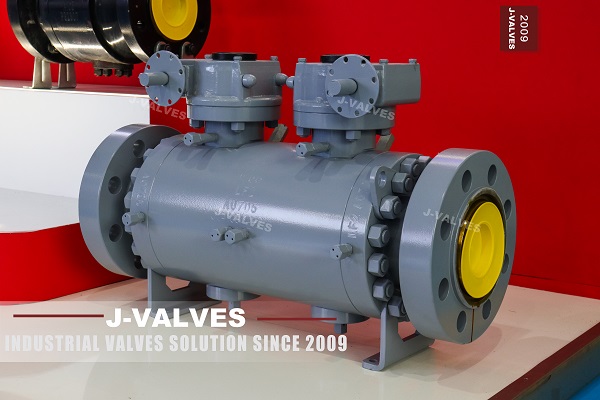
Double Block and Bleed (DBB) ball valves are widely used in oil and gas, petrochemical, LNG, and industrial pipeline systems. When selecting a DBB ball valve, one of the most important design considerations is choosing between a full bore and a reduced bore configuration.
Both designs offer unique advantages depending on flow requirements, pressure conditions, installation space, and operational costs. Understanding the differences helps engineers select the most suitable valve for specific industrial applications.
What Is a Full Bore DBB Ball Valve?
A full bore DBB ball valve has an internal flow passage equal to the pipeline diameter. The valve opening allows unrestricted media flow with minimal pressure loss.
Key Features
Full pipeline flow capacity
Minimal turbulence and pressure drop
Easy pigging operation
Improved flow efficiency
Full bore valves are commonly used in transmission pipelines and high-flow systems.
What Is a Reduced Bore DBB Ball Valve?
A reduced bore DBB ball valve has a smaller internal flow diameter than the connected pipeline. The reduced opening slightly restricts flow but decreases valve size and weight.
Key Features
Compact valve design
Lower manufacturing cost
Reduced weight
Easier installation in limited spaces
Reduced bore valves are often selected for utility systems and applications where maximum flow is not critical.
Full Bore vs Reduced Bore: Key Differences
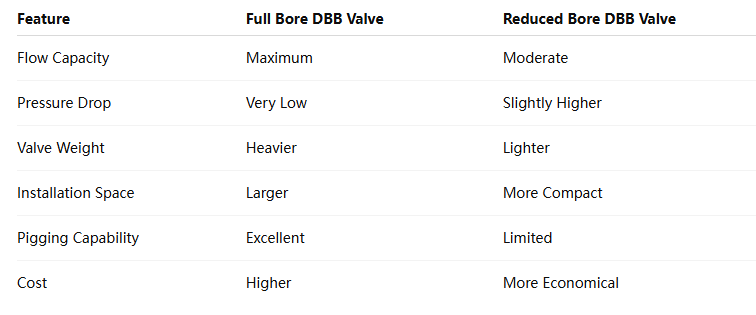
Advantages of Full Bore DBB Ball Valves
1. Better Flow Performance
Full bore valves minimize flow resistance and maintain stable system pressure. This is especially important in:
Oil and gas transmission
LNG transport systems
High-capacity process lines
2. Pigging Compatibility
Pipeline pigging tools can pass through full bore valves without obstruction, improving pipeline cleaning and inspection efficiency.
3. Reduced Energy Loss
Lower pressure drop helps reduce pumping energy consumption and improves overall system efficiency.
Advantages of Reduced Bore DBB Ball Valves
1. Lower Cost
Reduced bore valves require less material, lowering manufacturing and installation expenses.
2. Compact Design
Smaller dimensions make reduced bore valves suitable for:
Skid-mounted systems
Offshore platforms
Space-limited piping layouts
3. Reduced Weight
Lighter valves simplify transportation, installation, and maintenance operations.
Which Option Is Better?
The answer depends on the application requirements.
Choose Full Bore DBB Ball Valves When:
Maximum flow efficiency is required
Pigging operations are necessary
Pressure drop must be minimized
The system handles high-volume media transfer
Choose Reduced Bore DBB Ball Valves When:
Space is limited
Lower project cost is important
Moderate flow restriction is acceptable
Weight reduction is preferred
Material Considerations
Both full bore and reduced bore DBB valves are available in materials such as:
Carbon steel
Stainless steel
Duplex stainless steel
Alloy steel
C95800 aluminum bronze
Material selection should match pressure, temperature, and corrosion conditions.
Common Industrial Applications

Conclusion
Both full bore and reduced bore DBB ball valves offer valuable advantages in industrial systems. Full bore designs provide superior flow efficiency and pigging capability, while reduced bore valves deliver cost savings, compact installation, and lower weight.
Selecting the correct DBB valve configuration depends on operational priorities, system design, and budget considerations. Careful evaluation of flow requirements and installation conditions helps ensure reliable long-term valve performance.


