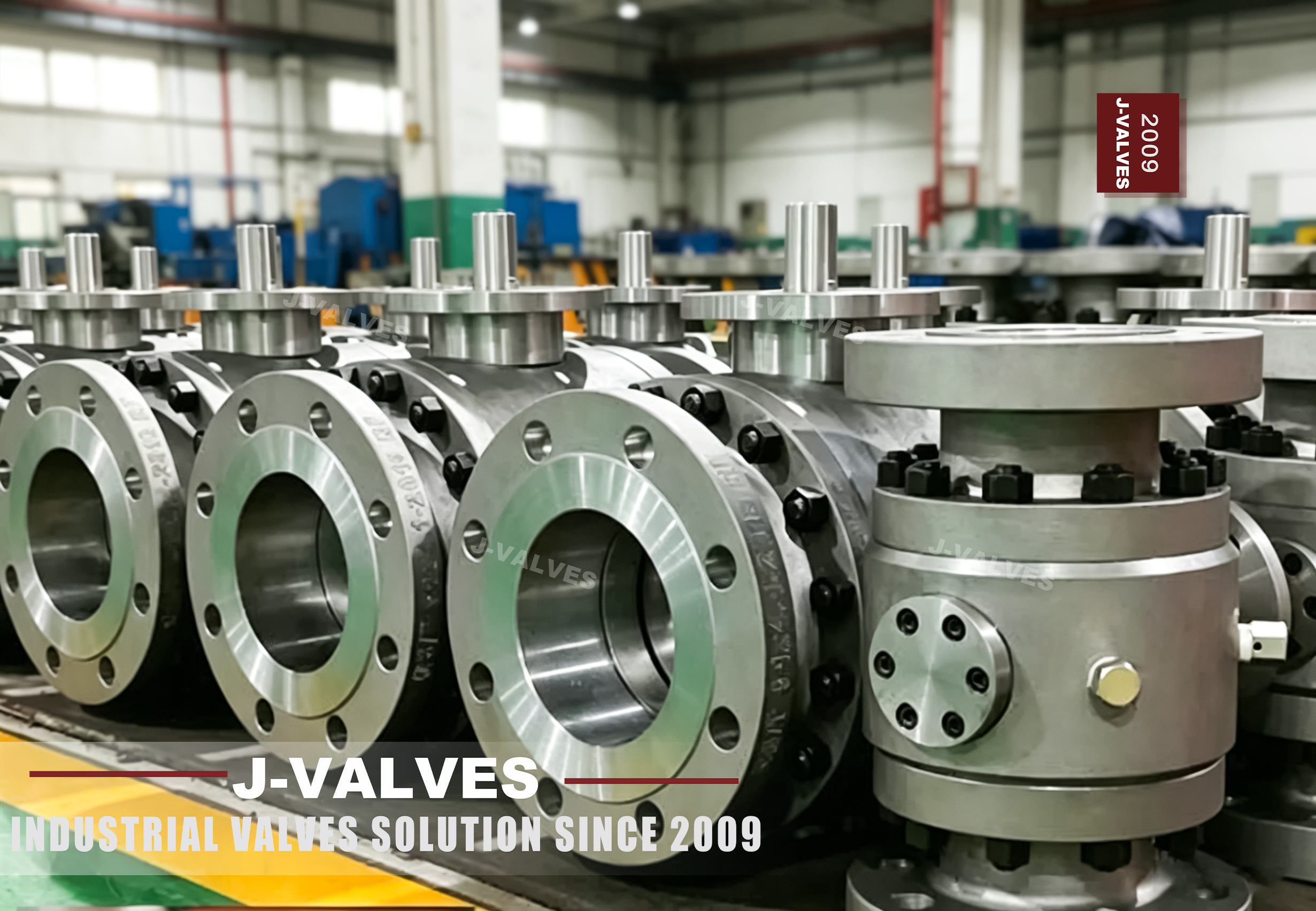
In heavy industries such as oil and gas transmission, thermal power generation, coal chemical industry and heating pipe networks, pipelines always operate under severe conditions of high temperature, high pressure and large flow. As the core control component of the pipeline system, large-diameter ball valves must have excellent structural strength, stable sealing performance and extreme condition adaptability.
Ordinary floating ball valves and conventional large-diameter valves are prone to sphere displacement, seat wear, jamming, medium leakage and body deformation under long-term high temperature and high pressure impact. These failures will cause production shutdowns, potential safety hazards and high operation and maintenance costs.
Many engineering purchasers and technical engineers are confused: when high temperature and high pressure become core challenges, can J-VALVES large-diameter trunnion ball valves break through the performance limitations of ordinary valves and fully meet industrial requirements? This article will give a comprehensive and objective answer through structural principles, core parameters, working condition adaptability and horizontal comparison.
I. Core Pain Points of Ordinary Large-Diameter Valves Under High Temperature & High Pressure
Deformation under high pressure: Ordinary floating ball valves lack trunnion support for the sphere. The sphere is easy to displace under medium pressure, resulting in unbalanced sealing specific pressure and continuous leakage.
Jamming and aging under high temperature: Conventional sealing materials and valve body materials have poor temperature resistance. Thermal expansion and contraction cause valve jamming and rapid aging of sealing parts.
Poor stability for large-diameter pipes: For pipes above DN300, ordinary valves have insufficient structural strength, resulting in severe vibration, loose parts and unstable operation under large flow impact.
High maintenance cost: Frequent failures under severe working conditions lead to frequent replacement and maintenance, increasing production downtime loss and operating costs.
II. Performance Comparison: J-VALVES Large-Diameter trunnion Ball Valve vs Ordinary Large-Diameter Ball Valve
The intuitive comparison table below clearly shows the performance gaps in pressure resistance, temperature resistance, structure, sealing stability and service life:
Comparison Items | Ordinary Large-Diameter Ball Valve | J-VALVES Large-Diameter trunnion Ball Valve | Core Advantages |
|---|---|---|---|
Pressure Rating | PN1.6~PN160, limited high-pressure resistance, easy deformation under ultra-high pressure | PN16~PN420 / CLASS150~CLASS2500, stable operation under ultra-high pressure conditions | Full coverage of low to ultra-high pressure working conditions |
Temperature Resistance Range | -20℃~300℃, sealing aging and body deformation at high temperature | -40℃~450℃, stable performance under extreme high and low temperature | Wider temperature adaptability, no jamming or failure |
Structural Design | Floating ball structure, sphere displacement under pressure, no deformation compensation | Dual-shaft trunnion ball structure + spring-loaded seat compensation mechanism, zero sphere displacement | Fundamentally solves pressure displacement and thermal deformation problems |
Sealing Performance | Single sealing structure, easy leakage under high temperature and high pressure | Soft and hard composite bidirectional self-tightening seal, zero leakage under full working conditions | Reliable sealing stability in severe environments |
Large-Diameter Adaptability | Poor structural rigidity, severe vibration and loose parts for DN300+ pipes | Integral forged steel body, DN50~DN600 full specification, anti-vibration and anti-impact | Optimized for large-flow and large-diameter pipeline systems |
Service Life | Short service life, high failure rate under severe conditions | High-strength forged steel and stainless steel materials, service life increased by over 40% | Long durability and lower replacement frequency |
Maintenance Difficulty | Complicated disassembly, high downtime and labor cost | Modular design, anti-static & cavity pressure relief structure, low maintenance | Greatly reduce operation and maintenance costs |
III. Key Advantages of J-VALVES trunnion Ball Valve in High Temperature & High Pressure Conditions
1. Integral Forged Steel Body with Ultra-High Structural Strength
J-VALVES large-diameter trunnion ball valves adopt integral forging technology with A105 carbon steel and 316L stainless steel materials. After high-temperature forging and heat treatment optimization, the tensile strength is 30% higher than ordinary cast steel valves, ensuring no deformation or cracking under long-term extreme pressure and high temperature impact.
2. trunnion Ball & Automatic Compensation Sealing System
The dual-shaft trunnion ball design eliminates sphere displacement and shaking under high pressure. The spring-loaded seat compensation structure automatically adjusts sealing preload to offset thermal expansion and pressure deformation, avoiding jamming and sealing failure caused by temperature and pressure changes, achieving zero leakage in full working conditions.
3. Multiple Safety Protection Mechanisms
Equipped with anti-static device and automatic cavity pressure relief structure to eliminate static electricity and release abnormal internal pressure, preventing valve body burst and flammable medium risks. Certified by ISO fire resistance standards, fully compliant with petrochemical and power industry safety specifications.
4. Full-Spec Customization for Large-Diameter Projects
Covering DN50 to DN600 complete specifications, compatible with GB, ANSI, DIN and other international standards. Customizable for long-distance pipelines, thermal power plants, coal chemical and municipal heating projects, meeting diverse engineering selection needs.
IV. Main Application Scenarios
Oil & gas long-distance high-pressure transmission pipelines
Thermal power & nuclear power high-temperature thermal pipe networks
High temperature and high pressure medium transmission in coal chemical industry
Large-scale municipal heating and industrial high-pressure water supply pipelines
Corrosive and flammable medium transmission working conditions
Conclusion
In conclusion, J-VALVES large-diameter trunnion ball valves fully meet the high-standard requirements of severe high temperature and high pressure working conditions. Compared with ordinary large-diameter ball valves, it has obvious comprehensive advantages in pressure resistance, temperature adaptability, sealing stability, large-diameter compatibility and long-term reliability.
It effectively solves the common pain points of traditional valves such as leakage, deformation, jamming and easy damage under extreme conditions. For industrial enterprises that pursue stable production, low maintenance cost and high safety, J-VALVES large-diameter trunnion ball valve is the optimal solution for high-temperature and high-pressure large-diameter pipeline systems. Follow us for more professional industrial valve selection knowledge and techni