

Understanding API 6D Standards
What is API 6D?
API 6D, formally known as the Specification for Pipeline Valves, is a comprehensive standard developed by the American Petroleum Institute. It outlines the design, manufacturing, testing, and documentation requirements for ball valves and other types of valves used in pipeline systems, particularly within the petroleum and natural gas industries. Compliance with API 6D ensures that valves meet stringent quality and safety standards, making them suitable for demanding industrial applications.
Key Requirements of API 6D
Design and Manufacturing: API 6D specifies the materials, dimensions, and construction methods for ball valves. It ensures that valves are designed to withstand the pressures and temperatures typical of pipeline systems.
Testing and Inspection: The standard mandates rigorous testing procedures, including pressure testing, leakage testing, and fire-safe testing, to verify the valve's integrity and performance.
Documentation: API 6D requires detailed documentation of the valve's design, manufacturing process, and test results, ensuring traceability and compliance.
Quality Management: Manufacturers must adhere to a quality management system compliant with API Spec Q1, which involves regular audits to maintain the API Monogram.
Features of API 6D Ball Valves
1. Full Port and Reduced Port Options
API 6D ball valves are available in both full port and reduced port configurations. Full port valves offer a larger flow area, minimizing pressure drop and ensuring efficient fluid flow. Reduced port valves, while providing slightly higher pressure drop, are more compact and cost-effective.
2. Trunnion-Mounted Ball valves
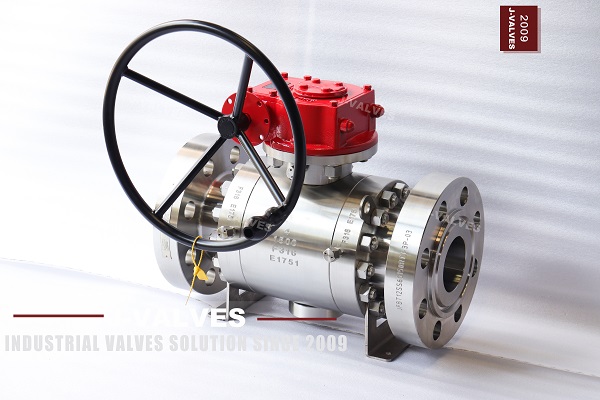
Trunnion-Mounted Ball Valves: These valves feature a trunnion mechanism that supports the ball, reducing the operating torque and enhancing stability. They are ideal for larger diameters and higher pressures.
Floating Ball Valves: In these valves, the ball floats within the valve body, providing a tight seal. They are simpler in design and suitable for smaller diameters and lower pressures.
4. End Connections
API 6D ball valves offer various end connections to suit different pipeline systems:
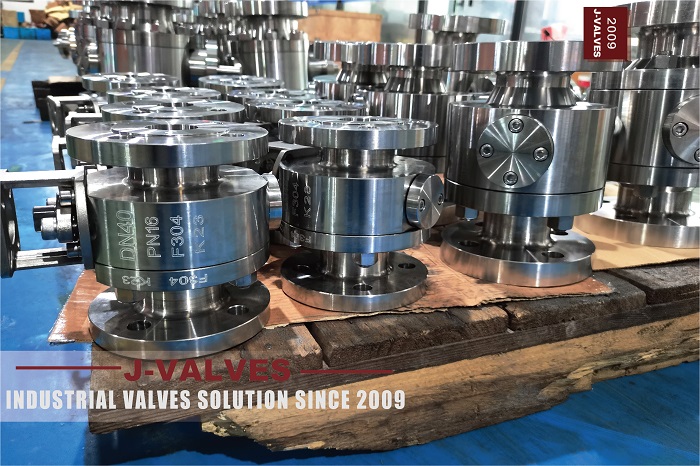
Flanged Ends: Suitable for high-pressure and high-temperature applications, flanged ends provide a secure and reliable connection.
Butt-Weld Ends: These ends are ideal for permanent connections in high-pressure systems, ensuring leak-tight performance.
Threaded Ends: Suitable for smaller diameter pipelines and lower-pressure applications, threaded ends offer easy installation and maintenance.
Applications of API 6D Ball Valves
Oil and Gas Industry
API 6D ball valves are extensively used in the oil and gas industry for their ability to handle high pressures and harsh operating conditions. They are ideal for applications such as:
Pipeline Systems: Ensuring reliable flow control and preventing backflow in oil and gas pipelines.
Offshore Platforms: Providing robust and reliable performance in demanding offshore environments.
Processing Plants: Managing fluid flow in oil refineries and natural gas processing plants.
Water and Wastewater Treatment
In water and wastewater treatment facilities, API 6D ball valves are used for their durability and corrosion resistance. They are suitable for applications such as:
Water Distribution Networks: Controlling water flow in municipal water supply systems.
Wastewater Treatment Plants: Managing the flow of wastewater and ensuring reliable operation in treatment processes.
Chemical Processing
API 6D ball valves are used in chemical processing plants for their ability to handle corrosive fluids and maintain tight sealing. They are ideal for applications such as:
Chemical Reactors: Ensuring precise flow control and safety in chemical reaction processes.
Distillation Columns: Managing fluid flow and maintaining pressure integrity in distillation processes.
Power Generation
In power generation facilities, API 6D ball valves are used for their reliability and ability to handle high pressures and temperatures. They are suitable for applications such as:
Steam Systems: Controlling steam flow in power plants.
Cooling Water Systems: Managing the flow of cooling water in power generation processes.