In industrial pipeline systems featuring high pressure, small diameters, and requiring frequent sampling or online maintenance, the isolation method using traditional single ball valves is gradually revealing its limitations. Especially in scenarios such as petrochemical engineering, instrument pressure tapping, and energy transmission, the demand for true isolation + safe blowdown is constantly rising.
This is why a growing number of engineering projects are turning to the Double Block and Bleed (DBB) ball valve structure.
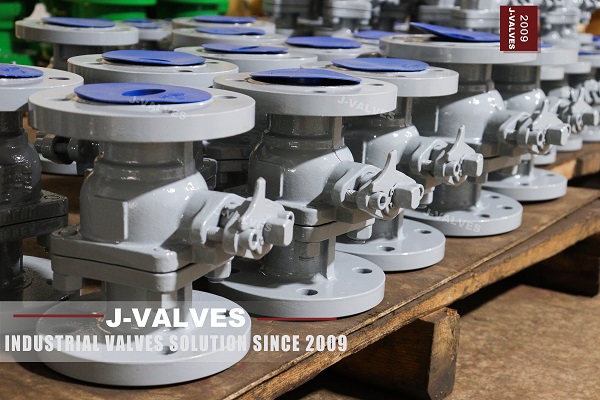
As can be seen from the on-site photos, this batch of J-VALVES 4/3×1/2×1/2 1500LB Stainless Steel DBB Ball Valves is a professional-grade product designed specifically for such harsh working conditions.
I. 4/3×1/2×1/2 Non-Standard Caliber Design: Targeting the Pain Points of On-Site Applications
In actual projects, there is often a size discrepancy between the main process pipeline diameter and the branch pipelines for instruments, sampling, and discharge.
J-VALVES adopts a multi-caliber combined design of 4/3×1/2×1/2, enabling a single valve to achieve the following functions:
Double isolation of the main line fluid
Cavity blowdown
Flexible connection of instrument or blowdown interfaces
This structure effectively reduces the number of tees, reducer pipe fittings, and additional valves, cuts down potential leakage points, and improves the overall reliability of the system.
II. 1500LB Pressure Rating: Built Exclusively for High-Pressure Systems
The 1500LB pressure rating is clearly marked on the valve body, indicating that this DBB ball valve can be stably applied in high-pressure working conditions, such as:
High-pressure oil and gas transmission pipelines
High-pressure reaction systems in chemical plants
Instrument pressure tapping and online analysis loops
Compared with conventional 600LB or 900LB valves, the 1500LB design imposes more stringent requirements on safety redundancy, wall thickness control, and sealing structure, making it more suitable for long-term continuous operation.
III. Stainless Steel Valve Body: Balancing Strength and Corrosion Resistance
This series of J-VALVES DBB ball valves is made of stainless steel (commonly grades such as CF8 / CF8M / F316), which offers distinct advantages in practical applications:
Excellent compatibility with water, oil, gas, and various chemical media
Resistance to rust in humid or corrosive environments
More stable valve body strength and sealing performance during long-term use
This is also a key reason why stainless steel DBB ball valves are widely adopted in the marine engineering, chemical, and energy industries.
IV. Core Value of the Double Block and Bleed Structure
Compared with ordinary ball valves, the core advantage of DBB ball valves does not lie in "structural complexity", but in risk control capability.
J-VALVES DBB ball valves realize superior performance through:
Two independent ball valve seals to achieve true double isolation
An integrated cavity bleed valve for real-time residual pressure detection or release
During equipment maintenance, instrument replacement, or system switching, it can effectively eliminate safety hazards caused by residual medium pressure, which is particularly critical in high-pressure systems.
V. Compact Layout: Ideal for High-Density Installation Scenarios
As shown in the photos, this batch of valves features a neat arrangement and compact structure, with blue handles and auxiliary valve positions clearly identifiable—facilitating operation and recognition even in space-constrained plant areas.
This design is ideally suited for:
Skid-mounted integrated equipment
Modular process units
High-density instrument pipe rack systems
It significantly improves space utilization without compromising safety performance.
VI. J-VALVES: Committed to Industrial Valve Solutions
Since 2009, J-VALVES has been deeply engaged in the industrial valve sector. From standard products to customized solutions of various specifications, we have always optimized designs based on actual working conditions.
This 4/3×1/2×1/2 1500LB Stainless Steel Double Block and Bleed Ball Valve is a mature demonstration of our expertise in high-pressure, small-diameter, and multi-interface application scenarios.
Conclusion: More Than Just a Valve, But a Part of System Safety
In modern industrial systems, valves are no longer merely "on-off switches".
For high-pressure working conditions, selecting a DBB ball valve with rational structure, reliable material, and mature design often translates to lower operational risks, higher maintenance efficiency, and more stable long-term operational performance.
J-VALVES DBB ball valves exist precisely to meet such engineering requirements.