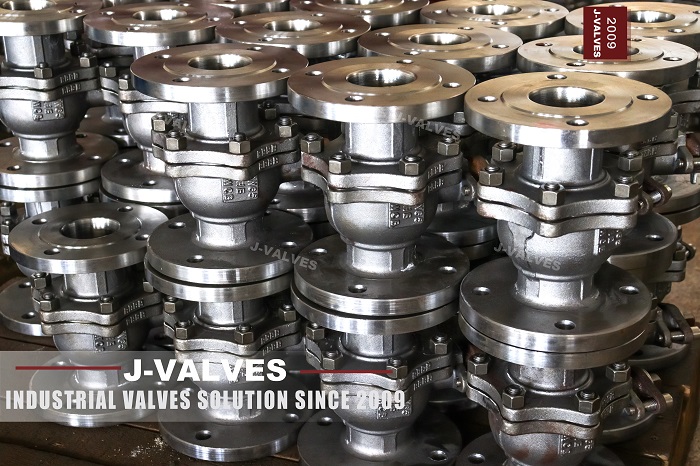
In the field of fluid control, ball valves are widely adopted in industrial pipeline systems for their high-efficiency and precise on-off control functions. As a uniquely structured and reliably performing valve, the fully welded trunnion mounted ball valve has gained increasing applications under high-pressure, high-temperature and special working conditions.
What is a Fully Welded Trunnion Mounted Ball Valve?
A fully welded trunnion mounted ball valve is a fluid control component featuring a fully welded body structure and trunnion mounted ball design. The fully welded construction means the valve body segments are integrally welded instead of being connected by threads or flanges, delivering superior tightness and durability under high pressure, high temperature and harsh service conditions.
The trunnion mounted design fixes the ball at both upper and lower ends via trunnion shafts, enabling flexible ball operation, higher pressure bearing capacity and stable performance under frequent cycling operation.
This type of valve is primarily deployed in systems requiring long-term continuous and stable operation, especially for critical industrial pipelines in petroleum, natural gas, chemical and other high-standard industries.
Working Principle of Fully Welded Trunnion Mounted Ball Valve
Its core operation relies on the rotation of the spherical closure member to realize fluid cut-off and circulation. Different from conventional floating ball valves, the dual-support trunnion structure restricts the ball displacement, significantly enhancing pressure resistance and sealing stability.
Fluid Flow Control: Driven by the valve stem, the ball rotates to align the internal bore with the pipeline passage for full flow. When rotated to the closed position, the ball isolates the pipeline passage completely to block medium flow.
Trunnion Connection Structure: The dual trunnion support ensures firm positioning of the ball and stable transmission of operating torque. It effectively withstands high line pressure and frequent opening/closing cycles, improving structural rigidity and long-term operational reliability in severe working conditions.
Fully Welded Body Design: The integral welded valve body eliminates potential leakage points of flange and threaded connections. It prevents external medium leakage under extreme high temperature and high pressure, guarantees pipeline system safety, and improves structural shock resistance and overall service durability for heavy-duty working conditions.
Main Characteristics of Fully Welded Trunnion Mounted Ball Valve
Ultra-High Sealing Performance
The integral fully welded structure eliminates loose connection gaps of traditional flanged valves. It maintains bubble-tight sealing under severe high-pressure and high-temperature conditions, effectively preventing internal and external leakage and ensuring long-term system stability and operational safety.
Superior High-Pressure Resistance
The trunnion dual-support structure shares medium pressure load on the ball, greatly upgrading pressure bearing rating. It maintains stable sealing performance even under extreme high-pressure working conditions, perfectly suitable for high-pressure fluid transmission in oil and gas industries.
Excellent Corrosion Resistance
Manufactured with stainless steel, low-temperature carbon steel and high-alloy materials as standard options, the valve delivers outstanding resistance to acid, alkali, salt and various chemical media. It supports long-term stable service in chemical processing, marine environments and oilfield working conditions.
Enhanced Seismic Performance
The monolithic fully welded body combined with rigid trunnion positioning structure effectively strengthens shock and vibration resistance. It adapts to vibration-intensive scenarios such as onshore oil and gas exploitation and offshore platform operations.
Long Service Cycle & Convenient Maintenance
Featuring integral high-strength welding and wear-resistant sealing configuration, the valve boasts low failure rate and extended maintenance intervals. On-site inspection, routine maintenance and partial component overhaul can be completed efficiently, minimizing system downtime.
Application Fields
Oil & Gas Industry: Indispensable for exploitation, long-distance transmission and process treatment of oil and natural gas. It is widely used in high-pressure long-distance pipelines, offshore platforms and gas processing units to ensure stable flow regulation and zero leakage under harsh field conditions.
Chemical Industry: Suitable for conveying and controlling highly corrosive chemical media. Corrosion-resistant alloy materials enable stable long-term operation in high-pressure corrosive environments, securing precise and safe fluid control for chemical processes.
Water Treatment Industry: Applied in sewage treatment, industrial wastewater delivery and water purification systems. Reliable sealing performance avoids medium leakage, supporting efficient and eco-friendly operation of water treatment facilities.
Marine Engineering: Adapted to extreme marine environments such as high pressure, low temperature and salt spray corrosion. With excellent seawater corrosion resistance and high-pressure bearing capacity, it is a core key component for subsea pipelines and offshore engineering projects.
Power Industry: Widely used in power plant cooling circulation systems, high-temperature steam pipelines and auxiliary fluid control loops. It maintains stable performance under continuous high-temperature and high-pressure operating loads to guarantee efficient power generation equipment operation.
Summary of Core Advantages
Ultra-reliable tightness: Fully welded construction eliminates leakage risks for high-pressure and corrosive working environments.
High pressure resistance: Trunnion dual support structure adapts to heavy-duty high-pressure pipeline systems.
Durable corrosion resistance: Premium metal materials resist chemical and marine medium erosion.
Strong shock resistance: Integrated welded structure meets vibration-intensive industrial scenarios.
Low life-cycle cost: Reduced maintenance frequency, extended service life and lower overall system operating costs.
Conclusion
With outstanding comprehensive performance including ultimate tightness, high-pressure resistance, corrosion resistance and structural stability, the fully welded trunnion mounted ball valve has become a core fluid control device in modern heavy-duty industries.
It provides stable and safe fluid control solutions for petroleum, natural gas, chemical, water treatment, marine engineering and power sectors. The adoption of fully welded trunnion ball valves effectively improves the overall safety, operational efficiency and service life of industrial pipeline systems, realizing long-term stable and economical system operation.