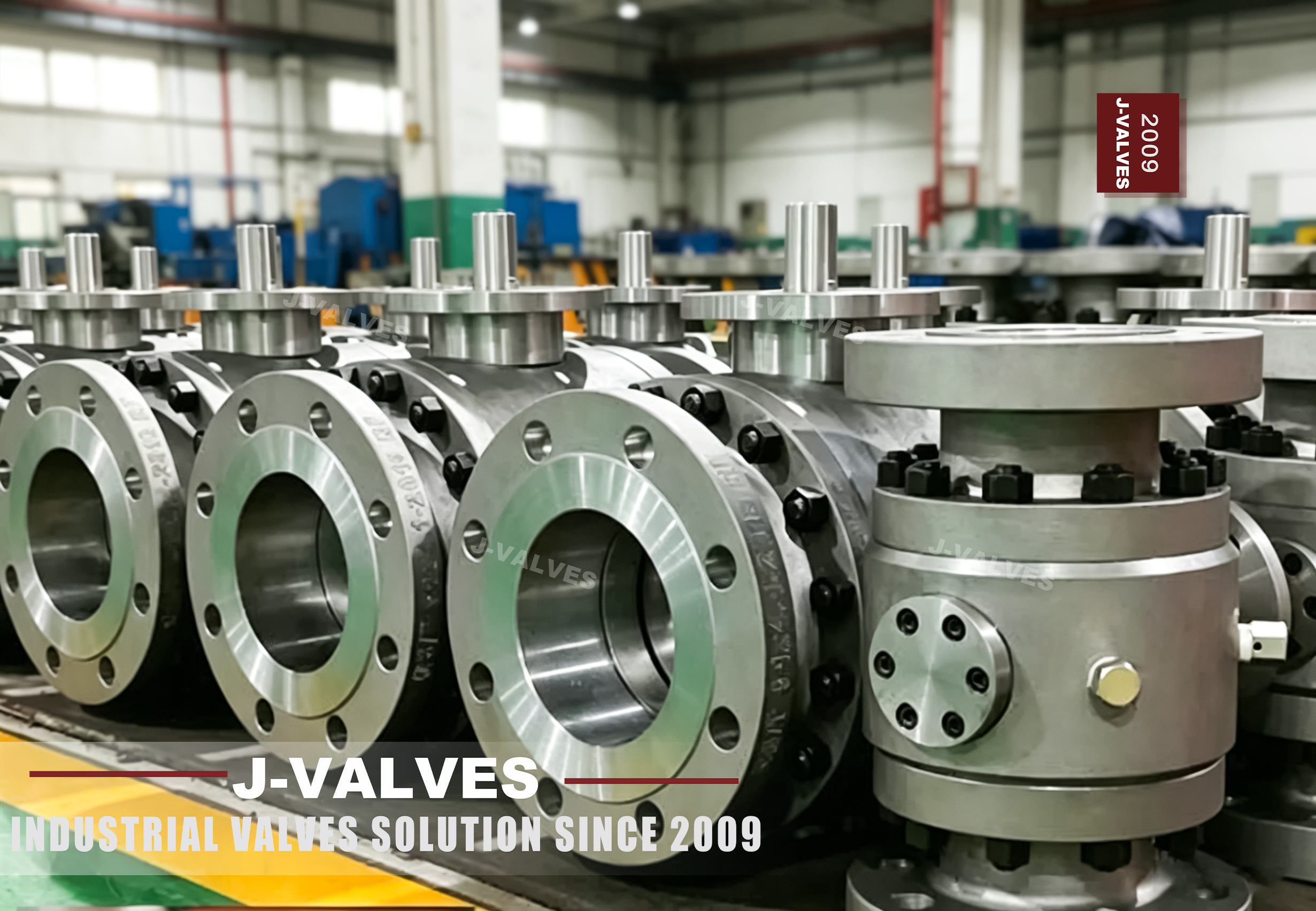
In industrial fluid control systems, ball valves are one of the most widely used equipment due to their simple structure, convenient operation and high fluid regulation accuracy. The 3PC stainless steel trunnion mounted ball valve is an innovative design based on conventional ball valves, which is especially suitable for fields with high requirements for fluid tightness, corrosion resistance and high-pressure working environments.
What is a 3PC Stainless Steel Trunnion Mounted Ball Valve?
A 3PC stainless steel trunnion mounted ball valve (3PC refers to three-piece structure) is composed of three main components, including valve body, valve seat and bonnet. Its "trunnion mounted" design means the ball is connected with the valve stem through a trunnion. This structure enables the ball valve to withstand higher pressure, while improving overall stability and sealing performance.
Widely applied in fluid control systems that require long-term and stable high-efficiency operation, the 3PC stainless steel trunnion mounted ball valve performs excellently under harsh working conditions, covering chemical, petroleum, natural gas, food and beverage and other industries.
Working Principle of 3PC Stainless Steel Trunnion Mounted Ball Valve
Its working principle is similar to that of general ball valves, relying mainly on the rotation of the ball to realize fluid cut-off and regulation. During operation, the valve stem drives the ball to rotate. The bore on the ball aligns with or isolates the pipeline passage, so as to switch and adjust fluid flow status.
On-Off Control
The core function is fluid cut-off and connection. The internal channel of the ball forms a tight fit with the valve seat to ensure zero leakage in fully closed status. By rotating the valve stem, the ball orifice aligns with the pipeline interface to allow smooth fluid passage.
Trunnion Connection Structure
Different from floating ball valves, the trunnion connection ensures firmer assembly between the ball and valve stem, capable of enduring high working pressure and frequent cyclic operation. The trunnion design guarantees stable and reliable performance under high-temperature and high-pressure working conditions.
Superior Sealing Performance
Equipped with high-quality sealing materials such as PTFE and Viton matched with precision valve seats, the valve maintains stable tightness during long-term continuous service and effectively reduces medium leakage risks.
Main Characteristics of 3PC Stainless Steel Trunnion Mounted Ball Valve
Excellent Corrosion Resistance
Stainless steel material endows the valve with outstanding anti-corrosion capability, perfectly adapted to corrosive medium working conditions in chemical, food and pharmaceutical industries. Its acid, alkali and high-temperature resistance enables long-term stable operation in harsh environments.
High Pressure Withstanding Capacity
The three-piece structure and trunnion mounted design effectively avoid stress concentration between valve stem and seat existing in ordinary ball valves under high pressure, greatly upgrading the pressure bearing grade and structural stability.
Easy Maintenance and Parts Replacement
The split three-piece structure allows quick disassembly of the valve body and convenient inspection, maintenance and seat replacement. Compared with integral welded ball valves, it shortens maintenance time and reduces system downtime and operation costs.
Reliable Sealing Performance
Precision machining and matching of ball and valve seat achieve bubble-tight sealing, eliminating medium leakage during opening and closing cycles, meeting strict tightness requirements of industrial processes.
Versatile Application Range
Applicable to the control of liquid, gas and various industrial media, it is widely used for fluid distribution, diversion and switching in multi-pipeline process systems.
Application Fields
Chemical Industry: Critical for the control of strong corrosive media in chemical production. With high pressure resistance and corrosion resistance, it ensures safe and stable fluid handling for acid, alkali, solvent and chemical raw material delivery.
Food & Beverage Industry: Compliant with high sanitary and precision control standards. Its hygienic stainless steel material and non-leakage sealing design prevent cross-contamination and guarantee fluid purity in food processing.
Oil & Gas Industry: Ideal for high-temperature and high-pressure medium transmission in onshore and offshore projects, widely used in oil exploitation, natural gas gathering, transmission and process pipeline systems.
Pharmaceutical Industry: Meets strict hygienic production specifications, realizing accurate fluid switching and steady flow control in pharmaceutical manufacturing processes.
Water Treatment Industry: Applied in sewage treatment, water purification and circulating water systems. Its corrosion and aging resistance ensures long-term stable operation in complex water quality environments.
Summary of Core Advantages
Corrosion Resistance: Stainless steel construction adapts to chemical erosion, hygienic production and harsh outdoor working conditions.
High Pressure Resistance: Three-piece body plus trunnion support structure enhances pressure bearing capacity and structural durability.
Zero-Leakage Sealing: Precision sealing system improves process safety and fluid control accuracy.
Convenient Maintenance: Detachable three-piece design simplifies overhaul and parts replacement.
Universal Compatibility: Covering petrochemical, pharmaceutical, water treatment, oil and gas and other mainstream industrial sectors.
Conclusion
As a core component of modern industrial fluid control systems, the 3PC stainless steel trunnion mounted ball valve is widely recognized and applied for its outstanding tightness, corrosion resistance and high-pressure resistance. The optimized three-piece split structure and trunnion fixed ball design enable long-term stable operation under severe working conditions.
Whether for chemical corrosive media, hygienic processing in food and pharmaceutical industries, high-pressure oil and gas transmission, or municipal water treatment projects, this valve delivers prominent comprehensive performance, becoming an indispensable key equipment in industrial pipeline fluid control systems.