

Introduction
In oil and gas, LNG, petrochemical, offshore, and process pipeline systems, reliable isolation is essential for equipment protection, maintenance, and operational safety. A conventional ball valve can provide effective shut-off, but some critical applications require two independent isolation barriers and a means of releasing pressure trapped between them.
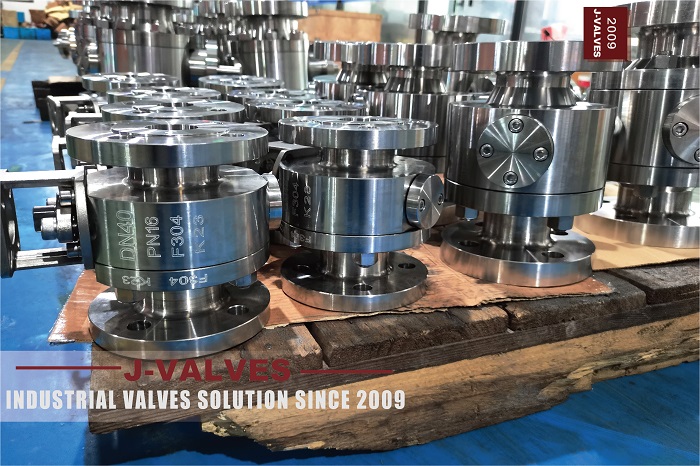
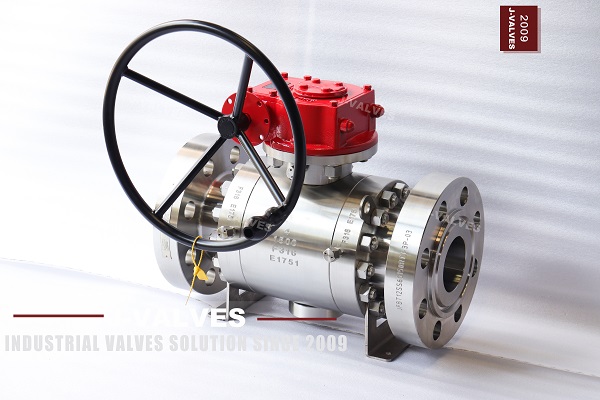
This is where the DBB Ball Valve provides an important engineering advantage. A Double Block and Bleed Ball Valve combines double isolation and an intermediate bleed function into an integrated valve design. Compared with separate valve arrangements, this configuration can simplify piping, reduce installation space, and provide a practical method for verifying isolation.
This article examines the structure, working principle, and engineering advantages of DBB Valve Design, as well as the manufacturing capabilities of J-VALVES.
1. What Is a DBB Ball Valve?
A DBB Ball Valve, or Double Block and Bleed Ball Valve, is designed to establish two separate sealing barriers while providing access to the cavity between them.
The basic concept includes:
Two independent sealing points
A valve cavity between the sealing barriers
An integrated or connected bleed arrangement
A single valve body for the isolation function
When the valve is fully closed, the two sealing barriers isolate the upstream and downstream sides. The intermediate cavity can then be monitored or depressurized through the bleed connection.
This arrangement is particularly valuable where positive isolation and pressure verification are important.
2. DBB Ball Valve Structure
The structure of a DBB valve depends on the specific design, pressure class, size, and application. Common configurations include floating and trunnion-mounted ball valve designs.
The main components generally include:
Valve Body
The body provides the primary pressure boundary. It must have sufficient mechanical strength and dimensional stability for the specified pressure and temperature conditions.
J-VALVES applies controlled casting or forging and precision machining processes to achieve accurate body dimensions and reliable pressure containment.
Ball
The ball controls the flow passage and works together with the seats to provide isolation. Precision machining and surface finishing are important for maintaining reliable sealing and smooth operation.
Seats
The seats form the sealing interface around the ball. Their material and design are selected according to the operating medium, pressure, temperature, and required leakage performance.
Stem
The stem transfers operating torque from the handle or actuator to the ball. An appropriately designed stem supports reliable operation and can incorporate anti-blowout features for improved operational safety.
Bleed System
The bleed connection provides access to the cavity between the two isolation barriers. It can be used for pressure release, cavity monitoring, or isolation verification according to the system design.
3. Working Principle of a Double Block and Bleed Ball Valve
The operating sequence of a Double Block and Bleed Ball Valve is based on creating two independent barriers.
When the valve is open, the ball provides a continuous flow passage through the pipeline.
When the valve is rotated to the closed position, the sealing system isolates the pipeline. The cavity between the two sealing barriers can then be accessed through the bleed connection.
A typical operating concept is:
Open position: Fluid passes through the valve.
Closed position: Two sealing barriers isolate the pipeline.
Bleed operation: Pressure in the intermediate cavity can be released or monitored.
Verification: The pressure condition in the cavity can help operators assess the isolation condition.
Actual operating procedures should always follow the valve manufacturer's instructions and the project's safety procedures.
4. Why DBB Design Is Different from Conventional Ball Valves
The key distinction between a conventional ball valve and a DBB configuration is the isolation arrangement.
A standard ball valve generally provides one primary flow barrier when closed. A DBB valve is designed to provide two separate isolation barriers with an intermediate bleed point.
The DBB Valve Design therefore offers several engineering benefits:
Double isolation within one valve assembly
Intermediate cavity pressure monitoring
Integrated bleed capability
Reduced piping complexity
Reduced installation footprint
Easier isolation verification
These features make DBB ball valves particularly useful in critical pipeline applications.
5. Cavity Pressure and Bleed Function
The bleed function is an important part of DBB operation. When the valve is closed, pressure may exist within the cavity between the two sealing barriers.
A properly configured bleed system allows this pressure to be released or monitored.
This can help with:
Isolation verification
Pressure relief from the valve cavity
Maintenance preparation
Leakage detection
Operational monitoring
The exact pressure-relief and cavity-management method depends on the valve design and process requirements. For this reason, DBB valve selection should consider not only the nominal pressure rating but also the seat configuration and cavity-pressure behavior.
6. Floating vs Trunnion-Mounted DBB Ball Valve
Both floating and trunnion-mounted ball valves can be engineered for DBB applications, but their structural characteristics differ.
Floating DBB Ball Valve
In a floating design, the ball is not mechanically fixed at the bottom. System pressure helps move the ball toward the downstream seat, generating sealing force.
Advantages may include:
Compact construction
Simple internal design
Suitable for many small and medium-size applications
Trunnion-Mounted DBB Ball Valve
A trunnion-mounted ball is mechanically supported by upper and lower trunnions.
This configuration can provide:
Lower operating torque for larger valves
Stable ball positioning
Suitability for larger sizes and higher-pressure applications
Compatibility with automated actuation
J-VALVES can select the appropriate configuration according to valve size, pressure class, operating torque, and project requirements.
7. Material Selection for DBB Ball Valves
Material selection has a direct impact on valve service life and reliability.
Depending on the application, DBB ball valves may be manufactured using:
Carbon steel
Stainless steel
Low-temperature carbon steel
Alloy steel
Corrosion-resistant alloys
Selection should consider:
Operating temperature
Design pressure
Fluid composition
Corrosion potential
Erosion conditions
Required service life
J-VALVES provides material and sealing options according to specific operating conditions rather than relying on a single standard configuration.
8. Sealing System and Leakage Control
The sealing system is a critical element of DBB performance. The ball and seat must maintain stable contact under the specified pressure and temperature conditions.
Depending on the service, J-VALVES can configure suitable seat and packing materials to achieve the required balance between:
Sealing performance
Operating torque
Wear resistance
Temperature resistance
Chemical compatibility
The valve may also incorporate stem sealing and anti-blowout features to improve external leakage control and operational safety.
Appropriate pressure and leakage testing should be performed according to the applicable valve standards and project specifications.
9. Engineering Advantages of J-VALVES DBB Ball Valves
J-VALVES combines engineering experience, precision manufacturing, and quality control to provide customized DBB valve solutions.
Professional DBB Valve Design
J-VALVES evaluates valve size, pressure class, temperature, medium, seat configuration, and operating method when developing a DBB solution.
Precision Machining
Accurate machining of the ball, seats, stem, and body helps maintain proper component alignment and consistent operating performance.
Customized Material and Sealing Solutions
Different body, trim, seat, and packing materials can be selected according to the application environment.
Quality Inspection and Testing
J-VALVES incorporates dimensional inspection, pressure testing, and sealing-performance checks into its manufacturing process to verify valve quality before shipment.
Flexible Actuation Options
DBB ball valves can be configured for manual operation or automated operation using pneumatic or electric actuators according to project requirements.
Compact Pipeline Integration
By integrating multiple isolation functions into one valve assembly, J-VALVES DBB solutions can help simplify piping layouts and reduce equipment footprint in applications where space is limited.
10. Typical Applications
The Double Block and Bleed Ball Valve is commonly considered for applications requiring enhanced isolation capability, including:
Oil and gas pipelines
LNG facilities
Petrochemical plants
Refinery process units
Offshore platforms
Natural gas systems
Storage terminals
Chemical processing facilities
Industrial process pipelines
These applications often require reliable isolation and controlled management of trapped pressure during maintenance or operational procedures.
Conclusion
The DBB Ball Valve combines two independent isolation barriers with a bleed function in an integrated valve configuration. Its structural design provides advantages in isolation management, cavity pressure monitoring, installation footprint, and maintenance planning.
A properly engineered Double Block and Bleed Ball Valve must consider valve configuration, seat design, materials, pressure class, temperature, and operating conditions. Through optimized DBB Valve Design, precision manufacturing, customized material selection, and strict quality control, J-VALVES provides reliable DBB ball valve solutions for demanding oil and gas, LNG, petrochemical, marine, and industrial applications.
For projects where reliable isolation and controlled cavity pressure management are essential, J-VALVES DBB Ball Valves offer a compact and professionally engineered solution.