English Version
In the global oil & gas, petrochemical, and pipeline industries, compliance is not optional—it is essential. When end users search for API 6D trunnion ball valves, they are looking for certified reliability, pressure integrity, and long-term performance.
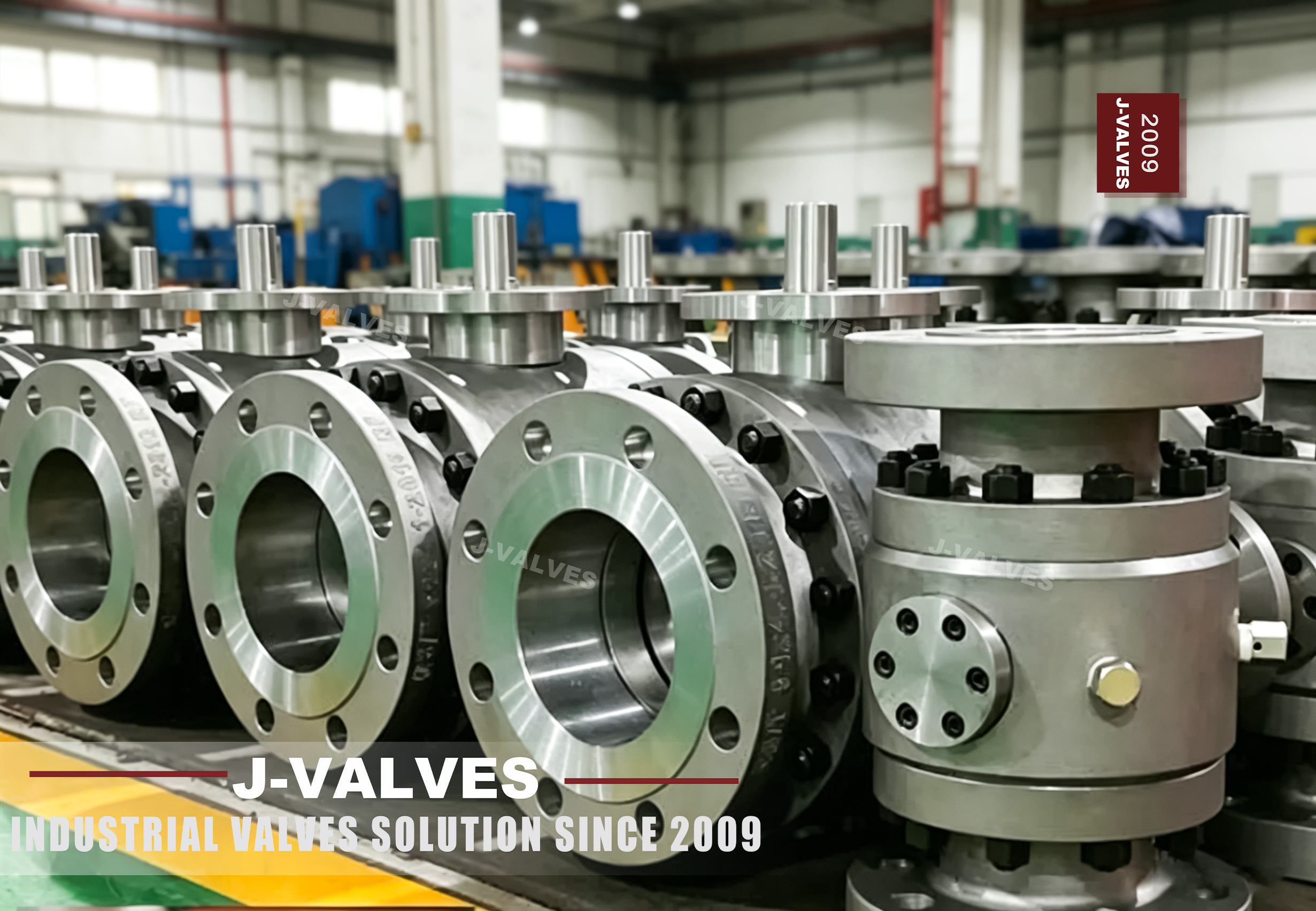
At J-VALVES, our API 6D trunnion mounted ball valves are engineered to meet strict international pipeline standards while delivering stable sealing, reduced operating torque, and enhanced service life.
What Is API 6D and Why It Matters?
American Petroleum Institute (API) develops globally recognized standards for oil and gas equipment.
API 6D specifies design, manufacturing, testing, and documentation requirements for pipeline valves, including trunnion-mounted ball valves.
For industrial buyers, API 6D compliance means:
Verified pressure performance
Standardized face-to-face dimensions
Mandatory hydrostatic and air testing
Documented material traceability
Strict fire-safe and anti-static design requirements
Choosing a valve manufactured according to API 6D ensures safer pipeline operation and lower lifecycle risk.
What Is a Trunnion Mounted Ball Valve?
Unlike floating ball valves, a trunnion ball valve features:
A fixed ball supported by upper and lower trunnions
Spring-loaded seats for bidirectional sealing
Reduced operating torque in high-pressure conditions
Stable sealing performance under large diameter applications
This structure is especially suitable for:
High-pressure transmission pipelines
Large-diameter oil & gas systems
LNG terminals
Refinery and petrochemical units
J-VALVES API 6D Trunnion Ball Valve – Key Technical Specifications
Below is a general specification overview of J-VALVES API 6D compliant products:
Parameter | Specification Range |
Standard | API 6D |
Size Range | 1/2" ~ 56" (DN15 ~ DN1400) |
Pressure Class | Class 150 ~ 2500 |
Design Standard | API 6D / ASME B16.34 |
Face-to-Face | ASME B16.10 |
Flange Ends | ASME B16.5 / B16.47 |
Fire Safe | API 607 / API 6FA |
Testing | API 6D hydro & air test |
Operation | Lever / Gear / Pneumatic / Electric |
Body Materials | WCB, LCB, CF8M, F304, F316 |
Seat Materials | PTFE / RPTFE / PEEK / Metal Seated |
Design Features That Improve Reliability
1. Double Block and Bleed (DBB) Function
Provides upstream and downstream sealing capability with cavity pressure relief.
2. Anti-Blowout Stem Design
Ensures safe stem retention under high pressure.
3. Fire-Safe Construction
Maintains sealing integrity in extreme temperature conditions.
4. Anti-Static Device
Prevents static charge accumulation during operation.
5. Emergency Sealant Injection
Available for critical pipeline systems.
Why Global Buyers Choose J-VALVES
Industrial procurement teams evaluate suppliers based on:
API compliance documentation
Third-party inspection support
Material traceability
Stable delivery lead time
Custom engineering capability
J-VALVES supports:
EN 10204 3.1/3.2 material certificates
NDT reports (RT, UT, MT, PT)
Hydrostatic & pneumatic test reports
Customized large-diameter solutions
Our engineering team focuses on balancing compliance, performance, and cost efficiency — making our API 6D trunnion ball valves competitive in global markets.
Application Industries
Crude oil transmission
Natural gas pipeline
LNG storage and transport
Refinery units
Petrochemical processing plants
Power generation systems
How to Select the Right API 6D Trunnion Ball Valve?
Before purchasing, consider:
Working pressure and temperature
Media type (gas, oil, slurry, corrosive fluid)
Required fire-safe level
Automation requirements
End connection standard
Choosing the correct configuration ensures long-term operational safety and minimizes maintenance costs.
Final Thoughts
API 6D compliance is more than a certification — it is a commitment to pipeline safety and performance.
If you are sourcing a reliable API 6D trunnion ball valve manufacturer, J-VALVES provides technical transparency, engineered durability, and global service support.
Contact our team for detailed technical drawings, quotation, or customized solutions.