


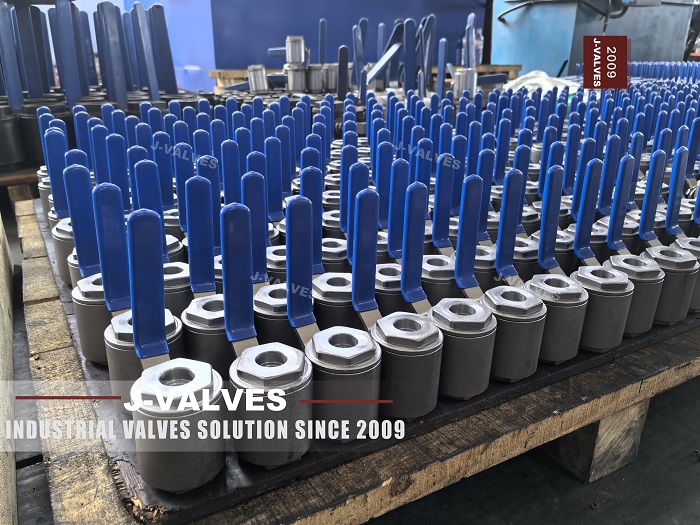
Fire hazards in industrial piping systems are catastrophic. Once fire breaks out, industrial valves must limit medium leakage under high-temperature flame to avoid explosion and fire spread. Fire safe certification becomes a mandatory requirement for 2-piece threaded ball valves used in petrochemical, natural gas, energy and refinery projects worldwide.
Many engineers and procurement staff often get confused: What are the core differences between API 6FA and API 607 fire test standards? Which standard should 2-piece threaded ball valves comply with to resist extreme fire scenarios?
I. Basic Definition & Scope: API 6FA VS API 607
API 6FA
API 6FA is the general standard for fire testing of rotary valves, including ball valves, plug valves and butterfly valves with stem packing.The fire test evaluates two critical leakage risks under continuous flame:
1. External leakage through valve stem packing;
2. Internal leakage across seats and external leakage from body joints.
API 6FA does not set strict limits on valve end connection types. Both flanged and threaded 2-piece ball valves can take fire witness test following this standard. It is the most widely accepted fire safe specification for global oil and gas projects.
API 607
API 607 is the fire test specification specially designed for quarter-turn valves with soft seats.It mainly targets ball valves and butterfly valves fitted with non-metal soft seals. The test focuses on secondary metal sealing performance after PTFE soft seats melt under fire.
Note: API 607 was originally developed for flanged end quarter-turn valves. For compact 2-piece threaded ball valves, manufacturers need to verify if valve structure meets specimen requirements before certification.
Simple Overview
API 6FA: Universal fire safe standard, applicable to all rotary valves regardless of seat material.
API 607: Specialized standard for soft-seated quarter-turn valves.
II. Main Fire Test Parameter Comparison
1. Flame temperature: API 6FA 760~980°C for 30 mins; API 607 704~927°C for continuous 30-minute burning.
2. Test medium: API 6FA supports both liquid and gaseous flammable medium; API 607 focuses on combustible fluid working conditions.
3. Leakage inspection: API 6FA inspects body joint, stem and seat leakage comprehensively; API 607 prioritizes seat secondary sealing after soft seal failure.
4. Compatibility for 2-piece threaded ball valve: API 6FA ✅ Widely recommended; API 607 ⚠️ Subject to structure approval by certification bodies.
III. Fire Risks of 2-Piece Threaded Ball Valves
Unlike flanged ball valves, a 2-piece threaded ball valve relies on thread connection to fasten two body halves. Two major risks emerge during fire accidents:
1. Thermal expansion reduces thread preload, leading to external leakage at body joint under high temperature;
2. PTFE soft seat melts completely without secondary metal seal, resulting in continuous flammable medium leakage and fire escalation.
Qualified fire-safe 2-piece threaded ball valves require optimized structure:
1. Install metal fire seat ring to maintain sealing after soft seat melting;
2. Adopt graphite fire-resistant packing for valve stem;
3. Precision machined body thread to sustain clamping force under high temperature creep;
4. Complete third-party witnessed fire test and obtain formal fire safe certification.
IV. How to Choose Suitable Standard for Industrial Projects
1. Overseas refinery, oil & gas, power plant projects: If specifications only require fire safe certification, API 6FA is the preferred solution for 2-piece threaded ball valves with wider acceptance globally.
2. Gas transmission pipeline projects: Select API 607 if project datasheet explicitly specifies this standard.
3. For export projects to Middle East, Europe and America: Confirm certification specimen structure with valve suppliers in advance. Avoid inconsistency between certified samples and supplied threaded ball valves.
V. Conclusion
Whether a 2-piece threaded ball valve can control leakage under extreme fire depends on structural design matched with proper API fire standard, instead of basic fire labels.
API 6FA offers higher flexibility for threaded ball valves in global export projects, while API 607 is more suitable for large soft-seated flanged quarter-turn valves. Design institutes and buyers should clearly mark fire safe test requirements on technical datasheets to eliminate safety risks for industrial pipelines.
J-VALVES supplies API 6FA certified fire safe 2-piece threaded ball valves. Third-party witnessed fire tests are available to meet strict fire safety demands of global chemical and energy piping systems.


