


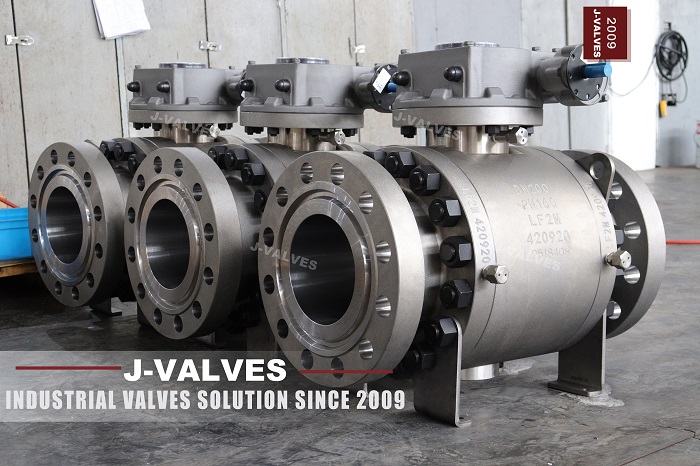
For hazardous process pipelines in oil & gas, refinery and coal chemical plants, the ability of valves to maintain reliable sealing during accidental fire incidents directly prevents fluid leakage, explosions and secondary disasters. Many procurement engineers confuse standard ball valves with API 607 fire safe trunnion mounted ball valves. The two types perform similarly under normal ambient temperature conditions, but their sealing reliability differs drastically when exposed to high fire temperatures. This article compares the two valves from standard specifications, structural design and high-temperature sealing mechanism.
I. Basic Introduction: API 607 Fire Safe Ball Valve & Ordinary Ball Valve
1. API 607 Certified Fire Safe Trunnion Ball Valve
API 607 is the globally recognized fire safety test standard for floating and trunnion ball valves.
A certified trunnion mounted ball valve features a trunnion supported ball and dual fire-safe sealing construction:
Soft seats deliver bubble-tight sealing under normal operating temperature;
If high fire temperature melts soft sealing components, built-in metal-to-metal sealing seats engage automatically to block massive medium leakage.
The valve is equipped with fire-resistant gaskets, heat-resistant packing and internal cavity pressure relief system to avoid valve body rupture caused by thermal expansion of trapped fluid.
2. Standard General Ball Valve
Most ordinary ball valves on the market are only designed for ambient temperature service without API 607 fire-safe construction. They adopt single soft seat design without backup metal sealing. In fire accidents, PTFE or RPTFE soft seats melt rapidly, leading to complete seal failure and continuous medium leakage, which will worsen fire hazards. Standard floating ball valves and basic trunnion valves have no protection for fire scenarios.
II. Core Reliability Differences Under Fire Conditions
1. Redundant Sealing System (Primary Difference)
Standard ball valve: Only single soft seat. Once soft material melts under fire, the valve loses shutoff capacity completely.
API 607 fire safe trunnion ball valve: Dual sealing system (soft seat + backup metal seat). Soft seats achieve low leakage for daily operation. After soft seats are damaged by fire heat, metal-to-metal contact provides emergency shutoff and limits leakage volume for emergency response.
2. Thermal Stability of Ball Support Structure
The trunnion structure fixes the ball on top and bottom shafts. The ball resists displacement under high pressure and high temperature and avoids uneven compression on sealing surfaces.
In floating ball valves, the ball leans against seats only by fluid pressure. Ball shift easily occurs during temperature rise and pressure fluctuation in fire, accelerating seal failure.
3. Cavity Relief & Fire-resistant Accessories
API 607 fire safe trunnion ball valves are fitted with automatic cavity relief. When trapped liquid expands and creates excessive pressure inside the valve cavity, fluid releases to upstream or downstream pipeline to protect the valve body. Fire-resistant graphite packing and gaskets prevent external leakage along the stem.
Most standard ball valves have no dedicated cavity relief structure. Thermal overpressure inside enclosed cavities may cause valve cracking, and ordinary packing cannot sustain fire temperature.
4. Independent Third-party Fire Test Certification
API 607 valves must pass standardized fire combustion tests conducted by third-party labs. Internal and external leakage levels are verified under simulated fire temperature and duration to obtain official certification.
Standard ball valves only undergo hydrostatic and air tightness tests at room temperature, without verified performance data for fire accidents.
III. Application Selection Guide
✅ Recommended to adopt API 607 fire safe trunnion ball valves:
LNG pipelines, crude oil transportation lines, refinery units, chemical pipelines with flammable medium, offshore platforms, tank inlet/outlet shut-off valves, high-pressure hazardous fluid systems above Class300 / PN100.
⚠️ Suitable scenarios for standard ball valves:
Non-flammable medium pipelines working under ambient temperature and low pressure, such as water circulation and common compressed air pipelines in general industry.
IV. Conclusion
API 607 fire safe trunnion ball valves and ordinary ball valves share similar flow performance under normal working conditions. The safety margin of fire-certified valves only works during extreme accident scenarios. For projects handling flammable and explosive media, standard ball valves cannot replace fire-safe certified valves. API 607 certification is frequently a mandatory requirement for shut-off valves in hazardous pipelines during engineering review and tender evaluation.
If you need quotations, drawings and certification documents of API 607 trunnion ball valves in LF2, A105, WCB material, please contact the technical team of J-VALVES industrial valves.


