


CHINA J-VALVES Offers Various High-quality I ndustrial Ball Valves
J-VALVES, a distinguished professional ball valve manufacturer rooted in China, takes pride in its extensive product portfolio. Our offerings span a wide range, including trunnion-mounted ball valves, floating ball valves, high-temperature ball valves, high-pressure ball valves, metal-sealed ball valves, ultra-low temperature ball valves, DBB ball valves, Three-way And Four-way Ball Valve, and fully welded ball valves. Each product is a testament to our commitment to precision engineering and reliable performance. Meticulously crafted, they are designed to not only meet but exceed the most stringent industrial demands, ensuring stable operation even under extreme conditions. This enables us to provide our clients with high-value services and makes our valves widely sought-after in industries.
Product Category
Contact Us

-
J-VALVES-Q47F
-
J-VALVES
Overview of the J-VALVES metal sealed trunnion mounted ball valve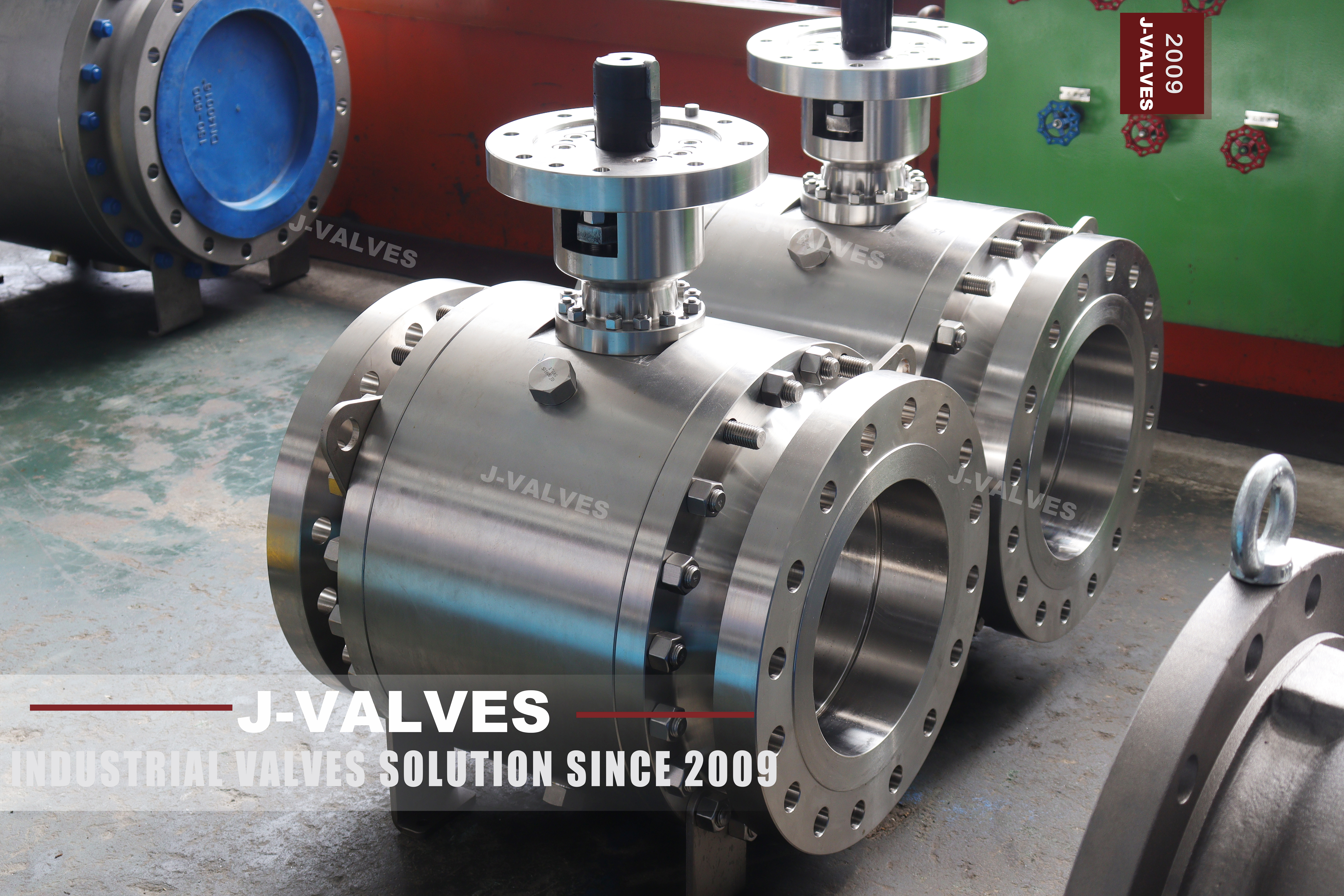
A metal seat is not one surface. It is two surfaces in contact, moving against each other, under load, with the medium in between. The page under discussion lists the seat as a material choice — martensitic stainless, austenitic stainless, or cemented carbide — and lists the ball as hardened stainless or alloy steel, and in doing so it describes two lists rather than one pair.
That distinction is the whole subject of this page. A polymer seat is forgiving: it conforms to the ball, it tolerates a small misalignment, and it replaces itself against wear by flowing. A metal seat does none of those things. It seals on a narrow band that has been lapped onto a sphere, and the band survives only if the two metals in contact do not weld to each other as they slide.
Two austenitic stainless faces will weld to each other. Under load, the oxide film breaks down at the high spots, clean metal meets clean metal, and a microscopic junction forms and then tears as the ball turns. The tear takes material with it. What is left is a rough patch on the ball and a matching patch on the seat, and the band that was lapped flat is no longer a band.
So the question the page should answer and does not is not which seat material is best. It is which pair is being sold: a hardened ball against a softer seat, a coated ball against a stainless seat, or two hard faces of different families. Those are three different valves with three different lives, and only one of them is right for a given duty. Written that way, the seat stops being a material choice and becomes a pair: a ball surface, a seat material, a band width and an acceptance rate, all of which belong on the drawing and none of which is decided by the word metal.
Design and Construction
The ball is carried on a stem above and a trunnion below, so it does not rest on the seats. That is what makes a metal seat practical: the seat ring only has to be pressed against the ball, not to hold it up, so the spring behind the ring can be sized for sealing rather than for weight.
Each seat ring sits in a pocket with a small axial freedom, and behind it is a spring set and a graphite packing ring. The spring provides the seating force at low pressure, when the medium cannot; the graphite ring provides a secondary seal and keeps the pocket from leaking past the ring. At pressure the medium adds to the spring, so the seat load rises with the line rather than staying where it was set.
The contact is a narrow band, not the whole spherical surface. The band is produced by lapping the seat ring against the ball, and its width is a designed quantity: too narrow and the contact pressure destroys the edge, too wide and the unit load falls until the seat no longer seals. That is why the band is measured rather than inspected by eye.
Because the seat is metal, the valve does not close dead tight. It closes to a rate. That is not a defect in manufacture and it is not something a better lap will fix: a metal to metal contact cannot conform the way a polymer does, so the acceptance in the test standard is written as a quantity over time. A specification that asks for zero leakage on a metal seat is specifying a different valve.

Material Options
The pairing is the material decision, and the page gives the ingredients without the recipe. The table below sets out the three workable pairings and what each one costs.
| Pairing | Ball Surface | Seat Material | What It Buys and Costs |
|---|---|---|---|
| Hard against soft | Cobalt based overlay or carbide coating | Austenitic stainless | Conforms slightly, tolerates debris, wears the seat |
| Soft against hard | Base stainless, lapped | Carbide or hardened martensitic | Keeps the ball, wears the seat ring, which is replaceable |
| Hard against hard, different families | Cobalt based overlay | Carbide or martensitic stainless | Best wear life, least tolerance for misalignment |
The rule behind the table is a hardness step or a change of alloy family, and either one will do. What will not do is two faces of the same austenitic stainless at the same hardness, because that is the combination that welds under load. The page's own list makes that combination possible, which is why it needs to be read as a menu with rules rather than as a list of alternatives.
A cemented carbide seat is not simply the best of the three. It is hard, it is wear resistant, and it is brittle: it will not yield to absorb a misalignment that a steel seat would take up, and it will chip if the ball is allowed to slam. It is chosen for abrasion, not as an upgrade, and a valve with a carbide seat needs a properly sized actuator more than a valve with a steel one does.
The body grade is a separate decision and it is the one the page spends most of its words on. Carbon steel covers the ordinary range, stainless covers the corrosive duty, duplex covers chloride plus strength, and a nickel based alloy covers the combination of chloride, temperature and acid that nothing else survives. The seat pairing is chosen after the body, because the body decides what the medium is doing and the medium decides what the pair has to resist.
One thing the duplex grades do not buy is a thinner wall. A duplex body has a higher yield strength than a carbon steel one, and the wall still comes from the material group table in the design standard, which does not give a discount for strength. What the duplex buys is corrosion margin and toughness, and it is bought for those reasons or not at all.
Technical Specifications
The table keeps the page entries and puts the two sides of the seat on separate lines, because a quotation that names one of them has named half a seat.
| Item | Value |
|---|---|
| Size range | Two to 56 inch, DN 50 to DN 1400 |
| Pressure class | Class 150 to Class 2500 |
| Body | Carbon steel, stainless, alloy, duplex or nickel based alloy |
| Ball | Hardened stainless or alloy steel |
| Ball surface | Cobalt based overlay, carbide coating, or a lapped base |
| Seat | Martensitic stainless, austenitic stainless or cemented carbide |
| Seat support | Graphite backed, spring loaded |
| Stem | Stainless or alloy steel |
| Temperature printed | Minus 46 to plus 425 Celsius |
| Temperature, metal seat with graphite | Up to 650 Celsius |
| Ends | Raised face flange or butt weld |
| Design | API 6D and ASME B16.34 |
| Test | API 598 |
The temperature line is worth separating from the seat line because the two are often confused. A metal seat with a graphite backing will run to 650 Celsius; the 425 printed on the page is a body and bolting figure for a carbon steel build. A valve ordered for 600 Celsius needs both, and neither one alone will get there. Written that way, the seat stops being a material choice and becomes a pair: a ball surface, a seat material, a band width and an acceptance rate, all of which belong on the drawing and none of which is decided by the word metal.
Standards and Compliance
Three documents matter here, and one of them is the reason the page cannot promise tight shut off.
| Document | What it fixes | What It Does Not Fix |
|---|---|---|
| API 6D | Valve requirements, fire test, marking | A leakage rate for a metal seat in normal service |
| ASME B16.34 | Wall, material groups, class ratings | Seat pairing or surface treatment |
| API 598 | Shell and seat test, and the acceptance for each seat type | Which pairing should have been chosen |
| API 607 | Fire test for quarter turn valves | A normal service leakage rate |
The acceptance in API 598 is written differently for a metal seat than for a soft one, and that difference is the entire reason a metal seat is acceptable in services where a polymer would be destroyed. A buyer who applies the soft seat acceptance to a metal seated valve will reject a valve that meets its specification, and a buyer who applies the metal acceptance to a polymer valve will accept one that does not.
The fire test is where a metal seat has an advantage that is real rather than advertised. When the soft parts burn, a polymer seated valve depends on a secondary metal seat that is only used in the fire case; a metal seated valve is already running on its metal faces, so the fire case is the same case. That is a genuine difference in behaviour, and it is the reason metal seats appear in fire critical service even when the temperature does not demand them.
What none of these documents fixes is the pairing. There is no table in a standard that says which ball surface goes with which seat for a given medium, because the answer depends on the medium, the cycling and the allowable wear. That is a manufacturer's decision and it should be visible on the drawing rather than implied by a material list.
Manufacturing Process
The ball is machined, then surfaced, then finished, and the order of those three operations is the difference between a hard ball and a round one. A coating applied before grinding sits on a surface that is not yet spherical; grinding after coating produces the geometry but can cut through the coating at the high spots. The sequence that works is rough machine, apply the overlay, finish grind, then lap the band.
The overlay itself is applied by welding or by thermal spray, and both leave a surface that has to be machined. A cobalt based overlay applied by welding leaves a heat affected zone in the base metal, which is why the ball is usually stress relieved between the overlay and the finish grinding. A coating applied by spray does not, but it is thinner and it is a coating rather than a rebuilt surface.
The seat ring is machined and then lapped against the ball it will run with, not against a master. That is deliberate: the pair is lapped together so that the band matches the sphere it will actually touch. A seat lapped to a master and fitted to a different ball will show a band that is patchy, and a patchy band is a leak path. Written that way, the seat stops being a material choice and becomes a pair: a ball surface, a seat material, a band width and an acceptance rate, all of which belong on the drawing and none of which is decided by the word metal.

Quality Control and Testing
The band check is the operation that distinguishes a metal seated build from a polymer one. Marking compound is applied to the seat, the ring is pressed against the ball and turned a few degrees, and the resulting band is measured for width and for continuity. A band that is continuous and of the designed width is a seat that will seal; a band that is broken is a seat that will leak no matter how much pressure is applied. Written that way, the seat stops being a material choice and becomes a pair: a ball surface, a seat material, a band width and an acceptance rate, all of which belong on the drawing and none of which is decided by the word metal.
Torque is measured after the seat test rather than before, and it is measured after a run of cycles rather than on the first stroke. A metal seat beds in: the first few cycles polish the band and the torque falls, and then it stabilises. A valve whose torque is still rising after a hundred cycles has a pairing problem rather than a bedding in problem. Written that way, the seat stops being a material choice and becomes a pair: a ball surface, a seat material, a band width and an acceptance rate, all of which belong on the drawing and none of which is decided by the word metal.

Applications and Industry Service
Abrasive and particulate service is the ordinary reason to buy this valve. Slurry isolation, catalyst handling, ash and fly ash lines, and any duty where a polymer seat would be cut by the medium within a few cycles. In those services the seat is not failing by temperature, it is failing by erosion, and no polymer survives it.
High temperature service is the second reason, and it is the one the temperature column describes. Above roughly 200 Celsius a polymer seat is out of its range, and above 425 the carbon steel body is out of its range as well, so a high temperature order changes the body and the seat together. Written that way, the seat stops being a material choice and becomes a pair: a ball surface, a seat material, a band width and an acceptance rate, all of which belong on the drawing and none of which is decided by the word metal.
Where this valve is the wrong choice is on a line that needs tight shut off, and on a line where the medium will not tolerate the products of wear. A metal seat passes a rate by design and it generates wear particles as it cycles; a line that cannot accept either needs a soft seat with a different temperature limit, not a harder metal one.

Installation, Operation and Maintenance
Installation follows the same rules as any flanged or welded valve, with one addition: the actuator, if fitted, has to be sized on the torque of a metal seat, which is higher than a polymer seat at the same size and class. An actuator selected against a soft seated valve of the same bore will be undersized, and it will stall rather than damage anything, which is at least a quiet failure.
Operation should avoid part open positions in abrasive service. A ball valve at part open puts the flow across the edge of the seat ring, and that edge is the part of the assembly that has the least material and the highest velocity. A metal seat tolerates full open and full closed; the positions in between are where it wears. Written that way, the seat stops being a material choice and becomes a pair: a ball surface, a seat material, a band width and an acceptance rate, all of which belong on the drawing and none of which is decided by the word metal.
Thermal cycling is the maintenance issue that is least visible. Each cycle moves the ball relative to the seat by the difference in expansion between the two materials, and that movement is the wear mechanism. A valve in a cycling service wears faster than the same valve in a steady one, and the pairing should be chosen with the cycle count in mind rather than only the temperature.
How to Specify and Order
The lines below are the ones the material list does not settle, and the first one is the line that decides whether the valve lasts.
| Line on the order | What to write | Why it matters |
|---|---|---|
| Ball surface | Base, cobalt based overlay, or carbide coating | One half of the rubbing pair |
| Seat material | Martensitic, austenitic, or carbide | The other half, and it has to differ |
| Medium and solids | What is in the flow, and how much | Erosion rather than temperature often decides |
| Temperature | Minimum and maximum, and the cycle count | The body figure is not the seat figure |
| Leakage acceptance | The class in the test standard | Metal seats close to a rate, not to zero |
| Operator | Handwheel, gear, or actuator sized for the pair | Metal seat torque is higher |
Written that way, the seat stops being a material choice and becomes a pair: a ball surface, a seat material, a band width and an acceptance rate, all of which belong on the drawing and none of which is decided by the word metal.
FAQ
Q: Why do two stainless faces gall?
A: Because they are the same alloy sliding on each other with no film between them. Under load the asperities weld at a microscopic scale and then tear, and the tear takes metal with it. The damage is a rough patch on one face and a matching patch on the other, and the seat that was lapped flat is no longer flat.
Q: Should the ball be harder than the seat?
A: As a rule, yes. The harder part keeps its form and the softer one conforms to it, so the contact band stays where it was lapped. Two parts at the same hardness, or a seat harder than the ball, is where the pairing starts to depend on luck rather than on a drawing.
Q: Is a cemented carbide seat still a metal seat?
A: It is a hard face rather than a polymer one, so it belongs in the same family, but it does not behave like steel. It is brittle, it does not yield to conform, and it will not survive a misalignment that a steel seat would absorb. It is chosen for abrasion, not as a general upgrade.
Q: Where does 425 Celsius come from if a metal seat goes to 650?
A: From the body and the bolting, not the seat. The figure printed on the page is the window of a carbon steel body with graphite, and a build that goes higher needs an alloy body and a bolting grade that keeps its strength up there. The seat is only one of the parts that has to agree.
Q: Does a metal seated valve shut off dead tight?
A: It shuts off to a rate. The acceptance for a metal seat is an allowable leakage in the test standard, and it is written as a quantity over time rather than as zero, because a metal to metal contact band cannot conform the way a polymer does. A specification that asks for zero leakage on a metal seat is asking for a different valve.



Hot Products


News
Direct Air Capture Ball Valves The Vacuum Side Runs The Seal Backwards, And Three Hundred Thousand Strokes Decide The Design
A solid sorbent DAC plant moves 1.3 million cubic metres of air per tonne of CO2, then asks a DN50 ball valve to hold 0.9 bar from the wrong side.
Read More
Your Ball Valve Is Not A Test Blind: What A Hydrotest Does To The Seats
A line test puts pressure on the wrong side of the seat logic, above the valve's own seat test, with water that stays in the pocket. What to arrange instead.
Read More
Remanufactured Ball Valves: Five Checks That Decide Whether A Rebuild Deserves A Certificate
A rebuild at 45 percent of price with half the life is no saving. Five checks that separate a real remanufacture from a repaint with a certificate.
Read More
The Squeeze Is A Residual: How Tolerance Stack-Up Decides Whether A Ball Valve Seals
No dimension sets the seat squeeze. Five tolerances do, in series. Why identical valves feel different, and why a new ball changes the arithmetic.
Read More