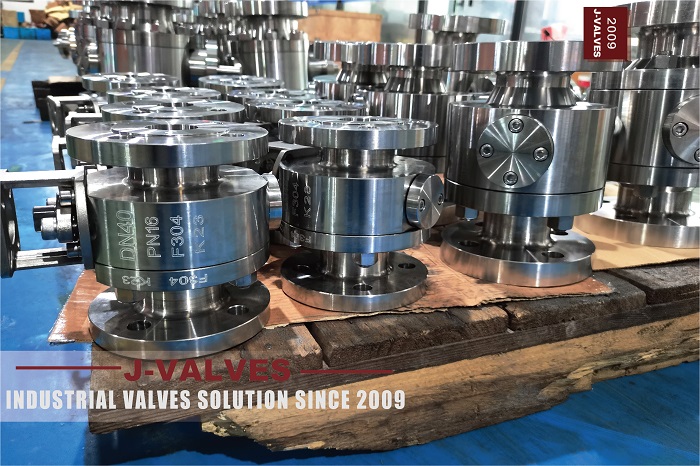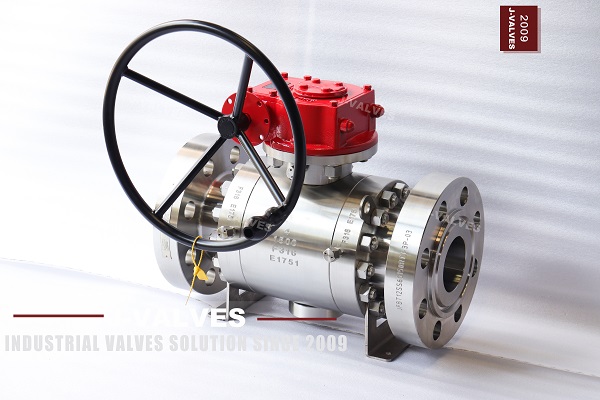


A trunnion mounted ball valve is a high-performance industrial valve designed for reliable flow control in high-pressure and large-diameter pipelines. Unlike a floating ball valve, the ball in a trunnion mounted design is supported by a shaft or trunnion at the top and bottom, which helps reduce operating torque and improve sealing stability.
This valve type is widely used in oil and gas, petrochemical, power generation, and pipeline systems where tight shutoff, low friction, and long service life are required.
I. What Does “Trunnion Mounted” Mean?
The term trunnion mounted refers to the mechanical support structure that holds the ball in place. Instead of relying only on line pressure to press the ball against the seat, the ball is anchored by trunnions above and below. This design keeps the ball stable during operation and helps maintain consistent sealing performance.
In simple terms, the ball does not “float” freely. It rotates with support, which is why this valve is preferred for larger sizes and higher pressure classes.
II .Working Principle of a Trunnion Mounted Ball Valve
The working principle is straightforward:
When the valve is fully open, the ball’s bore aligns with the pipeline, allowing fluid to pass through with minimal resistance. When the valve is closed, the ball rotates 90 degrees, and the solid surface blocks the flow path.
What makes the trunnion design special is that the ball is fixed in position by trunnions, while the seat rings move slightly toward the ball under pressure. This reduces wear on the ball and seat, lowers torque, and improves service life.
Key operating steps:
The actuator or handwheel turns the stem.
The stem transfers torque to the ball.
The ball rotates 90 degrees.
The fluid passage opens or closes.
The seats press against the ball to ensure tight shutoff.
III. Main Features of Trunnion Mounted Ball Valves
Trunnion mounted ball valves are known for several advantages:
Low operating torque
Suitable for high-pressure service
Excellent sealing performance
Reduced seat wear
Available in large sizes
Long service life
Safe and stable operation
Because the ball is mechanically supported, the valve performs well even in demanding conditions.
IV. Trunnion Mounted vs Floating Ball Valve
A common question is how this valve differs from a floating ball valve.
A floating ball valve relies on line pressure to push the ball against the downstream seat. This works well for small to medium sizes and lower pressures. However, in larger diameters or higher-pressure systems, the torque required becomes too high.
A trunnion mounted ball valve solves this issue by supporting the ball mechanically, making it more suitable for:
Large pipelines
High-pressure systems
Severe service conditions
Automation applications
V. Common Applications
Trunnion mounted ball valves are commonly used in:
Oil and gas transmission pipelines
Refineries and petrochemical plants
Natural gas processing
Power stations
LNG systems
Water and industrial fluid systems
They are especially useful where reliable shutoff and pressure resistance are essential.
VI. Why Choose a Trunnion Mounted Ball Valve?
If your project requires stable performance, reduced operating force, and strong sealing under pressure, a trunnion mounted ball valve is often the best choice.
It is designed for critical service environments where failure is not acceptable. That is why it is widely selected by engineers, project contractors, and industrial buyers around the world.
VII. Conclusion
A trunnion mounted ball valve is a robust and efficient valve solution for high-pressure and large-diameter pipelines. Its supported ball design improves sealing, reduces torque, and extends service life. Understanding its working principle helps buyers and engineers choose the right valve for demanding industrial applications.
VIII. FAQ
1. What is a trunnion mounted ball valve used for?
It is used for high-pressure, large-diameter, and critical pipeline applications where reliable shutoff is required.
2. How does a trunnion mounted ball valve work?
It works by rotating a supported ball 90 degrees to open or close the flow passage.
3. What is the advantage of trunnion design?
The trunnion support reduces operating torque, improves sealing, and reduces wear on valve seats.