

I. What Is an API 6D Full Bore Carbon Steel Floating Ball Valve?
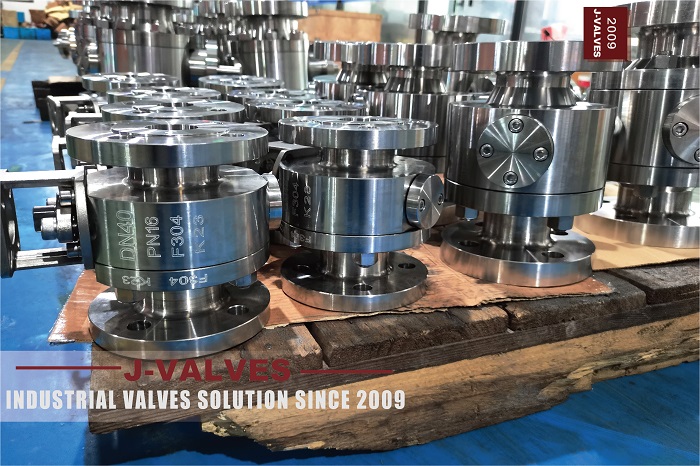
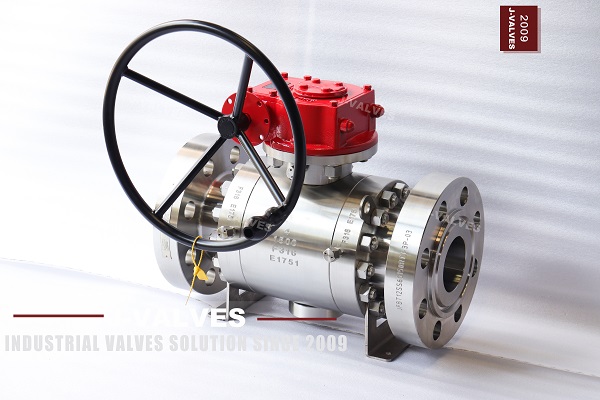
An API 6D full bore carbon steel floating ball valve is a pipeline isolation valve designed according to the API 6D standard. It uses a floating ball structure, which means the ball is not fixed by trunnions and moves slightly under line pressure to press firmly against the seat, creating a tight seal.
The full bore design allows the internal flow passage to match the pipeline bore, reducing flow restriction and pressure loss. This makes it especially suitable for applications where high flow capacity and easy pigging are important.
WCB is commonly used for the valve body because of its strength and cost efficiency, while 316SS is often selected for the ball, stem, or critical internal parts due to its corrosion resistance and durability.
II. Why Choose a Full Bore Design?
The full bore design offers excellent flow performance. Since the valve opening is close to the same diameter as the pipeline, the medium can pass through with minimal turbulence and pressure drop. This helps improve energy efficiency and supports pipeline cleaning operations.
It is a preferred choice for systems handling oil, gas, water, steam, and other industrial fluids where flow efficiency matters.
III. Benefits of WCB and 316SS Material Combination
WCB is a widely used carbon steel casting material known for mechanical strength and economic value. 316SS offers better resistance to corrosion, making it suitable for internal components exposed to moisture, chemicals, or other aggressive media.
Key advantages include:
Strong and reliable body structure
Better corrosion resistance on wetted parts
Balanced cost and performance
Suitable for a wide range of industrial services
IV. How the Floating Ball Valve Works
In a floating ball valve, the ball is supported by the seats rather than fixed in place. When pressure acts on the upstream side, it pushes the ball slightly downstream, increasing the contact force against the seat and improving sealing performance.
This design is valued for:
Simple construction
Fast quarter-turn operation
Reliable shut-off performance
Low maintenance requirements
V. Typical Applications
API 6D full bore carbon steel floating ball valves are widely used in:
Oil and gas transmission pipelines
Refining and petrochemical plants
Gas distribution stations
Water treatment and utility systems
General industrial pipelines
In these industries, dependable isolation, durability, and long service life are essential.
VI. What Should You Consider When Selecting the Valve?
When choosing this valve type, consider the following:
Pressure class: Class 150, 300, 600, etc.
Size range: NPS / DN
Material specification: WCB body, 316SS internals
End connection: flanged, welded, or threaded
Seat material: PTFE, RPTFE, or metal seat
Operating temperature and media
Optional features: fire-safe, anti-static, locking device
Proper selection helps ensure safety, performance, and long-term reliability.
VII. Why It Works Well for Industrial Projects
API 6D valves are designed for pipeline service and are commonly specified where performance and reliability are critical. For projects that need:
High flow capacity
Low pressure drop
Tight shut-off
Long service life
Easy maintenance
the API 6D full bore carbon steel floating ball valve is a strong option.
VIII. Conclusion
The API 6D full bore carbon steel floating ball valve with WCB body and 316SS internals delivers an effective balance of flow performance, sealing reliability, and cost efficiency. It is a practical solution for oil, gas, chemical, and general industrial pipeline systems.
IX. FAQ
1. What is the difference between an API 6D ball valve and a standard ball valve?
API 6D valves are built for pipeline service and follow stricter requirements for design, testing, and performance.
2. Why use WCB and 316SS together?
WCB provides a strong and economical body, while 316SS improves corrosion resistance for key internal parts.
3. What is the advantage of full bore over reduced bore?
Full bore valves offer lower pressure drop and better flow capacity, making them ideal for pipeline applications.