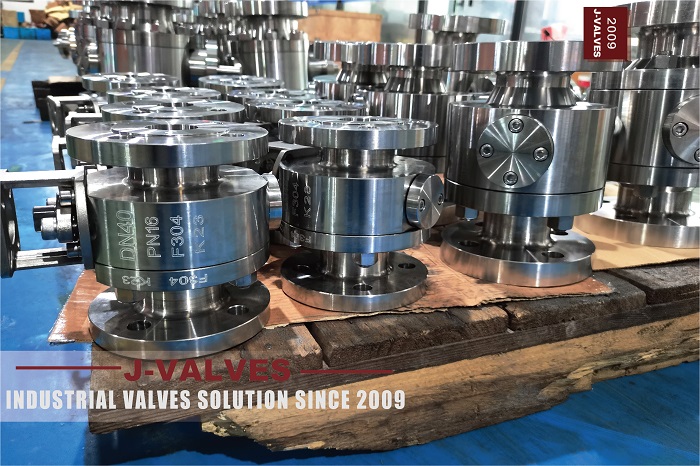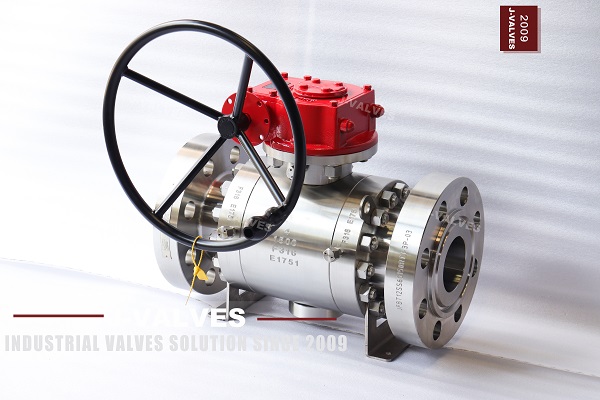


Pneumatic trunnion mounted ball valves are common industrial valves widely used in fluid transmission systems requiring precise flow control and high reliability. Thanks to their unique structural design, they play a vital role in industries such as petroleum, natural gas, chemical processing, and water treatment.
What is a Pneumatic Trunnion Mounted Ball Valve?
A pneumatic trunnion mounted ball valve is an automatically controlled ball valve in which the internal ball is supported by trunnions mounted on the valve body, ensuring stable positioning of the ball during valve opening and closing. A pneumatic actuator is attached to the ball valve to deliver accurate on-off operation.
Compared with conventional floating ball valves, pneumatic trunnion mounted ball valves offer superior sealing performance and durability, making them particularly suitable for high-pressure and high-temperature applications.
Key Design Features of Pneumatic Trunnion Mounted Ball Valves
Trunnion Support Structure
The core design feature of pneumatic trunnion mounted ball valves is the trunnion support system. The ball is fixed to the valve body via trunnions, preventing floating under pressure. In contrast to floating ball valves, this design reduces operating torque and enhances valve stability, ensuring extended service life and reliable sealing especially under high-pressure conditions.
Pneumatic Actuator
Equipped with a pneumatic actuator, pneumatic trunnion mounted ball valves can automatically open or close in response to control signals. Driven by compressed air, the actuator responds quickly to control commands for precise on-off control. This automated operation minimizes manual intervention, improving system efficiency and safety.
Sealing Design
Pneumatic trunnion mounted ball valves typically adopt soft-seated or metal-seated designs to ensure tight shut-off under various operating conditions. Soft sealing is commonly used in low-pressure environments, while metal sealing is suitable for high-temperature and high-pressure applications. The selection of sealing materials directly impacts the valve’s durability and performance.
Valve Body Material and Corrosion Resistance
Valve bodies of pneumatic trunnion mounted ball valvesare generally manufactured from high-strength alloy steel, stainless steel, or carbon steel, delivering excellent corrosion resistance, high-temperature resistance, and pressure-bearing capacity. These materials enable stable operation in demanding industrial environments.
Leak-Proof Design
Leakage prevention is a key design focus for pneumatic trunnion mounted ball valves, especially in high-pressure and high-temperature applications. Precision-machined sealing surfaces maintain long-term sealing effectiveness in both open and closed states, reducing the risk of valve leakage.
Working Principle of Pneumatic Trunnion Mounted Ball Valves
The working principle of pneumatic trunnion mounted ball valves is simple and efficient. When the pneumatic actuator receives an open/close control signal, compressed air drives the piston within the actuator, which in turn rotates the valve ball through a linkage rod. Supported by trunnions, the ball remains stable without floating during rotation, guaranteeing precise sealing and flow control.
Valve Open: The bore of the ball aligns with the fluid path in the pipeline, allowing unobstructed fluid flow.
Valve Closed: The ball rotates so that its bore is no longer aligned with the fluid path, achieving full shut-off and stopping fluid flow.
Advantages of Pneumatic Trunnion Mounted Ball Valves
High Sealing Performance
The trunnion support system eliminates potential sealing issues associated with conventional floating ball valves. The design ensures consistent and stable sealing in both open and closed positions, effectively preventing leakage especially under high-pressure and high-temperature conditions.
Low Operating Torque
With the ball supported by trunnions, pneumatic trunnion mounted ball valves feature lower operating torque than floating ball valves, facilitating easier operation, especially for large-bore and high-pressure applications.
Automated Control
Ball valves fitted with pneumatic actuators enable automatic on-off control, reducing manual operation and improving system efficiency and safety. Pneumatic control provides rapid response, ideal for applications requiring quick action.
High Reliability and Durability
Featuring robust structural design and high-quality materials, pneumatic trunnion mounted ball valves operate stably for extended periods in harsh working conditions with low maintenance costs.
Applications of Pneumatic Trunnion Mounted Ball Valves
Pneumatic trunnion mounted ball valvesare widely used across various industries, especially those demanding efficient and reliable flow control. Typical applications include:
Oil & Gas: Flow control during the extraction, transportation, and processing of oil and gas.
Chemical Industry: Regulation of chemical flow to prevent leakage and ensure operational safety.
Water Treatment: Flow regulation in water treatment plants and pipeline networks.
Power Industry: Flow control for cooling water and steam in power generation facilities.
How to Select the Right Pneumatic Trunnion Mounted Ball Valve
When selecting a pneumatic trunnion mounted ball valve, the following key factors should be considered:
Valve Size and Pressure Class: Ensure the valve size and pressure class meet system requirements.
Valve Body Material: Choose corrosion-resistant and high-temperature-resistant materials based on the application environment to maintain stability under extreme conditions.
Seal Type: Select a sealing design matching system needs — soft sealing for low-pressure environments and metal sealing for high-temperature and high-pressure conditions.
Automation Control Requirements: Determine whether an automated control system is needed to improve operational efficiency.
Conclusion
With superior sealing performance, low operating torque, and high reliability, pneumatic trunnion mounted ball valves have become indispensable key components in industrial fluid control systems. They deliver stable flow control and ensure efficient, safe system operation across industries including petroleum, chemical processing, and water treatment.