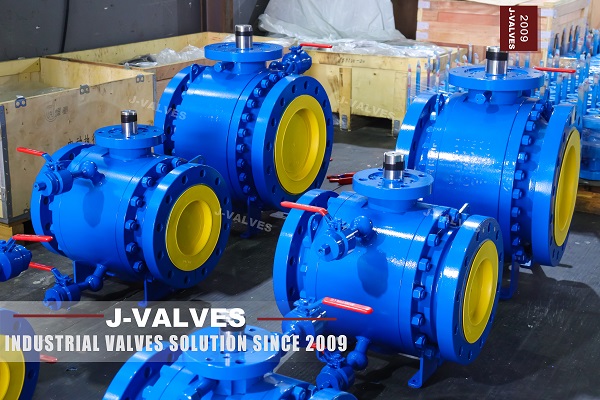
CHINA J-VALVES Offers Various High-quality I ndustrial Ball Valves
J-VALVES, a distinguished professional ball valve manufacturer rooted in China, takes pride in its extensive product portfolio. Our offerings span a wide range, including trunnion-mounted ball valves, floating ball valves, high-temperature ball valves, high-pressure ball valves, metal-sealed ball valves, ultra-low temperature ball valves, DBB ball valves, Three-way And Four-way Ball Valve, and fully welded ball valves. Each product is a testament to our commitment to precision engineering and reliable performance. Meticulously crafted, they are designed to not only meet but exceed the most stringent industrial demands, ensuring stable operation even under extreme conditions. This enables us to provide our clients with high-value services and makes our valves widely sought-after in industries.
Product Category
Contact Us

-
J-VALVES-Q667F
-
J-VALVES
Overview of the J-VALVES anti-static fully welded ball valve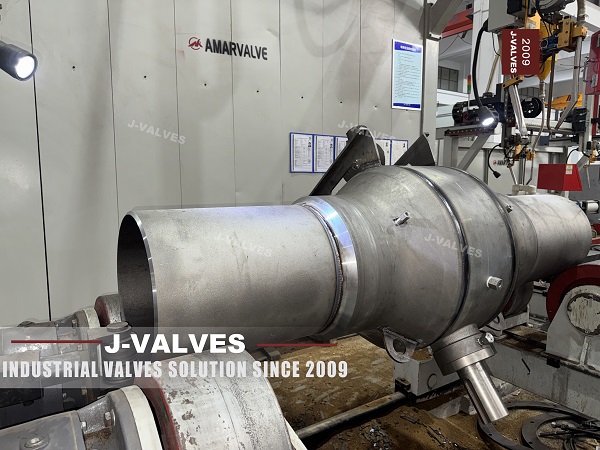
A ball valve is a device for holding a charged ball inside an insulated pocket. The ball turns on bearings that are often lined with a polymer, it seals against seats that are almost always a polymer, and the medium flowing past it generates static charge by friction. Unless something conducts that charge to the body, it accumulates on the ball until it finds a path, and the path it finds is a spark across the seat.
The anti-static device is the something. It is a small metal element, usually a spring loaded plunger, that bridges the gap between the ball and the stem and between the stem and the body, so that the ball is electrically connected to the shell. It is not a grounding strap and it does not connect the valve to earth; that is the installer's job. It makes the ball part of the body, and the body is then grounded once by the piping.
This valve is a welded trunnion ball valve from two to fifty six inches, in classes 150 to 2500, with the anti-static device as a standard feature rather than an option. On a welded body the device matters more than on a flanged one, because the parts that carry the charge cannot be reached after the shell is closed, and the only proof that they work is a measurement taken at the factory.
Design and Construction
The body is a welded shell: a pipe section with a forged end at each side, circumferential seams, and no joint that opens. The ball runs on an upper and a lower trunnion in bearings, the seats sit in pockets at each end, and the stem passes through the top flange into a stuffing box. The ends are butt weld or socket weld, and the body materials run from A105 carbon steel to 304, 316 and alloy steel.
The electrical path is built into that assembly. A plunger in the stem bears on the ball, a second element connects the stem to the body, and the two together make a continuous circuit from the ball to the shell. The plunger has to be spring loaded so that it keeps contact as the ball moves and as the parts wear, and it has to be positioned where the ball surface is smooth rather than where a seat sits.
What insulates the ball is not one thing but several. The seats are polymer on a soft seated valve, and they sit against the ball on both sides. The trunnion bearings are often polymer lined, which isolates the ball at both ends of its axis. The packing around the stem is polymer or graphite, and the graphite is conductive while most polymers are not. And on a coated ball, the coating itself may be less conductive than the steel under it.
That list is why an anti-static device is not a single part but a set of decisions. Each insulating element has to be bridged, and the bridge has to survive the movement of the ball and the wear of the seats. A device that only bridges the stem to the body leaves the ball isolated by its bearings; a device that only bridges the ball to the stem leaves the stem isolated by its packing.

The Spring Is Not The Path
The phrase anti-static spring suggests that a spring is what does the work. A spring is a shape, not a material property: a stainless spring is a conductor and a polymer coated one is not, and either way the spring's job is to keep the contact closed, not to be the conductor. The conductor is the metal path through the plunger and the stem, and the spring's only role is to hold it in touch.
| Insulating Element | What It Isolates | How It Is Bridged | Can It Be Renewed In A Welded Body |
|---|---|---|---|
| Soft seat, both sides | The ball from the body through the seats | Not bridged; the seats are meant to insulate | Yes, through the injection ports or by cutting out |
| Trunnion bearing | The ball from the body at both ends of its axis | A plunger through the stem, or a conductive bearing | No, the bearings are inside the shell for life |
| Stem packing | The stem from the body at the gland | A conductive packing, or a plunger below the packing | Yes, from the top flange |
| Ball coating | The ball surface from the plunger | Contact on an uncoated band, or a conductive coating | No |
Read the fourth column as the reason this page exists. On a flanged or three piece valve, a failed anti-static device can be replaced at the next shutdown by opening the body. On a welded body it cannot. The device is installed once, at assembly, and after that the only thing anyone can do is measure it and hope the measurement was honest.
The measurement itself is simple and is often skipped. A resistance meter is connected between the ball and the body, and between the stem and the body, with the valve at least part open so that the ball is not seated, and the readings are recorded. What the limit should be is a matter for the standard and the order, and what matters here is that a number exists on the test sheet rather than a tick in a box.
There is a second reason to measure rather than assume. The device depends on contact pressure, and contact pressure depends on assembly. A plunger that was set with the ball at mid travel may lose contact when the ball is fully open, and a valve that is anti-static at mid travel and not at the ends is a valve that will fail the measurement on the day somebody checks it properly.
Technical Specifications
The table below follows the factory data with the usual corrections. The standard is limited to the range where it applies, the temperature is marked as material dependent, and the anti-static line is written as a measurable requirement rather than as a feature.
| Item | Value |
|---|---|
| Size range | 2 inch to 56 inch, DN 50 to DN 1400 |
| Pressure class | Class 150 to Class 2500, PN 20 to PN 420 |
| Temperature | Minus 46 to plus 200 Celsius, material and seat dependent |
| Body | Forged A105 carbon steel, 304 or 316 stainless, or alloy steel |
| Body construction | Welded shell, no body joint |
| Ball | Hardened stainless or alloy steel, coated on request |
| Stem | Stainless or alloy steel, with anti blow out shoulder |
| Seat | PTFE or RPTFE, or a metal seat for higher temperature |
| Packing | Graphite, wire reinforced, conductive |
| Anti-static | Ball to stem and stem to body, measured and recorded |
| Ends | Butt weld to ASME B16.25, socket weld on small sizes |
| Face to face | ASME B16.10 for the size and class |
| Operation | Handwheel, pneumatic, or electric |
| Blow out proof stem | Shoulder retained by the body, not by the gland |
| Design standard | API 6D and ASME B16.34, API 608 within DN 600 and Class 600 |
| Test standard | API 6D and API 598, plus the continuity measurement |
| Fire test | API 607 and ISO 10497, on the design |
| Coating | Three layer polyethylene or fusion bonded epoxy, internals bare |
Two lines are worth separating from the rest. The anti-static line is written as a measurement because a feature cannot be inspected in a sealed body, and a recorded number is the only evidence that survives. The blow out proof line is separate because it is a different safety function: the stem is retained by a shoulder on the body rather than by the gland, so that pressure cannot eject it if the gland is removed.
Standards and Compliance
The anti-static requirement comes from API 6D, which requires a device that maintains electrical continuity between the ball, the stem and the body, and from the purchaser's specification, which usually adds the measurement points and the acceptance value. The fire requirement comes from API 607, and the two are frequently confused because both are described as safety features in the same paragraph of a data sheet.
| Document | What It Requires | What It Does Not Say |
|---|---|---|
| API 6D | Electrical continuity between ball, stem and body | The exact measurement method or value |
| API 608 | The same requirement, inside its size and class range | Anything above DN 600 or Class 600 |
| API 607 and ISO 10497 | A fire test of the design | Anything about static |
| ASME B16.34 | Wall and ratings | The electrical path |
| API 598 | Shell and seat test at ambient | Continuity, which is a separate check |
| IEC 60079 | Hazardous area equipment requirements | The valve, which is not electrical equipment |
| The purchase order | The measurement points and the limit | Everything above, unless it is written down |
The confusion worth naming is between anti-static and grounding. A valve with a working anti-static device has its ball connected to its body, and its body is connected to earth only if the piping is bonded and the flanges, if there are any, are jumpered. A welded valve is bonded to the pipe by its own welds, which is a genuine advantage: there is no flange bolt to carry the bonding current, and no jumper to forget.
Manufacturing Process
The anti-static elements are fitted during assembly, which on a welded body means before the last seam is closed. The plunger goes into the stem, the stem goes into the body, the second element goes into the top of the stem or into the body around it, and the assembly is checked for continuity before the ball is finally positioned. After that the ends are welded and the internals are sealed in.
The sequence is the reason the device cannot be an afterthought. A valve assembled without its plunger cannot have one fitted later without cutting the shell, and a valve whose plunger was left out by mistake will pass every pressure test and fail the one measurement nobody performs at site. The assembly procedure has to include the continuity check as a hold point rather than as a final inspection.
The stem itself is machined with a shoulder that bears on the body, so that the stem cannot be ejected by pressure even with the gland removed. That shoulder is also part of the electrical path on some designs, which is convenient but not sufficient: a shoulder that bears on a bearing or a bushing may be isolated by the bushing, and the continuity still has to be measured rather than assumed.

Quality Control and Testing
The continuity measurement is the central test on this page. It is taken with the valve part open, between the ball and the body, and between the stem and the body, and both readings are recorded against the valve serial number. A reading that is high or open means the device is not in contact, and the remedy at that point is to open the valve before it ships, not after it is installed.
The pressure tests come next and are unchanged: shell at the class pressure, seats in both directions with the cavity monitored, and a low pressure seat check on a soft seated valve. A valve can pass all of those with a broken anti-static device, which is exactly why the continuity check is a separate line on the test sheet rather than a note under the pressure test.
The fire test is a design test rather than a unit test, and it is worth stating what it does and does not prove. A valve that has passed API 607 has shown that its design keeps a seal after a fire, which on a soft seated valve means the metal seat has taken over from the polymer. It says nothing about the anti-static device, which may be destroyed in the same fire, and nothing about the actuator.

Applications and Industry Service
The services that need this device most are the ones with a low conductivity medium moving fast. Light hydrocarbons, gases, and products that have been filtered or freshly distilled all generate charge, and the charge accumulates wherever the fluid rubs against a surface. A ball valve in that service is a capacitor with a polymer dielectric, and the anti-static device is what stops it discharging through the seat.
Loading arms, tank farm manifolds, road and rail loading, and gas letdown stations are the usual locations. They share a second feature as well: they are places where the valve is operated frequently, so the device has to survive thousands of cycles rather than a few. A plunger that loses contact after a hundred operations is worse than none, because the maintenance plan assumes it works.
The welded body fits those services for its own reason. A loading line with a flange leak is a fire, and the welded body removes the flange. The consequence is that the anti-static device is sealed in, which makes the factory measurement the only one there will ever be, and makes the choice of device a decision about the twenty years after it.

Installation, Operation and Maintenance
The valve is welded in and the shell becomes part of the pipe. That makes the body grounded through the pipeline, provided the pipeline is bonded, which is the installer's responsibility. On a line with insulating joints or with flanges at the tie-in, the bonding has to be checked separately, because a valve that is anti-static internally and isolated externally is still a charged ball.
Commissioning includes a continuity check at site where the equipment allows it. The measurement is taken between the stem and the body at the top, which is reachable, and between the ball and the body if the valve can be reached through a port. That second measurement is the one that matters and the one that is usually impossible, which is why the factory record has to be kept with the valve documents.
Operation is unchanged by the device. Maintenance is limited to what can be reached: the packing from the top, the seats through the injection ports, the drive as a unit. The anti-static device is not on that list, because it cannot be reached, and the practical consequence is that a valve with a failed device is a valve with a limitation that nobody discovers until an incident review.
How to Specify and Order
An order for this valve has to state the measurement, the medium and the standard. The measurement is the only acceptance criterion for the anti-static feature, and the medium is what decides whether the feature is critical or merely prudent. The standard is a correction, because the range on this page runs past the limit of API 608.
| Line on the Order | What to Write | Why It Matters |
|---|---|---|
| Anti-static | The measurement points, the method and the limit | It is the only proof, and it cannot be repeated |
| Measurement record | A reading per valve, against the serial number | A tick in a box is not a measurement |
| Medium conductivity | Whether the service is a low conductivity product | It decides how much the device matters |
| Bonding | Who bonds the body to earth, and how | Anti-static is internal, grounding is external |
| Design standard | API 6D, with 608 only inside DN 600 and Class 600 | A certificate outside the scope proves nothing |
| Stem retention | Blow out proof shoulder, and what retains it | It is a separate safety function from anti-static |
| Seat | Polymer or metal, with the temperature | The seat is the main insulator |
| Packing | Conductive graphite, or a bridged gland | The packing is the second insulator |
| Ends | Butt weld or socket weld, and the pipe wall | The bevel follows the pipe |
| Fire test | Whether the design is tested, and to which standard | It does not cover the anti-static device |
FAQ
Q: What does an anti-static device actually do in a ball valve?
A: It connects the ball electrically to the body. The ball sits on polymer lined bearings and seals against polymer seats, so it is insulated from the shell, and the medium flowing past it builds up charge that has nowhere to go. A spring loaded plunger through the stem bridges the insulation, so the charge reaches the shell and from there the grounded piping.
Q: Is a spring the conductor?
A: No. The spring keeps the contact closed as the ball moves and the parts wear; the conductor is the metal path through the plunger and the stem. A stainless spring conducts, a coated or polymer seated one does not, and a device that relies on the spring alone will lose contact as soon as the travel takes the plunger off its seat.
Q: Why does a welded body make this more important?
A: Because the device cannot be replaced. On a three piece or flanged valve, a failed plunger can be renewed at a shutdown by opening the body. On a welded body the device is installed at assembly and sealed in, so the measurement taken at the factory is the only one there will ever be, and a missing plunger passes every pressure test.
Q: Is anti-static the same as grounding?
A: No. Anti-static makes the ball part of the body. Grounding connects the body to earth. A valve can be perfectly anti-static and still isolated if the piping is not bonded, which is why a line with insulating joints or flange isolation needs its bonding checked separately. A welded valve is bonded to the pipe by its own welds, which removes one of the usual failure points.
Q: Does the fire test cover the anti-static device?
A: No. API 607 is a test of the valve design in a fire, and on a soft seated valve it demonstrates that the metal seat takes over when the polymer is destroyed. It says nothing about the anti-static plunger, which may itself be damaged in the same fire, and nothing about the actuator. The two features are independent and should be specified independently.



Hot Products


News
A Ball Valve Does Not Warm Evenly: Thermal Shock, Distortion And The Leak That Only Exists At Start-Up
A slug of hot or cold liquid need not crack a ball valve. It bends the body first, moves the seat pockets, and the leak closes once the wall evens out.
Read More
A Ball Valve Is A Tuning Fork: Vibration, Fretting And The Joints That Only Hold By Friction
A ball valve holds seat, stem and body joint by preload alone. Vibration turns that preload into micro-motion, and the wear arrives with no cycle at all.
Read More
Urea Plant Ball Valves: The Wetted Path Survives Only While Oxygen Is Being Fed To It
Carbamate at 150 bar and 185 C eats stainless 50 times faster once the passive film starves. The valve cavity is where the oxygen runs out first.
Read More
Stiction: What A Ball Valve Becomes When Nobody Turns It
A valve that stood closed for years has not worn out. The seat has bonded to the ball, and the first stroke is a step, not a ramp. What the trace shows.
Read More