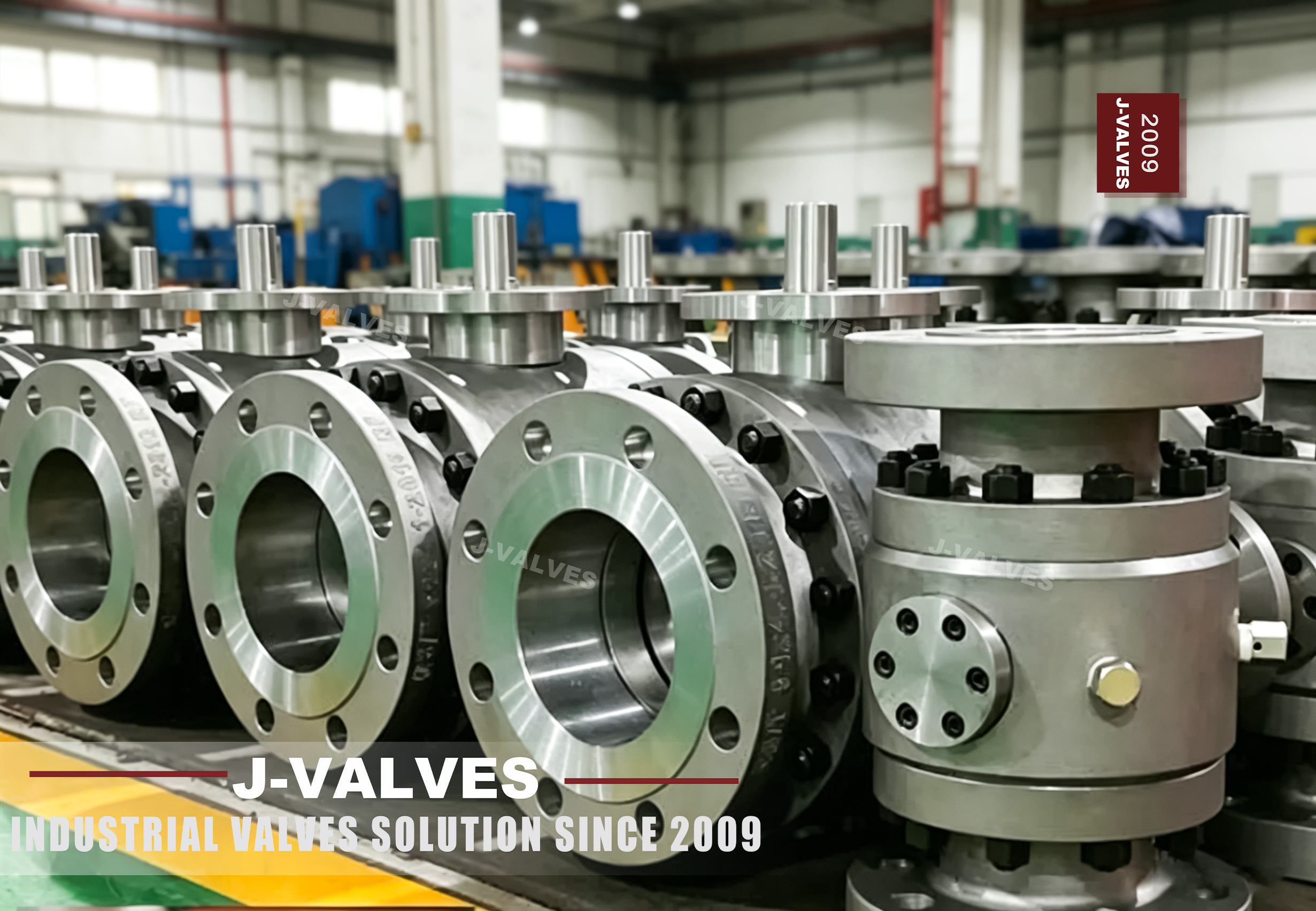
In high-pressure, high-wear and high-safety industrial scenarios such as oil & gas transportation, chemical processing and LNG terminals, the performance of flange trunnion ball valves directly affects the operational safety, maintenance cost and overall service life of fluid control systems. With over a decade of technical expertise and field verification worldwide, J-VALVES API 6D flange trunnion ball valve has become the preferred solution for large-scale industrial projects. It effectively solves common pain points of conventional valves including leakage, insufficient structural strength and seal failure, setting new benchmarks for valves working under high-pressure conditions.
1. Precision Forging & International Certifications: Solid Safety Foundation for High-Pressure Service
Demanding high-pressure environments require superior materials and manufacturing craftsmanship. Unlike ordinary cast valves, our flange trunnion ball valves are manufactured with integral forging technology, using premium forged steel materials including A105 and LF2. Multiple heat treatment processes eliminate internal stress thoroughly. Compared with cast counterparts, forged valve bodies are free from defects like porosity and cracks, delivering far higher structural strength. The valves are rated for pressure classes from Class 150 to 2500LB, capable of withstanding continuous high-pressure impact and eliminating leakage risks at the source.
All products fully comply with and exceed stringent standards including API 6D, ASME B16.34, ISO 9001 and CE. We implement strict full-process quality control: PMI material inspection for raw materials, comprehensive pressure tests for valve body and seats, as well as optional fire safety and low-temperature tests. Complete production and testing records ensure full lifecycle traceability, making our valves fully qualified for harsh working conditions in petrochemical, oil and gas industries.
2. Optimized Structural Design: Zero Leakage & Superior Durability
Conventional floating ball valves are prone to ball displacement, seal abrasion and sealing failure under high pressure. J-VALVES has upgraded the internal structure to build a reliable sealing system. The valve features a top and bottom trunnion mounted ball structure, which prevents radial movement of the ball. Pressure from pipelines is evenly distributed via trunnions, reducing operating torque and wear on sealing components significantly.
Equipped with Dual Piston Effect (DPE) seats, the seats are pressed firmly against the ball by medium pressure to achieve bidirectional sealing. The valves maintain bubble-tight zero leakage even under full differential pressure. The upstream seat relieves cavity pressure automatically while the downstream seat forms a secondary sealing barrier for enhanced safety. Pre-loaded spring seats compensate for seal face wear over time, extending service life and realizing maintenance-free operation for long-distance high-pressure pipelines, which greatly cuts down later maintenance costs.
In addition, the valves are fitted with anti-blowout stem, a mandatory safety configuration complying with API 6D standards. The stem is firmly locked even under full operating pressure, completely preventing stem ejection and adding an extra layer of safety protection.
3. Custom Solutions & Full Lifecycle Services: Adapt to Diverse Global Working Conditions
Standard universal valves can hardly meet the requirements of complex operating conditions with varied media, temperatures, pressure levels and installation environments. J-VALVES provides tailored solutions based on customers’ actual working conditions. We offer F316 stainless steel valve bodies for corrosive media, LF2 material for ultra-low temperature LNG service, and can integrate electric/pneumatic actuators to build intelligent fluid control valves as required.
Over the years, our API 6D flange trunnion ball valves have been widely applied in numerous benchmark projects across the globe. Multiple Class 600 large-bore trunnion ball valves have served cross-border natural gas transmission pipelines, operating stably for more than 8 years in remote areas and resisting frequent pressure and temperature fluctuations. Our custom cryogenic models work reliably at -196℃, serving as core emergency shut-off equipment in LNG terminals with outstanding sealing performance, winning high recognition from clients worldwide.
Beyond customized products, we deliver full lifecycle support services, including on-site installation guidance, operation & maintenance training and after-sales repair, helping customers eliminate concerns in actual operation.
Selecting a valve for high-pressure industrial fluid control means choosing long-term operational safety. Supported by rigorous manufacturing standards, innovative technology and professional all-round services, J-VALVES API 6D flange trunnion ball valves act as reliable partners in harsh high-pressure environments, safeguarding fluid transmission systems for global oil & gas, chemical and LNG projects.