
J-VALVES · Ball Valve Manufacturer · Wenzhou, China info@j-valves.com +86-13600648865

API 6D ball valve selection guide

News

Home News How to Apply the Right Globe Valve in the Right Situation?
Inquire

The stainless steel globe valve belongs to the forced seal type valve, so when the valve is closed, pressure must be applied to the valve flap to force the sealing surface not to leak. From the emergence of self-sealing valves, stainless steel globe valve media flow direction is changed from the top of the valve flap into the valve cavity, then under the action of media pressure, the force to close the valve is small, while the force to open the valve is large, the diameter of the valve stem can be reduced accordingly.


Here is the content list:

  • How to operate the globe valve

  • The selection principle of globe valve


How to operate the globe valve?


To open and close the stainless steel globe valve, the force should be smooth and not impact. Some impact opening and closing of high-pressure globe valve components have taken into account that this impact force and general globe valve can not be equivalent. When the shut-off valve is fully open, the handwheel should be reversed a little, so that the thread between the tight, so as not to loosen the damage. When the pipeline is first used, more internal dirt, you can slightly open the shut-off valve, the use of the high-speed flow of media will be washed away, and then gently close, open again, so repeat many times, flush clean dirt, and then put into normal operation. Normally open stainless steel globe valve, the sealing surface may be sticky with dirt, close also to use the above method to flush it clean, and then formally close the tight.
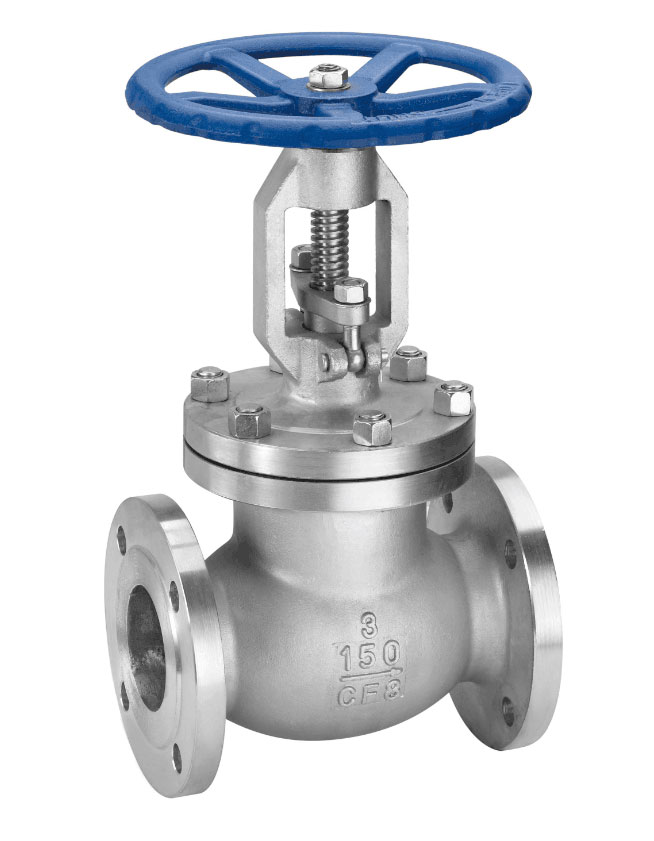

Stainless Steel Flange Globe Valves


The selection principle of globe valve


1. High temperature, high-pressure media pipeline or device on the appropriate choice of stainless steel globe valve. Such as thermal power plants, nuclear power plants, petrochemical systems, high-temperature, high-pressure pipelines.


2. Usually used in the pipeline on the flow resistance requirements are not the strict pipeline. That is, where the pressure loss is not considered.


3. A wide selection of small valves.


4. There is flow regulation or pressure regulation, but the requirements for regulation accuracy are not high, and the diameter of the pipeline is relatively small, such as nominal through the ≤ 50mm of the pipeline, which should be used.


5. Alumina Bayer production in the desilicon workshop, easy to coking pipeline, easy to choose the valve body separate type, the seat can go at the carbide sealing vice of the DC type globe valve or DC type globe valve.


6. Urban construction of water supply, heating engineering, nominal through the smaller pipeline, stainless steel globe valve can be used, such as nominal through the pipeline less than 150mm.


If you want to know more about stainless steel globe valves, please visit our company's official website. Our company's official website is https://www.ballvalvess.com/. We are ready to answer all your questions about stainless steel globe valves. We will be glad to provide you with better service, high-quality products, and competitive prices! We are committed to providing you with stainless steel globe valves. We look forward to hearing from you, and we believe we have what it takes to provide you with a perfect shopping experience! Thank you for your time.


Related Products

Explore the Valves in This Article
Nominal Size: 1 inch / DN25, range 1/4 to 12 inch Pressure Class: ASME Class 150, 19.6 bar at 38°C; Class 300 optional Body Material: ASTM B148 C95800 nickel aluminum bronze Body Type: Two piece, bolted Ball: C95800, SS316 hard faced optional Stem: C95800 or SS316, blowout proof Seat: PTFE, RPTFE, PPL, or reinforced PTFE Packing: PTFE or graphite combined packing End Connection: Threaded NPT / BSPT, flanged RF to ASME B16.5 optional Service Temperature: -29°C to +150°C standard, +200°C high temperature version Seawater Velocity Limit: About 6 m/s clean, 4.5 m/s with sand Design Standard: API 608, ASME B16.34 Test Standard: API 598, ISO 5208 Operation: Lever standard, pneumatic or electric optional
Size Range: 2 to 56 inch (DN50 to DN1400) Pressure Class: ASME Class 150 to 2500 / PN20 to PN420 Body Material: WCB, LCB, CF8, CF8M, CF3M, duplex, alloy steel Ball: Stainless with hard chrome, ENP, Stellite or tungsten carbide overlay Seat: PTFE, RPTFE, PPL, or metal Stellite faced Seat Arrangement: SPE, DPE (DIB-1), or combination (DIB-2) Packing: Live loaded graphite, ISO 15848-1 qualified Fire Test: API 607, also API 6FA and ISO 10497 Fugitive Emission: ISO 15848-1 class B or A, with temperature and cycle class stated Face to Face: ASME B16.10 short or long pattern End Connection: Flanged RF / RTJ to B16.5 and B16.47, butt weld to B16.25 Features: Double block and bleed, sealant injection, anti-static, anti-blowout stem Design Standard: API 6D, API 608, ASME B16.34, ISO 14313 Operation: Lever, gear, pneumatic, electric, hydraulic, gas over oil Sour Service: NACE MR0175 available
Nominal Size: 1-1/2 inch / DN40 Pressure Rating: 1000 WOG (68.9 bar cold working, non-shock) Body Type: Three piece, bolted end caps, four body bolts Body Material: ASTM A351 CF8 (304), CF8M (316) optional Ball: CF8, polished Ra 0.4 µm, full or reduced bore Seat: PTFE, RPTFE, PPL, or Stellite faced metal Body Gasket: PTFE to 180°C, graphite above Packing: PTFE V-ring to 200°C, graphite above End Connection: NPT, BSP, socket weld B16.11, butt weld B16.25, flanged RF Actuator Mounting: ISO 5211 F05 / F07 pad Air Supply: 0.4 to 0.7 MPa clean dry air Service Temperature: -29°C to +260°C, seat dependent Design Reference: MSS SP-110 general purpose, ASME B16.34 body wall Test Standard: API 598, ISO 5208
Nominal Size: 3/4 x 1/2 inch (DN20 x DN15), reduced bore Pressure Class: ASME Class 600 / PN100, 102.1 bar at 38°C Body Material: ASTM A182 F51 forged duplex, UNS S31803 PREN: Approximately 35 Ball: F51 with HVOF tungsten carbide or Stellite overlay Stem: F51, SS316 or 17-4PH, blowout proof Seat: RPTFE, Devlon, PEEK, or Stellite faced metal Bolting: B8M Class 2, alloy 718, or B7M for sour service End Connection: NPT, BSP, socket weld ASME B16.11, butt weld ASME B16.25 Bleed Port: Cavity bleed with plug or needle valve, lockable option Service Temperature: -29°C to +300°C, seat dependent Design Standard: API 6D, API 608, ASME B16.34 Test Standard: API 598, ISO 5208, cavity test through bleed port Sour Service: NACE MR0175 available