J-VALVES · Ball Valve Manufacturer · Wenzhou, China info@j-valves.com +86-13600648865

API 6D ball valve selection guide

News

Home News API Standards Reveal Advantages of 2×1.5" N10276 Floating Ball Valves
Inquire

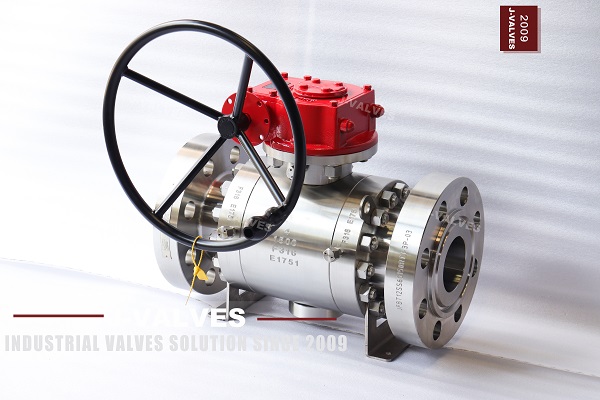
API compliant UNS N10276 Hastelloy C276 2×1.5 inch high pressure floating ball valve finished goods, J‑VALVES industrial special valves

1. API Standards Specification for High‑Pressure Floating Ball Valves

API 6D and API 608 are globally‑recognized authoritative standards for ball valves used in oil, gas and chemical industries, laying down mandatory requirements for shell rating, sealing performance, fire‑safe construction, anti‑blowout stem, anti‑static feature and material traceability.

The 2×1.5" N10276 high‑pressure floating ball valve is engineered and type‑tested in accordance with API specifications, meeting acceptance requirements for international projects and third‑party inspection.

Floating ball valves achieve tight shut‑off by media pressure pushing ball against seats, delivering reliable sealing contact force under high‑pressure service and reaching ANSI Class VI bubble‑tight leakage performance. For this reduced‑bore 2×1.5" size, optimized flow‑path geometry reduces pressure drop for process piping.


2. Core Benefits of UNS N10276 (Hastelloy C‑276) Alloy Material

Superior Corrosion Resistance for Severe Service

UNS N10276, also known as Hastelloy C‑276 nickel‑molybdenum‑chromium alloy, is proven for resisting chloride ion, wet chlorine, sulfuric acid and mixed reducing‑oxidation corrosive fluids.

Compared to conventional 316L stainless steel, N10276 delivers far better resistance against pitting and crevice corrosion under high‑temperature high‑pressure environments with Cl⁻ and H₂S. It is widely deployed in fine chemical plants, FGD desulfurization, offshore oil‑gas and hydrometallurgy systems.

Body and ball forgings of this 2×1.5” floating ball valve are manufactured from UNS N10276 per ASTM specifications with full material test reports (MTR), preventing material substitution risk, extending service life and cutting unplanned downtime for corrosive process lines.

Structural Integrity Under High‑Pressure per API Requirements

Built to API 6D requirements: anti‑static assembly, anti‑blowout stem and fire‑safe design are included. Spring‑energized seat seals maintain consistent sealing performance during pressure fluctuation while lowering operating torque for cyclic high‑pressure piping service.

The reduced‑bore 2×1.5” configuration meets process requirements of large inlet with smaller outlet without extra pipe reducers, simplifying system layout.


3. Typical Application for 2×1.5" N10276 High‑Pressure Floating Ball Valve

1. Oil & Gas: Offshore platforms and well‑site process lines with H₂S and chloride‑bearing media

2. Fine Chemical: Process loops with strong acid, chloride salts and wet chlorine

3. Environmental FGD: Flue‑gas desulfurization corrosive piping networks

4. Hydrometallurgy & seawater desalination for high‑salinity corrosive conditions


4. J‑VALVES Delivery Assurance for Special Alloy Valves

Founded in 2009, J‑VALVES manufactures special industrial valves. All N10276 high‑pressure floating ball valves undergo API‑required factory acceptance tests, including shell test, seat leakage test and NDT inspection with complete documentation. RF flange connection is available, manual, pneumatic or electric actuators can be customized upon request.

Related Products

Explore the Valves in This Article
Top entry trunnion mounted ball valve with a one piece body that removes the bolted body joint from the pressure boundary. Seats and seals are serviced through the top cover without cutting the valve out of the pipeline. Nominal Size: 1 inch to 36 inch Pressure Class: ASME Class 150 to 2500 Body Material: WCB, LCC, CF8M, CF3M, A105 forged Body Style: One piece top entry Ball & Stem: CF8M or F316 with ENP coating Seat Material: PTFE, RPTFE, PEEK or metal End Connection: Flanged RF / RTJ, butt weld Operation: Gear, pneumatic or electric actuator Maintenance: In line, through the top cover Design Standard: API 6D / ISO 14313 Test Standard: API 598, API 607 fire safe Options: Sealant injection, cavity relief, extended stem
A high pressure trunnion mounted ball valve for Class 900 to 2500 service, built to API 6D PSL3 with a forged or cast body, spring loaded seats, double block and bleed and sealant injection ports. Suited to wellheads, gas gathering and high pressure process isolation.   Nominal Size: 2 inch to 24 inch (DN50 to DN600) Pressure Class: ASME Class 900 / 1500 / 2500 Body Material: A105 forged, WCB cast, A182 F316, F51 duplex Ball & Stem: A182 F316 with ENP or hard chrome Seat Material: PTFE, RPTFE, PEEK or metal to metal End Connection: Flanged RF / RTJ, butt weld, hub Operation: Gear, pneumatic or electric actuator Design Standard: API 6D / ISO 14313, ASME B16.34 Test Standard: API 598, shell 1.5x and seat 1.1x Fire Safe: API 607 / API 6FA Material Certificate: EN 10204 3.1 with heat number traceability Temperature Range: -29 C to +200 C, trim dependent
Nominal Size :3/4"~60" (DN20~DN1500) Pressure Class :150LB~2500LB (PN10~PN420) Temperature Range: -20℃ ~ +200℃ Body Material :C95800 Nickel Aluminum Bronze Ball Material :C95800 Nickel Aluminum Bronze Stem Material :C95800 Nickel Aluminum Bronze Seat Material :PTFE, RPTFE, PEEK End Connection :Flanged RF Operation: Manual (Lever / Gear), Pneumatic, Electric Design Standard: ASME B16.34, API 608 Test Standard: API 598, ISO 5208 Face to Face: ASME B16.10 Fire Safe Standard: API 607
Nominal Diameter: 0.5" (DN15) Pressure Class: Class 300 (PN50) Temperature Range: -29℃ to +425℃ Body / Bonnet: ASTM A216 WCB cast carbon steel Ball: A105N / WCB with hard chrome plating, or 304 / 316 stainless steel (optional) Stem: 410 / 420 stainless steel or 17-4PH precipitation hardening stainless steel Seat: PTFE, RPTFE, PPL (reinforced PTFE) Sealing Materials: PTFE / RPTFE / PPL (seat), flexible graphite or PTFE (stem packing) End Connection: Flanged (RF Raised Face, conforming to ASME B16.5) Operation: Lever (90° open/close, with optional locking hole) Design Standards: ASME B16.34, API 608 Inspection & Test Standard: API 598 Face-to-Face Dimension: In accordance with ASME B16.10