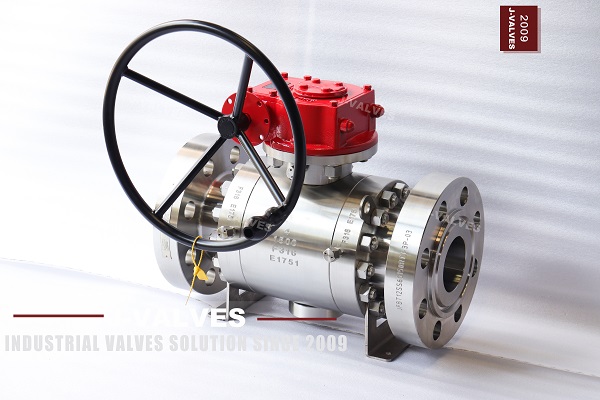


• Flange Design: Flanged end ball valves feature flanges at both ends, allowing for easy installation and removal without the need to cut or weld pipes. This design ensures a secure connection and minimizes the risk of leaks.
• Operation: The ball valve operates with a quarter-turn mechanism, providing quick and reliable shutoff. The flange design allows for easy access for maintenance and inspection.
• Ease of Installation: Flanged valves are relatively easy to install and can be done without specialized tools.
• Accessibility: Flanged connections provide easy access for maintenance and inspection, reducing downtime.
• Leak Prevention: The flange design provides a secure seal, minimizing the risk of leaks.
• Flexibility: Flanged valves can be easily replaced or repaired without the need to cut or weld pipes.
• Space Requirements: Flanged connections require additional space for the flanges, which may not be available in all installations.
• Complexity: The design is slightly more complex, which can increase manufacturing and maintenance costs.
• Weight: Flanged valves are generally heavier than welded valves, which can be a consideration in certain applications.
• Oil and Gas: Flanged ball valves are commonly used in oil and gas pipelines where reliability and ease of maintenance are critical.
• Chemical Processing: These valves are also used in chemical processing plants where frequent maintenance and inspection are necessary.
• Water Treatment: Flanged ball valves are ideal for water treatment plants where easy access for maintenance is crucial.
• Welded Design: Welded end ball valves feature welded connections at both ends, providing a permanent and secure bond with the piping system. This design eliminates the need for flanges, reducing the overall size and weight of the valve.
• Operation: The ball valve operates with a quarter-turn mechanism, providing quick and reliable shutoff. The welded design ensures a strong and durable connection.
• Strength and Durability: Welded connections provide a strong and durable bond, suitable for high-pressure and high-temperature applications.
• Reduced Size and Weight: The absence of flanges reduces the overall size and weight of the valve, making it suitable for space-constrained applications.
• Leak Prevention: Welded connections eliminate potential leak points, ensuring a secure seal.
• Cost-Effective: Welded valvesare generally more cost-effective due to the simpler design and reduced material requirements.
• Installation Complexity: Welded valves require specialized welding equipment and expertise for installation.
• Maintenance Challenges: Welded connections make maintenance and inspection more difficult, as the valve cannot be easily removed without cutting the pipe.
• Initial Cost: While welded valves are generally more cost-effective in the long run, the initial investment in welding equipment and expertise can be higher.
• Oil and Gas: Welded ball valves are commonly used in oil and gas pipelines where high strength and durability are required.
• Power Generation: These valves are also used in power plants where space is limited and high-pressure applications are common.
• Chemical Processing: Welded ball valves are suitable for chemical processing plants where a strong and durable connection is necessary.
| Feature | Flanged End Ball Valves | Welded End Ball Valves |
| Ease of Installation | Easy, no specialized tools required | Requires specialized welding equipment and expertise |
| Maintenance | Easy access for maintenance and inspection | More difficult to maintain and inspect |
| Strength and Durability | Secure connection, minimizes leaks | Strong and durable, eliminates potential leak points |
| Space Requirements | Requires additional space for flanges | Reduces overall size and weight |
| Cost | Moderate to high | Generally more cost-effective in the long run |
| Applications | Oil and gas, chemical processing, water treatment | Oil and gas, power generation, chemical processing |