J-VALVES · Ball Valve Manufacturer · Wenzhou, China info@j-valves.com +86-13600648865

API 6D ball valve selection guide

News

Home News Stainless Steel L Port 3 Way Ball Valve | ANSI Class 150 | J-Valves
Inquire

Port 3 Way Ball Valve

I.Introduction

In modern industrial piping systems, flexibility and efficiency are critical. The stainless steel L port 3 way ball valve has become a preferred solution for fluid control where flow diversion or mixing is required. Designed to meet ANSI Class 150 standards, J-Valves provides reliable performance across a wide range of applications including oil & gas, chemical processing, water treatment, and HVAC systems.


II.What is an L Port 3 Way Ball Valve?

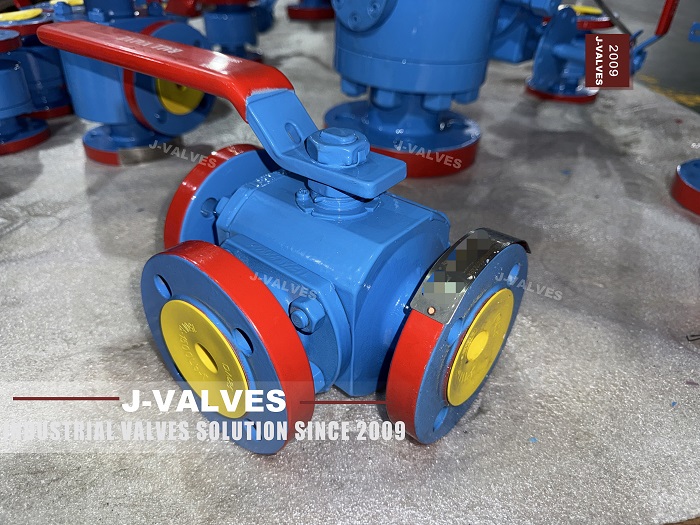
An L port 3 way ball valve features an L-shaped bore inside the ball, allowing flow to be directed between different ports. Unlike T-port valves, L-port valves are primarily used for flow diversion, making them ideal for switching between two flow paths without mixing.


III.Key Advantages of Stainless Steel L Port 3 Way Ball Valve

1. Flexible Flow Control

The L-port design allows operators to easily redirect flow between two outlets. This makes it suitable for systems that require switching operations without shutting down the entire pipeline.

2. Corrosion Resistance

Manufactured from high-quality stainless steel (such as CF8 or CF8M), the valve offers excellent resistance to corrosion, making it suitable for harsh environments and aggressive media.

3. Reduced System Complexity

By integrating multiple flow paths into a single valve, the 3-way design eliminates the need for multiple valves, reducing installation costs and simplifying pipeline layouts.

4. Reliable Sealing Performance

With precision-machined components and high-performance sealing materials (PTFE or reinforced seats), J-Valves ensures tight shut-off and minimal leakage.

5. ANSI Class 150 Compatibility

Designed in accordance with ANSI standards, this valve guarantees compatibility with standard piping systems, ensuring easy installation and maintenance.


IV.Applications

The stainless steel L port 3 way ball valve is widely used in:

  • Oil and gas pipeline switching systems

  • Chemical processing plants

  • Water treatment facilities

  • HVAC and utility systems

  • Food and pharmaceutical industries


V.Why Choose J-Valves?

J-Valves focuses on delivering reliable industrial valve solutions with:

  • Strict quality control standards

  • Advanced CNC machining technology

  • Customization options for different applications

  • Competitive pricing with global export experience


VI.Conclusion

The Stainless Steel L Port 3 Way Ball Valve (ANSI Class 150) is a cost-effective and efficient solution for flow diversion applications. Its durable construction, flexible functionality, and reduced system complexity make it an excellent choice for modern industrial systems.

Related Products

Explore the Valves in This Article
Nominal Size: 1 inch / DN25, range 1/4 to 12 inch Pressure Class: ASME Class 150, 19.6 bar at 38°C; Class 300 optional Body Material: ASTM B148 C95800 nickel aluminum bronze Body Type: Two piece, bolted Ball: C95800, SS316 hard faced optional Stem: C95800 or SS316, blowout proof Seat: PTFE, RPTFE, PPL, or reinforced PTFE Packing: PTFE or graphite combined packing End Connection: Threaded NPT / BSPT, flanged RF to ASME B16.5 optional Service Temperature: -29°C to +150°C standard, +200°C high temperature version Seawater Velocity Limit: About 6 m/s clean, 4.5 m/s with sand Design Standard: API 608, ASME B16.34 Test Standard: API 598, ISO 5208 Operation: Lever standard, pneumatic or electric optional
Size Range: 2 to 56 inch (DN50 to DN1400) Pressure Class: ASME Class 150 to 2500 / PN20 to PN420 Body Material: WCB, LCB, CF8, CF8M, CF3M, duplex, alloy steel Ball: Stainless with hard chrome, ENP, Stellite or tungsten carbide overlay Seat: PTFE, RPTFE, PPL, or metal Stellite faced Seat Arrangement: SPE, DPE (DIB-1), or combination (DIB-2) Packing: Live loaded graphite, ISO 15848-1 qualified Fire Test: API 607, also API 6FA and ISO 10497 Fugitive Emission: ISO 15848-1 class B or A, with temperature and cycle class stated Face to Face: ASME B16.10 short or long pattern End Connection: Flanged RF / RTJ to B16.5 and B16.47, butt weld to B16.25 Features: Double block and bleed, sealant injection, anti-static, anti-blowout stem Design Standard: API 6D, API 608, ASME B16.34, ISO 14313 Operation: Lever, gear, pneumatic, electric, hydraulic, gas over oil Sour Service: NACE MR0175 available
Nominal Size: 1-1/2 inch / DN40 Pressure Rating: 1000 WOG (68.9 bar cold working, non-shock) Body Type: Three piece, bolted end caps, four body bolts Body Material: ASTM A351 CF8 (304), CF8M (316) optional Ball: CF8, polished Ra 0.4 µm, full or reduced bore Seat: PTFE, RPTFE, PPL, or Stellite faced metal Body Gasket: PTFE to 180°C, graphite above Packing: PTFE V-ring to 200°C, graphite above End Connection: NPT, BSP, socket weld B16.11, butt weld B16.25, flanged RF Actuator Mounting: ISO 5211 F05 / F07 pad Air Supply: 0.4 to 0.7 MPa clean dry air Service Temperature: -29°C to +260°C, seat dependent Design Reference: MSS SP-110 general purpose, ASME B16.34 body wall Test Standard: API 598, ISO 5208
Nominal Size: 3/4 x 1/2 inch (DN20 x DN15), reduced bore Pressure Class: ASME Class 600 / PN100, 102.1 bar at 38°C Body Material: ASTM A182 F51 forged duplex, UNS S31803 PREN: Approximately 35 Ball: F51 with HVOF tungsten carbide or Stellite overlay Stem: F51, SS316 or 17-4PH, blowout proof Seat: RPTFE, Devlon, PEEK, or Stellite faced metal Bolting: B8M Class 2, alloy 718, or B7M for sour service End Connection: NPT, BSP, socket weld ASME B16.11, butt weld ASME B16.25 Bleed Port: Cavity bleed with plug or needle valve, lockable option Service Temperature: -29°C to +300°C, seat dependent Design Standard: API 6D, API 608, ASME B16.34 Test Standard: API 598, ISO 5208, cavity test through bleed port Sour Service: NACE MR0175 available