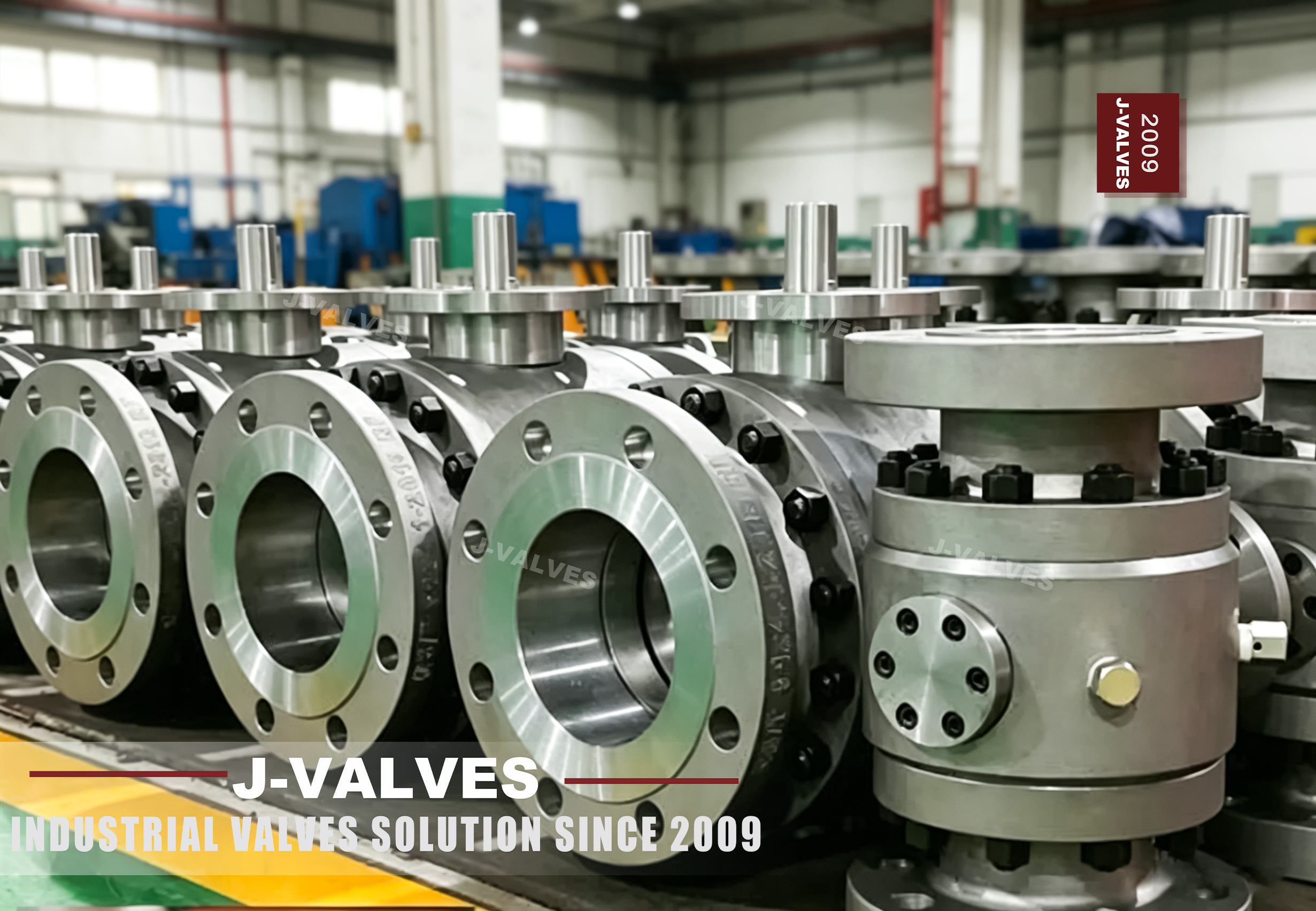
A ball valve is the opening and closing member driven by the valve stem, and rotational movement around the axis of the ball valve. Also can be used for fluid regulation and control, its ball core and welded carbide metal seat have a strong shear force, especially for the media containing fibers, and micro solid particles. The multi-way ball valve in the pipeline can not only flexibly control the merging, diverging, and switching of the flow direction, but also close any channel and make the other two channels connected. Stainless steel ball valves are more durable and less prone to rusting than ordinary ball valves. Our stainless steel ball valves are not only reliable in quality but also very affordable in price.
Here is the content list:
What is a ball valve?
Features of ball valve
What is a ball valve?
The ball valve was introduced in the 1950s, with the rapid development of science and technology, production processes and product structure continue to improve, and in a short period of 40 years, has rapidly developed into a major type of valve. In western industrialized countries, the use of ball valves is rising year by year. In China, stainless steel ball valves are widely used in petroleum refining, long-distance pipelines, chemical, paper, pharmaceutical, water conservancy, electric power, municipal, steel, and other industries, and occupy a pivotal position in the national economy.
It has the action of rotating 90 degrees, and the plug body is a sphere with a circular through-hole or channel through its axis. Stainless steel ball valve in the pipeline is mainly used to do cut-off, distribution, and change the flow direction of the medium, it only needs to use the operation of 90 degrees of rotation and a very small turning torque to close tightly. The ball valve is most suitable for use as an on/off, cut-off valve, and V-shaped ball valve.

Features of ball valve
Since the spool of the hard seal ball valve is alloy steel spray welded and the seal ring is alloy steel overlay welded, the hard seal ball valve does not produce much wear and tear when it is opened and closed. Since the seal of the hard seal ball valve is manually ground until the spool and the seal ring are perfectly matched before use. So its sealing performance is reliable. Since the seal of the hard seal ball valve uses a spring at the bottom of the seal to make the seal and the spool hold tightly together, it switches very lightly when the external force exceeds the preload of the spring. Stainless steel ball valves have been widely used in various sectors such as petroleum, chemical, power generation, paper making, atomic energy, aviation, rocket, etc., as well as in people's daily life.
Stainless steel ball valve has a simple and compact structure, reliable sealing, easy maintenance, sealing surface and the spherical surface is often in a closed state, not easy to be eroded by the medium, easy to operate and maintain, suitable for water, solvents, acids, and natural gas and other general working media, mainly used to cut off or connect the medium in the pipeline, but also for fluid regulation and control. Compared with other kinds of valves, the ball valve has angular stroke output torque, opens quickly, smoothly, and reliably, and is widely used.
Our company has developed a wide range of stainless steel ball valves which are tested extensively before leaving the factory to ensure quality. These stainless steel ball valves are durable. You can consider our cost-effective products. Our company website is https://www.ballvalvess.com/, please feel free to inquire about us!