


Introduction
In modern oil and gas transportation systems, pipeline safety and maintenance efficiency are critical factors for reliable operation. Double Block and Bleed (DBB) Ball Valves are widely used in upstream, midstream, and downstream pipeline applications because they provide reliable isolation, pressure control, and safe maintenance conditions.
Designed according to API 6D requirements, a high-quality API 6D DBB Ball Valve must meet strict standards related to valve structure, pressure testing, sealing performance, and pipeline installation requirements. These design requirements ensure that the valve can provide safe isolation under high-pressure and demanding operating conditions.
As a professional valve manufacturer, J-VALVES focuses on the development and manufacturing of advanced Pipeline Ball Valves, including DBB ball valves designed according to API, ASME, and international pipeline standards. Through strict quality control and engineering expertise, J-VALVES provides reliable solutions for oil & gas, LNG, petrochemical, and energy industries.
1. Understanding API 6D Standard for DBB Ball Valves
API 6D – Specification for Pipeline and Pipeline Valves is one of the most important international standards for valves used in pipeline transportation systems. It defines requirements for valve design, manufacturing, inspection, testing, and documentation.
For a DBB ball valve used in pipeline applications, API 6D focuses on ensuring:
Reliable pressure containment
Tight shut-off performance
Safe isolation capability
Long-term operational reliability
Compatibility with pipeline systems
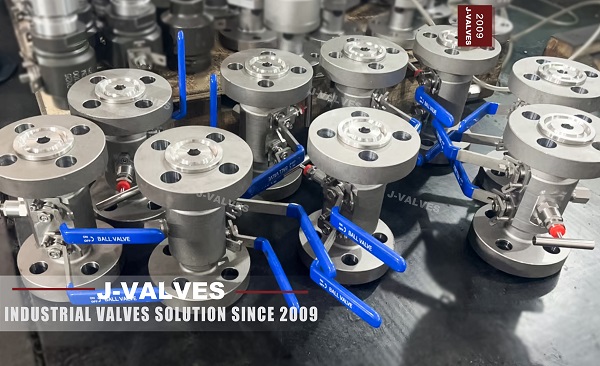
An API 6D DBB Ball Valve is designed to provide two independent sealing barriers between the upstream and downstream sides, with a bleed function allowing trapped cavity pressure to be safely released.
This design allows operators to verify valve isolation before maintenance activities.
2. API 6D Double Block and Bleed Function Requirements
The primary advantage of a DBB ball valve is its ability to achieve double isolation with pressure relief capability.
A standard DBB configuration includes:
Double Block Function
The valve provides two separate sealing points between the pipeline and valve cavity.
Benefits include:
Improved personnel safety
Reduced risk during maintenance
Enhanced system reliability
Prevention of unwanted fluid migration
Bleed Function
The bleed system allows operators to:
Release trapped pressure inside the valve cavity
Confirm sealing performance
Perform valve maintenance safely
For critical pipeline systems, the DBB function helps reduce operational risks and improves inspection efficiency.
3. API 6D DBB Ball Valve Structural Requirements
The structural design of an API 6D DBB Ball Valve must meet strict mechanical and sealing requirements.
Full Bore Design
Pipeline ball valves commonly use a full bore design to minimize pressure loss and allow pipeline inspection tools to pass through.
Advantages include:
Low flow resistance
Reduced turbulence
Improved pipeline efficiency
Compatibility with pigging operations
This design is especially important for long-distance oil and gas pipelines.
Trunnion Mounted Ball Design
For large diameter and high-pressure applications, trunnion mounted ball valves are commonly selected.
The ball is supported by fixed shafts, reducing operating torque and improving stability.
Advantages include:
Lower operating torque
Suitable for high-pressure service
Improved sealing reliability
Extended valve service life
J-VALVES provides engineered trunnion mounted DBB ball valve solutions for demanding pipeline applications.
Double Piston Effect (DPE) Seat Design
Many API 6D DBB ball valves use double piston effect seat designs.
The seat structure allows pressure from the valve cavity to energize the sealing force, providing reliable shut-off performance.
Benefits include:
Bidirectional sealing capability
Improved leakage prevention
Enhanced safety during operation
Anti-Static and Fire Safe Design
API 6D pipeline valves require additional safety features for hydrocarbon applications.
Typical requirements include:
Anti-Static Device
The anti-static design prevents electrostatic accumulation caused by ball movement and friction.
Fire Safe Construction
Fire-safe designs ensure that the valve maintains sealing performance under fire conditions.
These features are essential for oil, gas, and petrochemical pipeline systems.
4. API 6D Pressure Testing Requirements
Pressure testing is a critical part of API 6D compliance.
Before delivery, DBB ball valves must undergo inspection and testing to verify pressure integrity and sealing performance.
Shell Test
The valve body is tested under high pressure to confirm:
Body strength
Pressure containment capability
Casting and welding integrity
Seat Leakage Test
Seat testing verifies that the valve can achieve tight shut-off.
Testing evaluates:
Upstream sealing performance
Downstream sealing performance
Valve cavity pressure relief function
Double Block and Bleed Verification
For DBB ball valves, testing confirms:
Independent sealing of both seats
Effective cavity pressure release
Reliable isolation performance
These tests ensure that the valve can safely operate in critical pipeline systems.
5. Application Requirements of API 6D Pipeline Ball Valves
Pipeline Ball Valves designed according to API 6D are widely applied in industries requiring reliable fluid transportation.
Typical applications include:
Oil and Gas Transmission Pipelines
DBB ball valves are commonly installed in:
Crude oil pipelines
Natural gas pipelines
Refined product pipelines
They provide safe isolation during:
Pipeline maintenance
Emergency shutdown
System commissioning
LNG and Cryogenic Systems
In LNG transportation and storage facilities, DBB ball valves require:
Reliable low-temperature performance
High sealing integrity
Suitable material selection
J-VALVES provides cryogenic DBB solutions for LNG applications with customized material and sealing designs.
Petrochemical and Industrial Systems
Chemical and energy facilities require valves with:
High pressure resistance
Corrosion resistance
Long operating life
API 6D DBB ball valves provide dependable flow control and isolation.
6. J-VALVES Advantages in API 6D DBB Ball Valve Manufacturing
As an experienced industrial valve manufacturer, J-VALVES specializes in designing and producing high-performance DBB ball valves for global pipeline projects.
API Standard Compliant Design
J-VALVES develops DBB ball valves according to recognized international standards, including:
API 6D
ASME B16.34
ASME B16.5
NACE MR0175 (when required)
This ensures compatibility with demanding pipeline applications.
Professional Engineering and Customization Capability
Different pipeline systems require different valve solutions. J-VALVES provides customized DBB ball valve designs including:
Floating ball valve
Trunnion mounted ball valve
Double block and bleed configuration
Metal seated ball valve
Cryogenic DBB ball valve
Customized solutions are available according to pressure class, temperature range, media characteristics, and installation requirements.
Strict Quality Control Process
J-VALVES implements comprehensive inspection procedures throughout manufacturing.
Quality control includes:
Raw material inspection
Dimensional inspection
Welding inspection
Non-destructive testing
Hydrostatic pressure testing
Seat leakage testing
Each valve is tested to ensure reliable performance before shipment.
Experience in Critical Pipeline Applications
J-VALVES DBB ball valves have been applied in various industries, including:
Oil & gas transportation
LNG facilities
Offshore platforms
Petrochemical plants
Energy infrastructure projects
With professional manufacturing experience and engineering support, J-VALVES helps customers improve pipeline safety and operational efficiency.
Conclusion
The API 6D DBB Ball Valve is a critical component for modern pipeline systems requiring safe isolation, reliable sealing, and efficient maintenance operations. Compliance with API 6D requirements ensures that the valve meets strict standards for design, pressure testing, structural performance, and pipeline application reliability.
Through advanced engineering, strict quality control, and customized manufacturing capabilities, J-VALVES delivers high-performance Pipeline Ball Valves designed for demanding oil & gas, LNG, and industrial applications worldwide.
Choosing a reliable API 6D DBB ball valve manufacturer ensures safer pipeline operation, reduced maintenance risks, and long-term system reliability.


