Introduction
In oil & gas, LNG, petrochemical, and pipeline systems, valve isolation safety is a key factor affecting equipment reliability. Although standard ball valves provide excellent shut-off performance, DBB Ball Valves (Double Block and Bleed Ball Valves) offer higher safety levels through double isolation and pressure release functions.
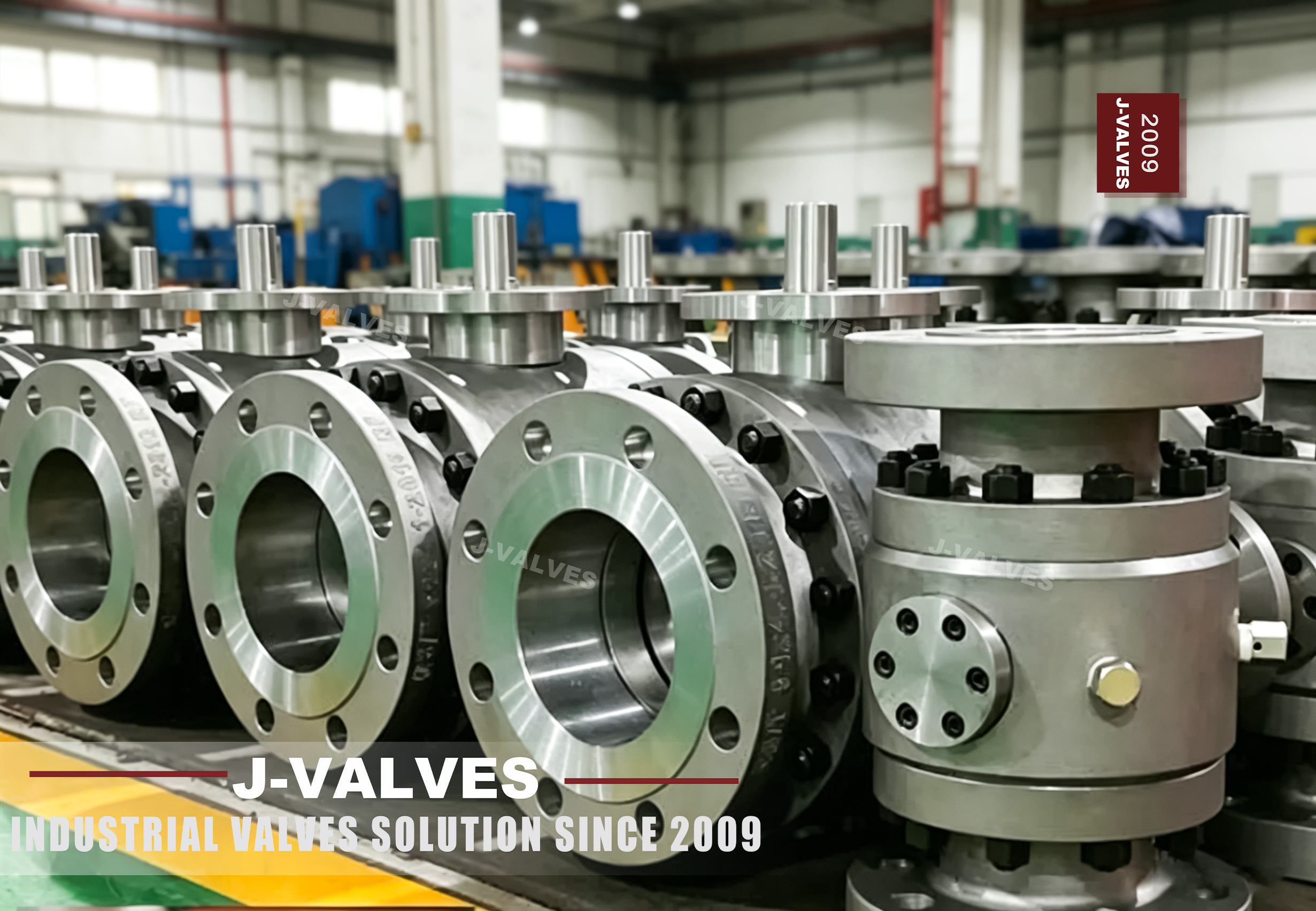
J-VALVES specializes in manufacturing high-performance API 6D DBB Ball Valves designed for critical pipeline applications with reliable sealing and long service life.
1. Single Isolation vs Double Isolation Design
Standard Ball Valve
A standard ball valve normally provides a single sealing barrier between upstream and downstream pipelines.
Advantages:
Simple structure
Easy operation
Cost-effective solution
Suitable for general shut-off applications
However, it cannot independently verify whether complete isolation has been achieved, which may create additional risks during maintenance.
DBB Ball Valve
A DBB Ball Valve integrates two independent sealing seats and a bleed system between them.
Main advantages:
Double block isolation
Pressure release capability
Isolation verification
Improved maintenance safety
The operator can release trapped pressure inside the valve cavity to confirm that both seats are sealing properly.
2. Leakage Risk Comparison
Leakage control is critical in high-pressure and hazardous fluid systems.
Standard Ball Valve
A single sealing barrier means that sealing failure may directly affect system isolation performance.
Potential risks include:
Seat wear after long operation
Difficult pressure verification
Higher maintenance requirements
DBB Ball Valve
DBB design reduces leakage risks through independent sealing barriers.
Benefits include:
Better isolation reliability
Easier pressure monitoring
Reduced risk during pipeline maintenance
For oil and gas systems, DBB ball valves provide a safer isolation solution.
3. Maintenance Advantages of DBB Ball Valve
One of the biggest advantages of a Double Block and Bleed Ball Valve is safer online maintenance.
Compared with using multiple standard valves, DBB ball valves provide:
Compact installation
Fewer pipeline components
Reduced maintenance time
Improved operator safety
They are especially suitable for applications where equipment must be isolated without shutting down the entire system.
4. Application Differences
Standard Ball Valve Applications
Standard ball valves are commonly used in:
Water systems
General industrial pipelines
Utility applications
Non-critical process systems
DBB Ball Valve Applications
DBB ball valves are preferred for critical industries, including:
Oil and gas pipelines
LNG storage and transportation
Offshore platforms
Petrochemical plants
Natural gas transmission systems
These applications require higher isolation reliability and safety performance.
5. J-VALVES Advantages in DBB Ball Valve Manufacturing
As a professional valve manufacturer, J-VALVES provides reliable DBB ball valve solutions for global pipeline projects.
API Standard Design
J-VALVES DBB ball valves are designed according to international standards, including:
API 6D
ASME B16.34
ISO 14313
This ensures compatibility with demanding pipeline applications.
Advanced Sealing Technology
J-VALVES DBB ball valves feature:
Double piston effect seat design
Reliable cavity pressure relief system
Fire-safe and anti-static structure
Low operating torque design
These features improve sealing performance and service reliability.
Strict Quality Control
Each DBB ball valve undergoes:
Material inspection
Dimensional inspection
Hydrostatic testing
Seat leakage testing
J-VALVES ensures every valve meets customer requirements before delivery.
Conclusion
The comparison of DBB Ball Valve vs Ball Valve shows that standard ball valves are suitable for general isolation, while DBB ball valves provide enhanced safety through double isolation and bleed functions.
For critical pipeline systems such as oil & gas, LNG, and petrochemical applications, API 6D DBB Ball Valves offer lower leakage risk, safer maintenance, and higher operational reliability.
With professional manufacturing experience and engineering capabilities, J-VALVES delivers high-quality DBB ball valve solutions for demanding industrial applications worldwide.