Introduction
In critical industrial pipelines, reliable isolation is essential to ensure safety, protect equipment, and enable maintenance without shutting down entire systems. The Double Block and Bleed (DBB) Ball Valve provides this solution by combining two sealing mechanisms with a bleed port, offering safe depressurization and enhanced operational security.
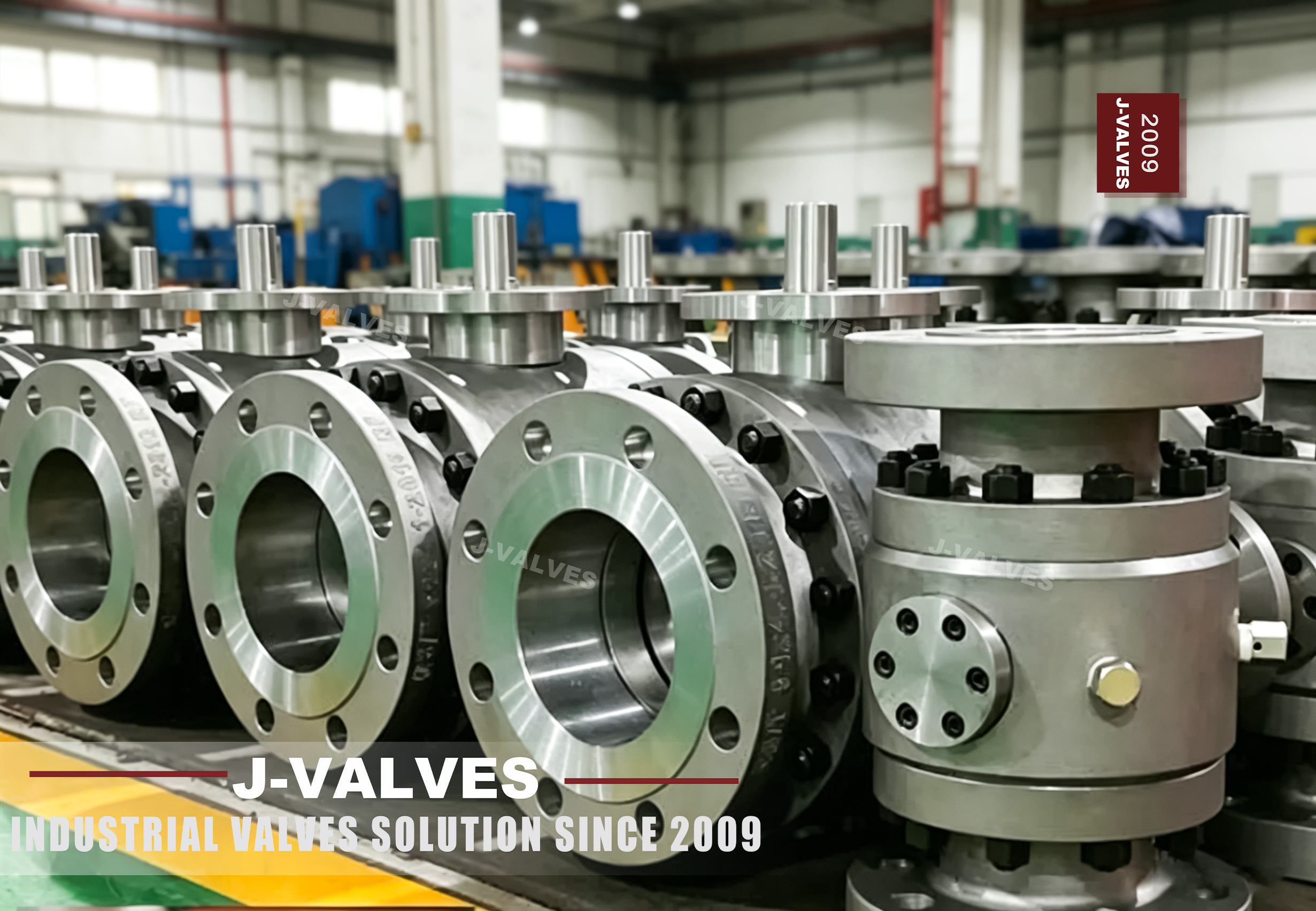
J-VALVES has specialized in manufacturing DBB ball valves since 2009, delivering durable, API- and ASME-compliant solutions for global oil & gas, LNG, petrochemical, offshore, and power generation projects.
Understanding DBB Ball Valves
A DBB ball valve integrates two balls and a bleed port between them:
1. Double Isolation: The two independent ball seats block upstream and downstream flow completely.
2. Bleed Function: The cavity between the balls can be safely vented to monitor leakage or relieve pressure.
3. Enhanced Safety: Minimizes the risk of backflow and protects maintenance personnel.
DBB ball valves come in floating and trunnion-mounted designs, suitable for high-pressure, high-temperature, and cryogenic pipelines.
Key Features
1. Reliable Double Block: Provides secure isolation in hazardous or high-pressure services.
2. API & ASME Compliance: Manufactured in accordance with API 6D, API 608, and ASME B16.34 standards.
3. Material Flexibility: Options include carbon steel, stainless steel, and C95800 Nickel Aluminum Bronze for corrosive environments.
4. Integrated Bleed Port: Ensures safe pressure release and inspection between the two ball seats.
5. Full Bore & Reduced Bore Options: Optimized for flow efficiency and pipeline integration.
6. Low Torque Operation: Precision engineering reduces operating torque and enhances service life.
Advantages Over Conventional Valves
1. Eliminates the need for separate isolation and bleed valves.
2. Reduces potential leakage points.
3. Simplifies maintenance and reduces downtime.
4. Ensures high-pressure and high-temperature reliability.
5. Improves operational safety in critical applications.
Applications
DBB ball valves are essential in sectors where safety and reliability are paramount:
1. Oil & Gas Pipelines: Isolation of critical process lines.
2. LNG Terminals: Cryogenic service with superior leak-tightness.
3. Petrochemical Plants: Secure maintenance of high-pressure equipment.
4. Power Generation: Steam, water, and cooling systems.
5. Offshore Platforms: Corrosion-resistant DBB solutions for marine environments.
J-VALVES Expertise
Since 2009, J-VALVES has become a leading manufacturer of DBB ball valves, offering:
1. Advanced Engineering: Floating and trunnion-mounted designs for superior sealing.
2. Rigorous Testing: Hydrostatic, shell, and seat leakage testing per API 598 and MSS SP-61 standards.
3. Customized Solutions: Material, pressure class, and end connections tailored to project requirements.
4. Global Project Experience: Successfully deployed in LNG storage, offshore platforms, and high-pressure pipeline networks.
Successful Project Cases
1. LNG Storage Terminals: Trunnion-mounted DBB valves for cryogenic tanks provided leak-tight isolation and safe depressurization during maintenance.
2. Offshore Oil Platforms: Floating DBB valves enhanced operational safety for utility and process pipelines.
3. Petrochemical Facilities: High-pressure DBB valves ensured safe isolation of critical equipment, reducing maintenance hazards and improving plant reliability.
Conclusion
J-VALVES DBB Ball Valves offer exceptional safety, reliability, and operational efficiency. Engineered to meet API and ASME standards, these valves deliver long-term performance in high-pressure, high-temperature, and corrosive environments. Their proven track record in LNG, offshore, petrochemical, and power generation projects makes them a preferred choice for critical pipeline isolation and maintenance safety.