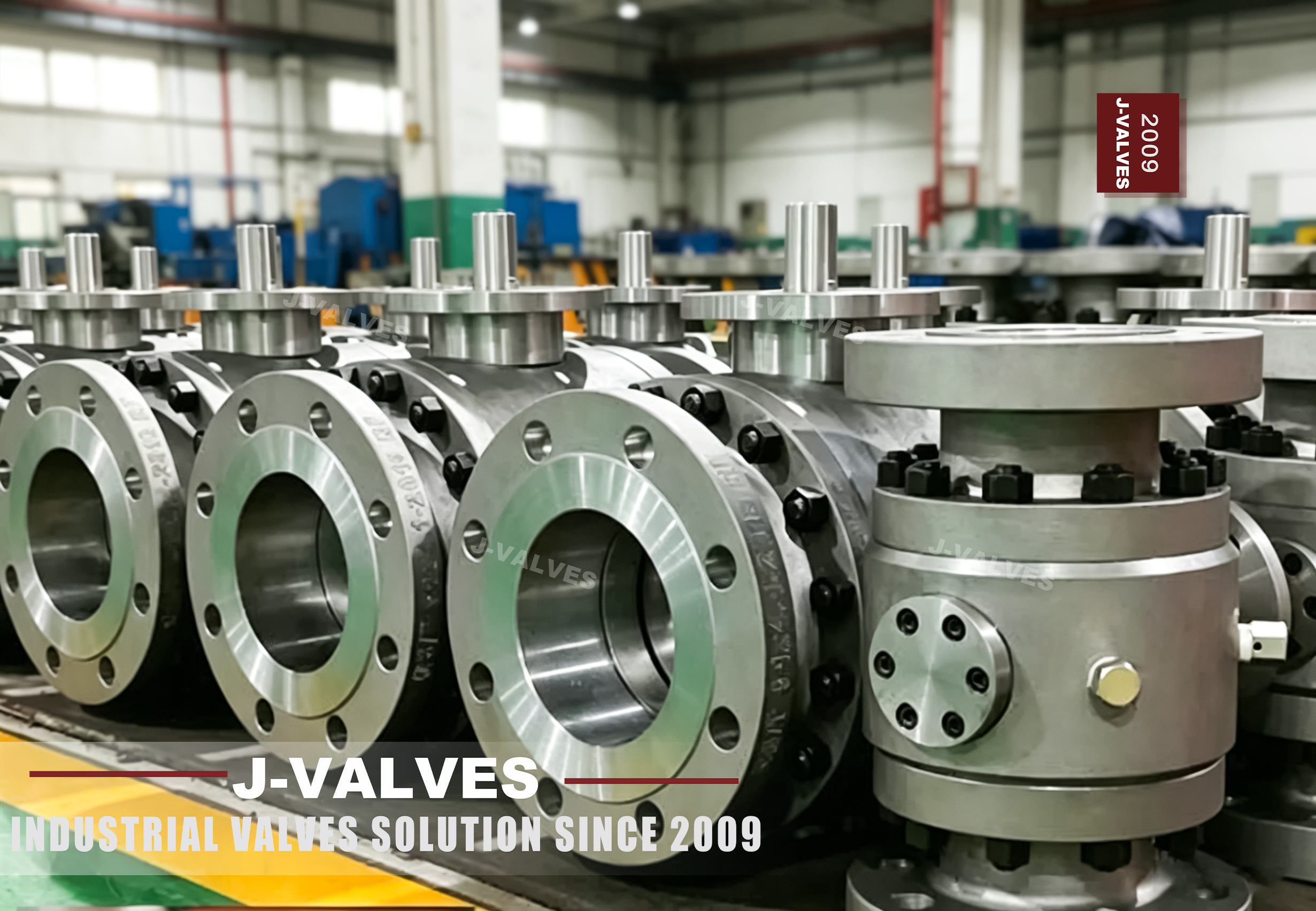
Basic Principles and Structure of DBB Ball Valves
The core function of a DBB (Double Block and Bleed) ball valve is to control the on-off of fluid through the rotation of the valve ball. Its structural design includes a ball fixed inside the valve body, with a through hole on the ball. When the through hole aligns with the pipeline, fluid can flow freely; when it is perpendicular to the pipeline, the fluid is shut off. Another key feature of DBB ball valves is their double blocking function: in the closed state, fluid on both sides of the ball can be reliably isolated, and pressure in the valve cavity can be safely released through a bleed port.
The structure of a DBB ball valve typically includes the valve body, valve ball, valve seat, valve stem, and actuator. The valve body serves as the outer shell, housing the valve ball and seat; the valve ball is the critical component for controlling fluid flow; the valve seat seals the gap between the ball and the valve body; and the valve stem connects the actuator to the ball, enabling rotational operation of the ball.
I. Key Factors for Material Selection Based on Working Conditions
(I) Fluid Characteristics
Corrosive Fluids
Working condition description: If the DBB ball valve is used to handle acidic, alkaline, or other corrosive fluids (e.g., sulfuric acid, sodium hydroxide), material selection must prioritize corrosion resistance.
Recommended materials: Stainless steel (e.g., 316L) is a common choice due to its high chromium and nickel content, which forms a dense oxide film to effectively resist corrosion. For more severe corrosive environments, nickel-based alloys (e.g., Hastelloy) or titanium alloys are preferable. These materials offer superior corrosion resistance but come at a higher cost.
Abrasive Fluids
Working condition description: Fluids containing solid particles (e.g., sand, slag) cause wear on the valve ball and seat.
Recommended materials: Hard materials are preferred, such as cemented carbides (e.g., tungsten-cobalt alloys) or ceramic coatings. These materials have high hardness and wear resistance, effectively resisting particle abrasion.
Non-Corrosive Fluids
Working condition description: For non-corrosive fluids like water or natural gas, material options are more diverse.
Recommended materials: Stainless steel remains reliable due to its corrosion resistance and sufficient strength. In cost-sensitive applications, carbon steel or cast iron can be considered, but anti-corrosion treatment is necessary.
(II) Temperature Range
High-Temperature Conditions
Working condition description: In high-temperature environments (e.g., oil cracking, chemical reactions), valve materials must withstand high temperatures without deformation or performance degradation.
Recommended materials: High-temperature alloys (e.g., Inconel) and stainless steel (e.g., 310S) are ideal, as they offer excellent oxidation resistance and mechanical strength at high temperatures.
Low-Temperature Conditions
Working condition description: In low-temperature environments (e.g., LNG storage and transportation), valve materials must maintain good toughness and strength.
Recommended materials: Low-temperature carbon steel and aluminum alloys are common choices, as they do not become brittle at low temperatures and can withstand pressure in cold environments.
(III) Pressure Rating
High-Pressure Conditions
Working condition description: In high-pressure environments (e.g., deep-sea oil and gas extraction, high-pressure chemical reactions), valve materials must resist high pressure without leakage or deformation.
Recommended materials: Carbon steel and stainless steel are preferred. Carbon steel offers high strength and toughness to withstand pressure, while stainless steel maintains good sealing performance under high pressure.
Low-Pressure Conditions
Working condition description: In low-pressure environments (e.g., urban water supply systems, low-pressure steam systems), material selection is more flexible.
Recommended materials: Cost-effective options like cast iron or plastics (e.g., PVC) are suitable, as they meet performance requirements in low-pressure environments with good economy.
(IV) Environmental Conditions
Humid Environments
Working condition description: In humid environments (e.g., offshore platforms, coastal chemical plants), valve materials must have good corrosion resistance.
Recommended materials: Stainless steel and nickel-based alloys are ideal, as they effectively resist corrosion in humid conditions.
UV-Exposed Environments
Working condition description: In outdoor environments, valves may be subject to long-term UV radiation, causing material aging.
Recommended materials: Stainless steel and aluminum alloys are preferred for their good UV resistance. For plastics, UV-resistant materials should be selected.
II. Specific Material Recommendations
(I) Stainless Steel
Stainless steel is one of the most commonly used materials for DBB ball valves, offering good corrosion resistance, strength, and toughness. Common grades include 304, 316, and 316L. Among them, 316L stainless steel, with its low carbon content, provides better resistance to intergranular corrosion, making it suitable for chemical, food processing, and other industries.
(II) Carbon Steel
Carbon steel has high strength and good toughness, enabling it to withstand high pressure and temperature. It is a cost-effective choice for cost-sensitive applications. However, in corrosive environments, carbon steel requires anti-corrosion treatment (e.g., painting or hot-dip galvanizing).
(III) Nickel-Based Alloys
Nickel-based alloys (e.g., Hastelloy, Inconel) offer excellent corrosion resistance and high-temperature performance, making them suitable for extreme corrosive environments and high-temperature, high-pressure conditions. Though costly, they are indispensable in certain specialized applications.
(IV) Titanium Alloys
Titanium alloys feature high strength, low density, and excellent corrosion resistance, making them ideal for weight-sensitive applications such as aerospace and marine engineering. Their combination of corrosion resistance and strength makes them a top choice for high-performance DBB ball valves.