


Shell test versus seat test
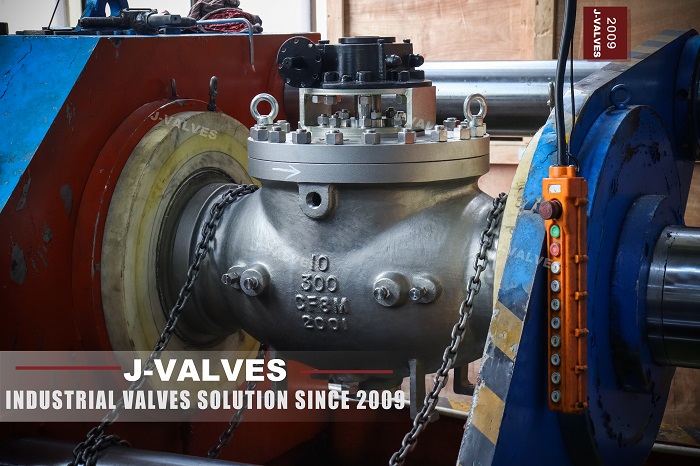
Two pressure tests are applied to every ball valve, and they answer different questions. The shell test pressurises the body cavity with the valve partly open, so the pressure acts on the body, bonnet and welds; it is the proof of structural integrity and no leakage is ever acceptable. The seat test pressurises one side of a closed valve and measures leakage past the seat or seats; it is the proof of sealing performance and is compared against an acceptance class. J-VALVES applies shell tests at 1.5 times the rated pressure and seat tests at 1.1 times the rated pressure. The two tests must not be confused, because a valve that passes the shell test with no leakage can still fail the seat test, and the seat test result is the one that decides whether the valve is fit for isolation duty.
Test pressures and durations
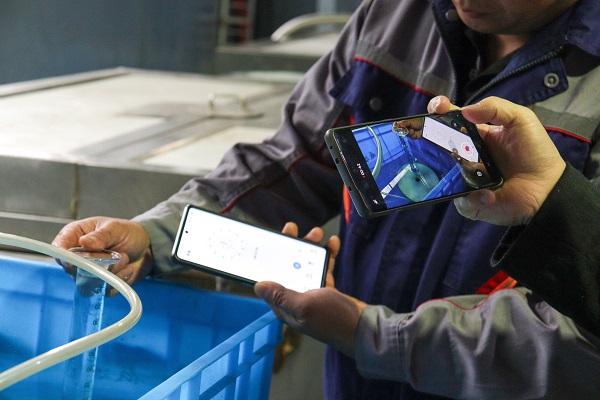
Test pressure is set by the standard and calculated from the rating at the test temperature; API 598 and ISO 5208 both work from the cold working pressure of the valve. Duration is not fixed, and in most specifications it rises with nominal size, from a short hold on small valves to around two minutes on large ones, with a minimum hold of only a few seconds on the smallest shell tests. Seat tests are run on each side of the valve in turn, so a double seated valve is tested twice. Before testing the valve is cleaned and any trapped air is removed, because air compresses and can mask a small leak. Test water is usually treated to limit corrosion, and in stainless steel valves the chloride content is controlled to avoid pitting after the test.
Leakage rate classes explained
ISO 5208 defines leakage rate classes starting at Rate A, which requires no visible leakage, then working down through progressively more tolerant classes. Rate A is the normal requirement for soft seated ball valves, because a polymer seat can genuinely seal bubble-tight. Rate B and the classes below it allow a measured leakage and are generally applied to metal seated valves, where a perfect seal cannot be achieved at every condition. API 598 uses its own acceptance criteria for ball valves, broadly similar in intent. The class must be selected before the valve is ordered, because it drives seat design, ball surface finish and, in many cases, whether a soft or a metal seat is used at all.
Double block and bleed cavity testing
For double block and bleed valves the cavity is treated as a third pressure boundary. Each seat is tested with the cavity open and monitored, so leakage past one seat cannot be balanced by the other. The cavity itself is then pressurised and the bleed point is opened to confirm that the body between the seats holds pressure and that the drain functions. This cavity test is normally run at 1.1 times the rated pressure, in line with the seat test. The result matters because the bleed point is used in service to prove that both seats are sealing before maintenance begins. Where both seats are double piston effect, the cavity must also be protected against trapped pressure, and the test record notes the relief arrangement used.
What the test certificate must show
A test certificate is only useful if it identifies the valve and the conditions. It should carry the valve tag and serial number, the size and pressure class, the body and trim materials, the relevant heat numbers, the applicable standard, the test medium, the shell and seat test pressures, the hold durations, the leakage class required and the measured result. The date, the test bench reference and the name of the inspector or witnessing body complete the record. Where a third-party witness is arranged, normally through SGS or TUV, the certificate carries the witness details. Certificates should be issued against EN 10204 3.1 where a project requires material traceability, and they should be filed with the valve serial number so the record can be retrieved years later.

Frequently Asked Questions
Why is the seat tested at 1.1 times rather than 1.5 times? The seat is not the pressure boundary. The shell test at 1.5 times the rated pressure proves the body, bonnet and welds, which must hold under all conditions. The seat only has to seal against the pressure it sees in service, so both API 598 and ISO 5208 apply 1.1 times the rated pressure. Testing a polymer seat harder would damage it.
What is the difference between Rate A and Rate B? Rate A in ISO 5208 requires no visible leakage, so the seat must be bubble-tight under the test condition. Rate B allows a small measured leakage and is normally applied to metal seated valves, where a perfectly tight seal cannot be guaranteed at every condition. The required rate is set in the specification and drives the seat design.
Is a water test or air test better? Water is used for the standard shell and seat tests because it is safe to contain and a leak is easy to see. Air or nitrogen is more sensitive, since gas passes small paths that water cannot, and it is often used as an additional check on gas service valves. Air tests carry more stored energy, so proper precautions are needed.


