


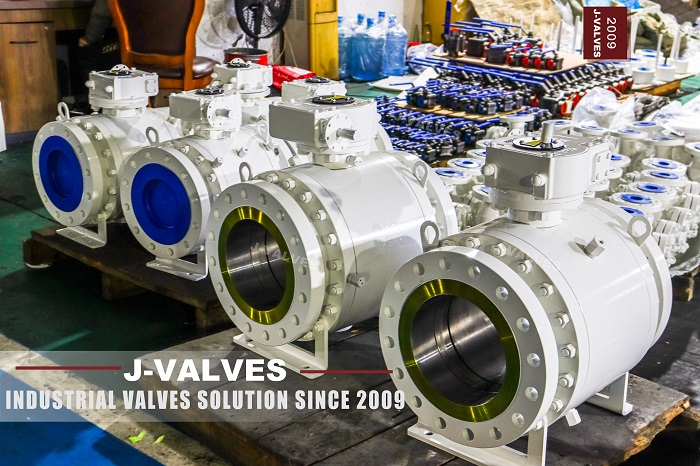
I. Significance of Two Authoritative Standards for Ball Valves
For fluid transmission systems in oil & gas and chemical industries, valve performance directly determines long‑term pipeline safety. API 6D and ASME B16.34 are two globally‑recognized industrial valve specifications. Many international engineering projects require trunnion mounted ball valves to be designed, manufactured and inspected with reference to both standards.
API 6D focuses on pipeline valve overall performance, covering face‑to‑face dimension, pressure‑temperature rating, type test, fire‑safe test, operating torque and non‑destructive examination. It is widely used for pipeline station and transmission line valve qualification. ASME B16.34 governs valve pressure‑temperature rating, body design and end connection criteria. It defines maximum allowable working pressure under different temperatures, serving as core basis for pressure‑containing body calculation.
A 600LB ASTM A105 trunnion mounted ball valve referencing both standards means its design satisfies pipeline service requirements meanwhile its pressure boundary strictly complies with ASME B16.34. It simplifies technical evaluation for overseas project owners and EPC contractors.
II. Core Advantages of Class 600LB Rating & ASTM A105 Forged Steel
Working Conditions for Class 600LB
Class 600 belongs to medium‑high pressure class. According to ASME B16.34 pressure‑temperature chart, ASTM A105 body has corresponding allowable working pressure under different operating temperatures. Thick‑walled body design improves resistance to pressure fluctuation, suitable for high‑pressure process pipelines, oil‑gas processing plants and chemical process lines.
Material Features of ASTM A105 Forged Carbon Steel
ASTM A105 is a widely‑used carbon steel forging grade for valve body and bonnet. Forged steel delivers dense internal microstructure with far fewer casting defects. It offers stable tensile strength and impact property, fit for oil, gas and water media under moderate high‑temperature service. It is a popular body material for trunnion ball valves in petrochemical and oil‑gas projects.
III. Structural Advantages of Trunnion Mounted Ball Valve
Different from floating ball valves, trunnion mounted ball valves fix the ball by upper and lower trunnion shafts. Fluid pressure load is borne by trunnion instead of compressing seat seals heavily.
1. Reasonable seal load: Reduce excessive seat wear under high pressure and extend service life.
2. Stable operating torque: Torque will not surge sharply with rising working pressure. Manual, gearbox, pneumatic and electric actuators can be matched.
3. Optional bidirectional sealing design for pipeline bi‑directional pressure service.
4. Body cavity overpressure relief function relieves thermal expansion pressure inside valve cavity to avoid overpressure risk.
IV. Key Inspections under API 6D and ASME B16.34
Valves referencing both standards shall complete critical inspections:
1. Verify pressure‑temperature rating and body wall thickness per ASME B16.34.
2. Perform body hydrostatic test and seat leakage test according to API 6D.
3. Provide material test report for ASTM A105 forging including chemical composition and mechanical properties.
4. NDE inspection such as PT / MT for forging surface defect check.
5. Optional API 607 fire‑safe qualification for fire hazard working conditions.
6. End flange dimension complies with ASME B16.5.
Note: Reference to dual standards does not automatically include extra certifications. Fire‑safe or SIL requirements shall be clearly specified during inquiry.
V. Typical Applications & Selection Tips
600LB ASTM A105 trunnion mounted ball valves referenced to API 6D and ASME B16.34 are commonly used in oil‑gas gathering pipelines, refineries, chemical process lines, power plant auxiliary systems and pipeline station block‑in service.
Practical selection suggestions:
1. Confirm medium and operating temperature; ASTM A105 carbon steel is not suitable for strong corrosive fluid.
2. Specify whether API 607 fire‑safe and anti‑static structure is required.
3. Confirm end connection: flanged or butt‑weld ends.
4. Select actuator based on API 6D measured operating torque data.
5. Request material certificates and pressure test reports from valve manufacturers.
VI. Conclusion
The 600LB ASTM A105 trunnion mounted ball valve adopts forged carbon steel body and follows API 6D pipeline valve specification together with ASME B16.34 pressure‑containing standard. It delivers reliable structure and good wear resistance for medium‑high pressure isolation service. For overseas petrochemical and oil‑gas projects, selecting valves referencing these two authoritative standards effectively reduces sealing and body failure risks on site, making it a mainstream solution for high‑pressure pipeline isolation service.


