


CHINA J-VALVES Offers Various High-quality I ndustrial Ball Valves
J-VALVES, a distinguished professional ball valve manufacturer rooted in China, takes pride in its extensive product portfolio. Our offerings span a wide range, including trunnion-mounted ball valves, floating ball valves, high-temperature ball valves, high-pressure ball valves, metal-sealed ball valves, ultra-low temperature ball valves, DBB ball valves, Three-way And Four-way Ball Valve, and fully welded ball valves. Each product is a testament to our commitment to precision engineering and reliable performance. Meticulously crafted, they are designed to not only meet but exceed the most stringent industrial demands, ensuring stable operation even under extreme conditions. This enables us to provide our clients with high-value services and makes our valves widely sought-after in industries.
Product Category
Contact Us


-
J-VALVES-Q47F
-
J-VALVES
Overview of the J-VALVES 6 inch 900LB F316 metal seated trunnion ball valve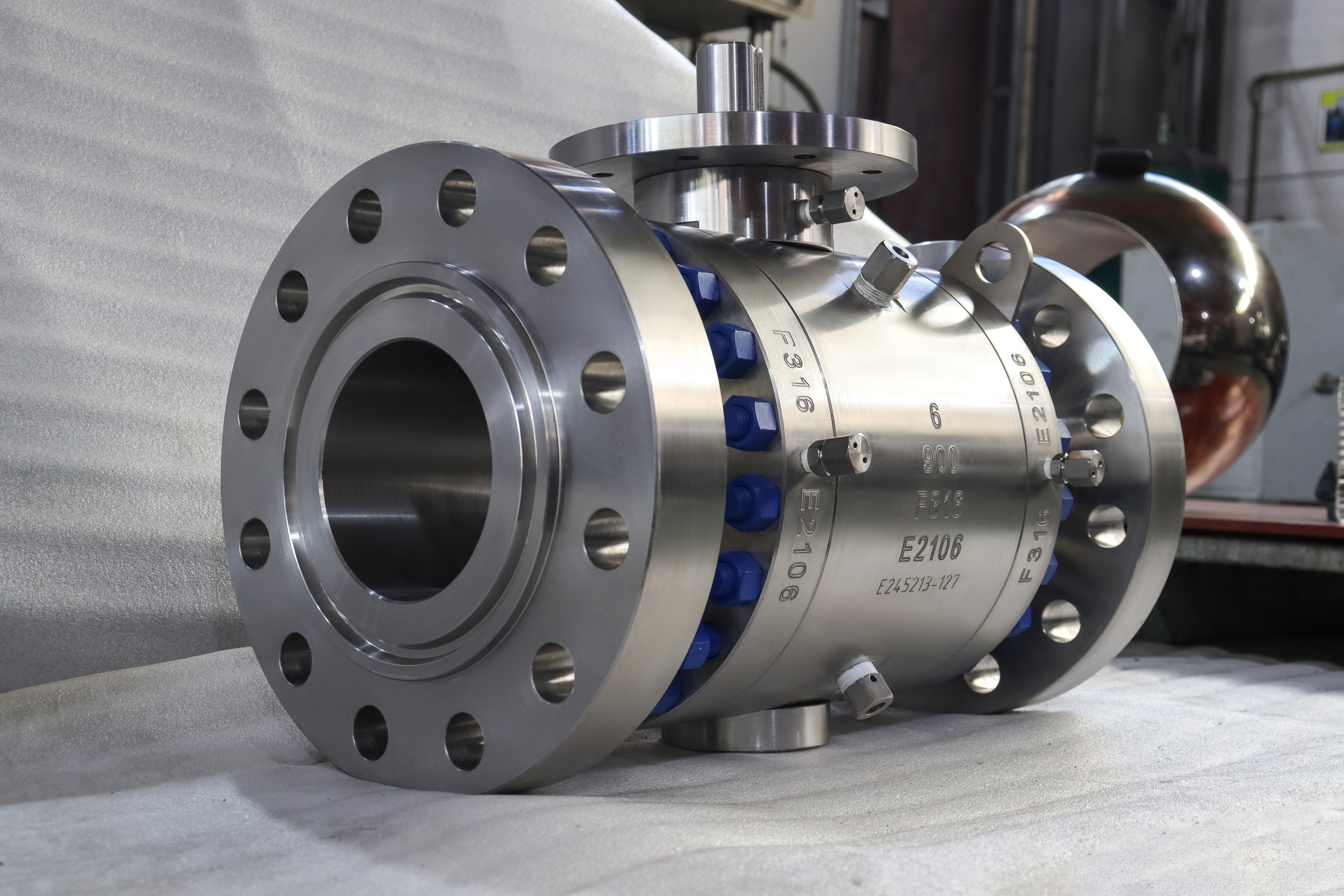
A soft seated ball valve seals because the seat material deforms into the smallest irregularity on the ball. A metal seated valve has no such luxury. There is no elastomer to flow, no PTFE to conform, and no second chance at the contact line: the seal is metal against metal across a band a few tenths of a millimetre wide, held closed by a spring and then loaded by the line pressure itself.
That changes everything about how the valve is made, and very little about how it is sold. The body is a three piece forging in A182 F316, six inch at Class 900, with the same flanges and the same face to face as any other valve of that size and class. The difference is inside: the seat ring, the facing on it, the clearance that lets it move, and the lapping that decides whether the two surfaces meet.
Class 900 is recorded as PN 150 in API 6D clause 7.2, and in group 2.2 of ASME B16.34 the rating at 38 C is 2160 psi. That is a real pressure, and it is the reason a metal seat is chosen in the first place: past a certain temperature or a certain abrasiveness, no soft insert survives long enough to be worth fitting.
This page is about the seat. What it is made of, why it needs clearance, what that clearance does as the valve heats and cools, and what acceptance actually means when the seal is metal.
Design and Construction
The ball is carried on an upper and a lower trunnion, so the pressure thrust goes into bearings and the seat is not asked to hold the ball in place. Each seat ring is a separate part, free to move a small distance along the bore axis, pushed towards the ball by a spring pack and then by the pressure acting on the back of the ring.
The clearance is the design problem. A seat ring that cannot move cannot follow the ball as the body expands; a seat ring that moves too freely will not stay square to the ball and will leak on one side. The clearance is set at assembly and it changes with temperature, because the ring and the body are not the same section and do not heat at the same rate. That is why a metal seated valve has a stated temperature range and why the range is not simply the body grade's limit.
The hard facing is what makes the contact survive. The seat ring carries a facing on its sealing face, and the ball carries a matching one, and the two are lapped together so that the contact band is continuous rather than a set of high spots. A metal seat that has not been lapped will pass a low pressure test and leak at the top of the range, because the high spots carry the load and the rest of the band never touches.

Material Options
A182 F316 is the body and cap forging grade, in group 2.2 of ASME B16.34. The low carbon variant F316L is in group 2.3 and carries a lower rating at the same class, so an L grade substituted into a 900 class order is a change to the rating and not a convenience.
The facing is the decision that matters most on this build. A cobalt based alloy is the general purpose facing for metal seats, hard enough to resist the contact stress and tough enough not to chip. A tungsten carbide coating is harder and more abrasion resistant but less tolerant of impact, and it is the right choice for a medium carrying solids rather than for a clean one.
| Component | Standard Build | Options | What It Decides |
|---|---|---|---|
| Body and caps | ASTM A182 F316 forging | F316L, F304, duplex | Group 2.2 rating and corrosion |
| Ball | A182 F316 with a hard faced band | Tungsten carbide coating | Contact stress and erosion |
| Seat ring | A182 F316 with cobalt based facing | Carbide facing, nickel based facing | The sealing band and its life |
| Spring pack | Stainless coil springs behind each seat | — | Preload at low pressure |
| Stem | A182 F316 | 17-4PH, nickel based alloy | Drive strength with a gear |
| Packing | Flexible graphite | Braided graphite | Stem seal at temperature |
| Body joint gasket | Spiral wound, graphite filled | Ring joint gasket | Both joints at full line pressure |
| Bolting | A193 B8M with A194 8M | A193 B16 with A194 7 | Thermal match with the body |
A metal seat is not a single material choice but a pair. The facing on the seat and the facing on the ball have to be compatible: two surfaces of the same hardness will gall and weld at the contact line, which is why one of them is usually harder than the other and why the lapping is done as a matched pair rather than as two independent parts.
Technical Specifications
The valve is six inch at Class 900, forged A182 F316 body and caps, metal seated, flanged to ASME B16.5 with a raised face or a ring joint, gear operated. In group 2.2 the rating is 2160 psi at 38 C, and the group 2.2 table runs to 538 C, above which a flanged body has no rating at all.
| Item | Value |
|---|---|
| Size | Six inch, DN150 |
| Pressure class | Class 900, recorded as PN 150 in API 6D clause 7.2 |
| Body style | Three piece forged body, trunnion mounted ball |
| Body material | ASTM A182 F316, ASME B16.34 group 2.2 |
| Rating | 2160 psi at 38 C in group 2.2 |
| Seat | Metal to metal, hard faced, spring energised |
| Flange | ASME B16.5 Class 900, raised face or ring joint |
| Bore | Full port as photographed |
| Face to face | ASME B16.10 for NPS 6 Class 900, confirmed on the signed drawing |
| Temperature | Minus 29 to plus 425 C; the seat clearance sets the practical range |
| Operator | Gear as standard; lever or actuator per order |
| Test | API 598 shell and seat, API 6D documentation |
The temperature line is the one to read twice. The body and the packing can take more than 425 C, and the group 2.2 rating table goes further still, but the seat clearance is a dimensional fit and it closes up or opens out as the valve heats. A metal seated valve run at the top of its range will seal differently from one run at ambient, and the range on the data sheet is the figure within which that difference has been allowed for.
Standards and Compliance
API 6D governs the valve and API 608 does not apply at Class 900, because its scope stops at Class 600. ASME B16.34 supplies the wall and the rating, and the metal seat is what makes the fire performance straightforward: with no elastomer in the seat, the fire case is about the body joint and the packing rather than about the seal.
The seat acceptance is the point where buyers and suppliers most often talk past each other. API 598 gives a leakage rate for a metal seated valve rather than zero, and that is a property of the standard rather than a concession. A buyer who requires a tighter figure has to write it into the order, and it will be quoted against a different lapping and inspection regime.
| Requirement | Document | What It Means Here |
|---|---|---|
| Pipeline valve design | API 6D | Governing standard at this class |
| Wall and rating | ASME B16.34 group 2.2 | 2160 psi at 38 C, table to 538 C |
| Pressure testing | API 598 | Shell 1.5 times, seat 1.1 times |
| Seat acceptance | API 598 rate for metal seats | A rate, not zero leakage |
| Fire test | API 607 or ISO 10497 | No elastomer in the seat to destroy |
| Flange dimensions | ASME B16.5 Class 900 | Raised face or ring joint |
| Face to face | ASME B16.10 | Confirmed on the signed drawing |
| Material certificate | EN 10204 3.1 | Body, ball, seat ring and stem |
Manufacturing Process
The seat ring is machined from a forging or from bar, and the facing is applied before the final grinding. Cobalt based facing is welded or sprayed on and then machined back, and the finished face is ground flat and lapped. The ball is ground to a sphere, coated, and then lapped against the seat it will run with, which is the step that produces the continuous contact band.
Lapping is a matched operation and it is not interchangeable between parts. A seat lapped against one ball will not necessarily seal against another, which is why a replacement seat is supplied with a note about matching and why a spare seat on a shelf is not a spare seat until it has been run in against the ball it will see.
The ball is checked for sphericity before it is coated and again after lapping, because a ball that is slightly oval will seal at one position and leak a quarter turn away. On a metal seated valve that fault is invisible in a static test and obvious in service, which is why the roundness check is recorded rather than assumed.
Assembly follows the usual sequence with one addition: the seat clearance is measured and recorded, because it is the dimension that decides how the valve behaves at temperature. The valve is then tested with the cavity vented, and the seat test is run in the direction the seat is designed to hold rather than in both directions regardless.

Quality Control and Testing
The seat test on a metal seated valve is watched rather than counted. The acceptance is a rate, and a rate that is close to the limit is a warning about the contact band even when it passes, so the inspector looks at the pattern on the seat face after the test as well as at the number.
| Step | Check | Acceptance |
|---|---|---|
| 1 Incoming | Heat number against the mill certificate | EN 10204 3.1, F316 chemistry |
| 2 Facing | Facing thickness and hardness | Drawing and facing specification |
| 3 Lapping | Contact band continuity on seat and ball | Full band, no gaps or high spots |
| 4 Clearance | Seat ring axial clearance recorded | Drawing tolerance, logged |
| 5 Shell test | Body, joints and stem at 1.5 times | API 598, no leakage |
| 6 Seat test | Each seat at 1.1 times in its design direction | API 598 rate for metal seats |
| 7 Function | Quarter turn, gear travel, stop setting | Works standard |
| 8 Final | Cavity drained, bore dried, faces protected | Works standard |
The clearance record is the document that makes a later temperature question answerable. If a valve leaks after a year at temperature, the assembly figure is the first thing anyone asks for, and a works that did not record it has nothing to offer except a new seat.

Applications and Industry Service
Metal seating is chosen where soft seating cannot survive: high temperature service above the practical limit of PPL, abrasive media carrying sand or catalyst fines, and duties where the medium would swell or dissolve an elastomer. Six inch at Class 900 is a size that appears in refinery and petrochemical process lines, gas gathering, and high pressure steam.
In those duties the valve is often expected to isolate rather than to control, and the metal seat's advantage is that it does not degrade in storage. A soft seat left in a valve on a shelf for five years will have hardened; a metal seat will be exactly as it was, which is worth something on a line where the valve is installed and not operated for a long time.
Where the medium carries solids, the failure mode changes. A soft seat is cut by a particle trapped at the contact line; a metal seat is not cut but is worn, gradually, until the band is no longer continuous. That wear is slow and predictable, and it is the reason a metal seated valve on an abrasive duty is inspected on a schedule rather than on a leak.

Installation, Operation and Maintenance
Keep the bore clean during installation. A metal seat has no resilience to swallow a particle, so grit left in the pipe from a weld or a cut will be pressed into the contact band on the first closure and will mark it permanently. Flush the line before the valve is closed, and close it slowly the first time rather than snapping it shut.
Operate through the quarter turn and stop at the stop; a gear does not give the seat any warning before it is overloaded. Where the valve is left in one position for long periods, exercise it at intervals, because a metal seat that has sat closed under pressure will take a set at the contact line and the first movement will be stiff.
For maintenance the line is isolated and vented, the caps come off, and the seats and ball come out as a set. A marked contact band is inspected rather than polished away: lapping a damaged seat without checking the ball is how a matched pair is destroyed. The gaskets are replaced, the seat clearance is reset and recorded, and the valve is tested before it goes back.
How to Specify and Order
Six lines fix the valve: size, class, body grade, seat facing, flange facing and the operator. On a metal seated valve a seventh belongs on the order, which is the seat acceptance figure if the standard rate is not tight enough for the service.
Four questions are about the line: the medium and what it carries, the design temperature, the design pressure, and whether the valve will be operated often. The medium decides the facing, the temperature decides the clearance and the packing, the pressure confirms the class, and the duty decides whether the seat will wear at the contact band or at the bore.
Documents worth naming: EN 10204 3.1 for body, ball and seat ring, the shell and seat test record with the acceptance figure, the seat clearance record, and the fire certificate with its scope. The clearance record is unusual to ask for and it is the one that answers the question a year later.
One more figure belongs on the order where the service is abrasive: the facing specification. Cobalt based and carbide facings wear differently, and a supplier who is not told which one is required will quote the cheaper one, which will be the wrong one on a line carrying sand.
FAQ
Q: Why does a metal seat need clearance?
A: Because it has to move. The ring is pushed towards the ball by a spring and then by line pressure, and it has to follow the ball and the body as they expand at different rates. Too little clearance and the ring cannot follow; too much and it will not stay square, and the leak appears on one side.
Q: Is zero leakage possible on a metal seated valve?
A: No, and API 598 does not ask for it. The standard sets a leakage rate for a metal seat because a hard contact band cannot conform the way a soft insert does. A tighter figure can be specified and will be quoted against a different lapping and inspection regime.
Q: What is the hard facing for?
A: To survive the contact stress and the erosion at the sealing band. A cobalt based facing is the general purpose choice, hard enough to resist the load and tough enough not to chip; a tungsten carbide coating is harder and better in abrasion but less tolerant of impact.
Q: Can a spare seat be fitted to any ball?
A: Not reliably. The seat and the ball are lapped as a matched pair, so a spare seat is not a spare seat until it has been run in against the ball it will see. That is why a replacement seat should be ordered against the valve serial number.
Q: Does a metal seat make the valve fire safe by itself?
A: It removes the elastomer from the seat, which is most of the fire case. The body joint gasket and the packing still have to survive, and those are covered by the API 607 type test rather than by the seat material alone.


Hot Products


News
Reading A Ball Valve GA Drawing: The Five Dimensions That Decide Whether It Fits
A GA drawing is approved for its outline and lost on its section. The five dimensions that decide whether the valve fits, bolts and can be operated.
Read More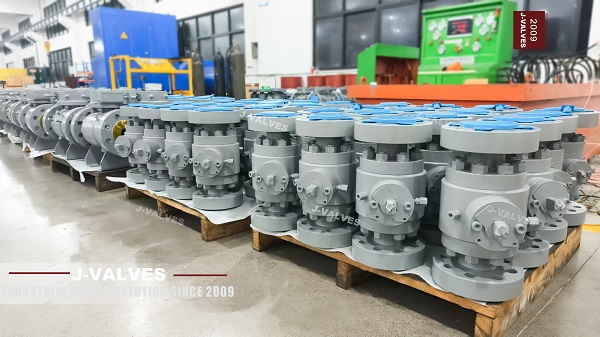
Stainless Steel Ball Valve Grades: 304, 316 And 316L, And What Actually Decides
Molybdenum is the difference that decides the duty, carbon is the difference that gets missed, and the chloride in the line matters more than the price.
Read More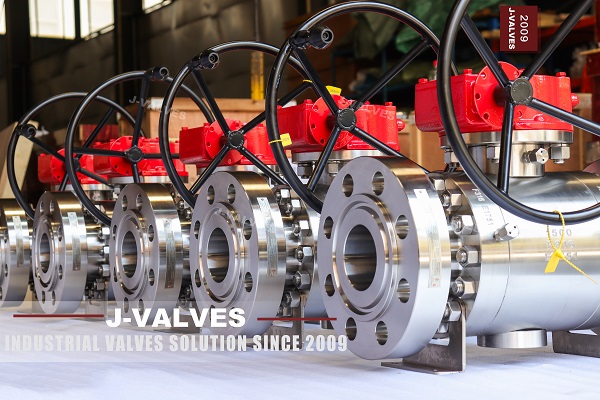
Ball Valve Spare Parts for Overseas Projects: The Wear Part List, The Quantity Math, And Four Traps
Why isolation valves fail on calendar time, not cycles. Wear part lists, Poisson stock maths, seat kit traps and the clauses that decide year six.
Read More
Ball Valves On A Bottom Loading Gantry: Creep, Dry Break And The Test That Proves Neither
A loading gantry cycles a ball valve far more than it is designed for and still cannot prove shut-off. Where creep starts, and what to specify.
Read More