
J-VALVES · Ball Valve Manufacturer · Wenzhou, China info@j-valves.com +86-13600648865

API 6D ball valve selection guide

News

Home News Trunnion Mounted Ball Valve: Reliable Solution for High Pressure Pipeline Systems
Inquire

6x4“ 900LB LF2 固定球阀 (4) 拷贝

Introduction

In high-pressure and critical pipeline applications, valve stability and sealing reliability are essential for safe operation. The Trunnion Mounted Ball Valve is widely used in oil & gas, petrochemical, LNG, and industrial systems due to its robust structure, low operating torque, and excellent pressure resistance.

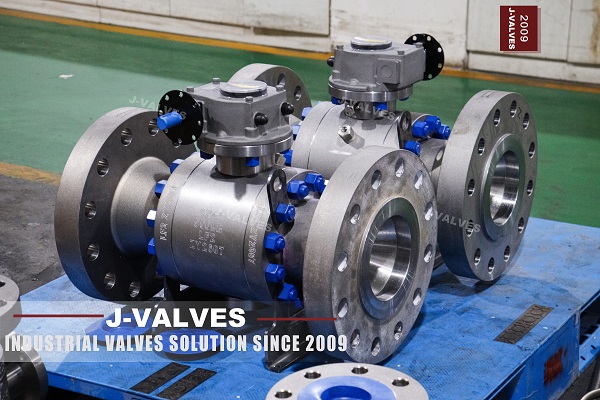
The valve shown is a LF2 Trunnion Mounted Ball Valve, designed for high-pressure service where reliable shut-off performance and long-term durability are required.

J-VALVES specializes in manufacturing high-performance Trunnion Mounted Ball Valves for demanding industrial applications worldwide.

1. Structural Advantages of Trunnion Mounted Ball Valve

Unlike floating ball valves, a trunnion mounted ball valve uses a fixed ball supported by upper and lower stems.

Main features include:

  • Fixed ball support structure

  • Reduced operating torque

  • High pressure capability

  • Stable sealing performance

  • Suitable for large diameter pipelines

The trunnion design reduces the pressure load on valve seats, improving service life and operational reliability.

2. LF2 Material for Low Temperature Applications

LF2 carbon steel is commonly used for low-temperature and high-pressure valve applications.

Material advantages include:

  • Good impact toughness at low temperatures

  • Excellent mechanical strength

  • Reliable pressure performance

  • Suitable for harsh operating environments

This makes LF2 trunnion mounted ball valves ideal for applications such as natural gas, LNG, and energy transportation systems.

3. Reliable Sealing and Safety Performance

A high-performance Trunnion Mounted Ball Valve requires advanced sealing technology.

Key features include:

  • Double block sealing design

  • Fire-safe structure

  • Anti-static device

  • Emergency sealant injection system

These designs help minimize leakage risks and ensure safe pipeline isolation.

4. Applications of Trunnion Mounted Ball Valve

Trunnion ball valves are widely applied in:

  • Oil and gas transmission pipelines

  • LNG storage and transportation systems

  • Petrochemical plants

  • Offshore facilities

  • High-pressure process systems

They are especially suitable for applications requiring frequent operation and long service intervals.

5. J-VALVES Advantages in Trunnion Ball Valve Manufacturing

As a professional industrial valve manufacturer, J-VALVES provides customized Trunnion Mounted Ball Valve solutions.

Professional Design Standards

J-VALVES products are designed according to international standards, including:

  • API 6D

  • ASME B16.34

  • ISO 14313

Advanced Manufacturing Process

J-VALVES focuses on:

  • High-quality material selection

  • Precision machining

  • Professional assembly

  • Strict pressure and leakage testing

to ensure reliable performance and consistent quality.

Conclusion

The Trunnion Mounted Ball Valve provides a reliable solution for high-pressure and low-temperature pipeline applications. With fixed ball support, strong sealing capability, and excellent mechanical performance, it is widely used in critical energy and industrial systems.

With advanced manufacturing technology and strict quality control, J-VALVES delivers durable Trunnion Mounted Ball Valve solutions for global oil & gas, LNG, and industrial projects.

Related Products

Explore the Valves in This Article
Nominal Size: 1 inch / DN25, range 1/4 to 12 inch Pressure Class: ASME Class 150, 19.6 bar at 38°C; Class 300 optional Body Material: ASTM B148 C95800 nickel aluminum bronze Body Type: Two piece, bolted Ball: C95800, SS316 hard faced optional Stem: C95800 or SS316, blowout proof Seat: PTFE, RPTFE, PPL, or reinforced PTFE Packing: PTFE or graphite combined packing End Connection: Threaded NPT / BSPT, flanged RF to ASME B16.5 optional Service Temperature: -29°C to +150°C standard, +200°C high temperature version Seawater Velocity Limit: About 6 m/s clean, 4.5 m/s with sand Design Standard: API 608, ASME B16.34 Test Standard: API 598, ISO 5208 Operation: Lever standard, pneumatic or electric optional
Size Range: 2 to 56 inch (DN50 to DN1400) Pressure Class: ASME Class 150 to 2500 / PN20 to PN420 Body Material: WCB, LCB, CF8, CF8M, CF3M, duplex, alloy steel Ball: Stainless with hard chrome, ENP, Stellite or tungsten carbide overlay Seat: PTFE, RPTFE, PPL, or metal Stellite faced Seat Arrangement: SPE, DPE (DIB-1), or combination (DIB-2) Packing: Live loaded graphite, ISO 15848-1 qualified Fire Test: API 607, also API 6FA and ISO 10497 Fugitive Emission: ISO 15848-1 class B or A, with temperature and cycle class stated Face to Face: ASME B16.10 short or long pattern End Connection: Flanged RF / RTJ to B16.5 and B16.47, butt weld to B16.25 Features: Double block and bleed, sealant injection, anti-static, anti-blowout stem Design Standard: API 6D, API 608, ASME B16.34, ISO 14313 Operation: Lever, gear, pneumatic, electric, hydraulic, gas over oil Sour Service: NACE MR0175 available
Nominal Size: 1-1/2 inch / DN40 Pressure Rating: 1000 WOG (68.9 bar cold working, non-shock) Body Type: Three piece, bolted end caps, four body bolts Body Material: ASTM A351 CF8 (304), CF8M (316) optional Ball: CF8, polished Ra 0.4 µm, full or reduced bore Seat: PTFE, RPTFE, PPL, or Stellite faced metal Body Gasket: PTFE to 180°C, graphite above Packing: PTFE V-ring to 200°C, graphite above End Connection: NPT, BSP, socket weld B16.11, butt weld B16.25, flanged RF Actuator Mounting: ISO 5211 F05 / F07 pad Air Supply: 0.4 to 0.7 MPa clean dry air Service Temperature: -29°C to +260°C, seat dependent Design Reference: MSS SP-110 general purpose, ASME B16.34 body wall Test Standard: API 598, ISO 5208
Nominal Size: 3/4 x 1/2 inch (DN20 x DN15), reduced bore Pressure Class: ASME Class 600 / PN100, 102.1 bar at 38°C Body Material: ASTM A182 F51 forged duplex, UNS S31803 PREN: Approximately 35 Ball: F51 with HVOF tungsten carbide or Stellite overlay Stem: F51, SS316 or 17-4PH, blowout proof Seat: RPTFE, Devlon, PEEK, or Stellite faced metal Bolting: B8M Class 2, alloy 718, or B7M for sour service End Connection: NPT, BSP, socket weld ASME B16.11, butt weld ASME B16.25 Bleed Port: Cavity bleed with plug or needle valve, lockable option Service Temperature: -29°C to +300°C, seat dependent Design Standard: API 6D, API 608, ASME B16.34 Test Standard: API 598, ISO 5208, cavity test through bleed port Sour Service: NACE MR0175 available