


CHINA J-VALVES Offers Various High-quality I ndustrial Ball Valves
J-VALVES, a distinguished professional ball valve manufacturer rooted in China, takes pride in its extensive product portfolio. Our offerings span a wide range, including trunnion-mounted ball valves, floating ball valves, high-temperature ball valves, high-pressure ball valves, metal-sealed ball valves, ultra-low temperature ball valves, DBB ball valves, Three-way And Four-way Ball Valve, and fully welded ball valves. Each product is a testament to our commitment to precision engineering and reliable performance. Meticulously crafted, they are designed to not only meet but exceed the most stringent industrial demands, ensuring stable operation even under extreme conditions. This enables us to provide our clients with high-value services and makes our valves widely sought-after in industries.
Product Category
Contact Us

-
J-VALVES-Q367F
-
J-VALVES
Overview of the J-VALVES API 6D underground fully welded ball valve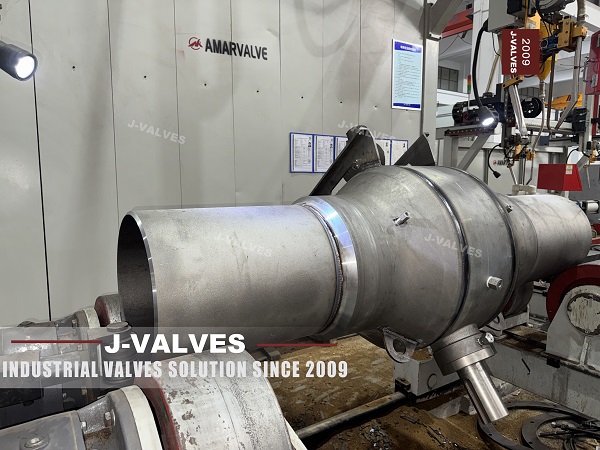
A buried valve is bought as a coated object, and the page that sells it lists the coating in one line: three layer polyethylene, fusion bonded epoxy or coal tar epoxy, in compliance with two standards. That line is doing a lot of work, because three coatings and two standards do not pair up evenly, and because the part of the coating that fails first is the part the standards do not cover.
The valve leaves the works fully coated and leaves a bare length at each end, because the ends are going to be welded to the pipe and welding burns coating. The joint that is then made between the factory coating and the field applied coating is a separate product, applied by a different crew, to a different standard, in a trench. It is the only place on the whole assembly where the corrosion protection is made by hand.
This page reads the buried valve from the outside in. It separates the three coatings, says which standard actually covers each of them, and follows the joint where the factory coating stops and the field coating begins. The body underneath is the six to fifty six inch welded trunnion valve the page describes, with a stem extended through a sleeve to an operator above ground.
Design and Construction
The shell is welded from a forged pipe section and two forged ends, with no body flange and no bolted joint. At the ends, the butt weld preparation is machined to ASME B16.25 and matched to the pipe specification. The stem leaves through the top of the shell and continues upward inside an extension sleeve to the operator, which sits above ground level.
The ball is carried on an upper and a lower trunnion, and the thrust from line pressure goes into the trunnions and their bearings rather than into the seats. That is what allows a valve of this size to be turned by a gearbox at the top of a long stem, and it is also why the stem is not a structural part: it transmits torque and nothing else.
The extension sleeve is listed as A105 or F316 with a three layer polyethylene or fusion bonded epoxy coating, or as solid stainless. That sleeve is not a pressure part. It is a cover over the stem, and the actual seal is the packing in the body below it, which is why the page can say that the stem extension is unaffected by a stem seal failure: a leak at the packing stays inside the sleeve and reaches the atmosphere at the top, where it is visible.

Coating, Standard and Field Joint
Three coatings are offered and two standards are named, and the mapping is not one to one. Three layer polyethylene is a factory process: an epoxy primer, an adhesive layer and a polyethylene topcoat, applied over a cleaned and heated pipe. DIN 30670 is the standard for that factory coating, and its tests are the ones that matter here: holiday detection, impact, indentation, adhesion and cathodic disbondment.
| Coating | What It Is | Standard That Covers It | Where It Stops |
|---|---|---|---|
| Three layer polyethylene | Epoxy primer, adhesive, PE topcoat, factory applied | DIN 30670 | At the cut back for the weld |
| Fusion bonded epoxy | Single layer powder epoxy, factory applied | AWWA C213 for water pipelines | At the cut back for the weld |
| Coal tar epoxy | Two pack paint, brush or spray | Neither of the two named | Anywhere, including the field joint |
| Heat shrink sleeve | Cross linked polyolefin with an adhesive | DIN 30672, the field joint standard | Over the weld and the cut back |
| Tape wrap | Adhesive tape, spiral applied | DIN 30672 | Over the weld and the cut back |
Two things follow from that table and both of them cost money if they are missed. The first is that coal tar epoxy is not covered by either standard on the page, so a specification that asks for coal tar epoxy in compliance with DIN 30670 has asked for something that does not exist; the coating is legitimate, the reference is not. The second is that the field joint is covered by a different standard from the factory coating, and it is the field joint that gets the least inspection.
The cut back length is the interface between the two. A valve end is left bare for a distance that has to be long enough for the weld and the heat it puts into the pipe, and the sleeve that goes over the finished joint has to reach from the factory coating on one side to the factory coating on the other side with the specified overlap at each end. If the cut back is longer than the sleeve, there is bare steel in the middle of the joint. If it is shorter, the sleeve cannot get its overlap onto sound coating at both ends, and the joint depends on adhesion to a surface that was damaged by welding heat.
The holiday test is the other interface. A factory coating is tested for holidays before it leaves, and the test is recorded. The field joint is tested after it is applied, in the trench, by a crew that may or may not have the equipment. That test is the only evidence that the joint is continuous, and a joint that is not continuous is where the cathodic protection current goes, which brings the next subject.
Technical Specifications
The table is the build as the page states it. Sizes and classes are quoted as ranges, because a six inch Class 150 and a fifty six inch Class 2500 are not the same valve and do not share a drawing.
| Item | Value |
|---|---|
| Size range | 6 inch to 56 inch, DN 150 to DN 1400 |
| Pressure class | Class 150 to Class 2500, PN 20 to PN 420 |
| Temperature | Minus 29 to plus 425 Celsius, carbon steel body |
| Body | ASTM A105 forged carbon steel, welded shell |
| Body Options | A350 LF2 to minus 46, A694 F52 or F65, A182 F316 |
| Ball | A105 with ENP or carbide coating, or solid F316 |
| Trunnion | Surface hardened A105 or 17-4PH |
| Stem | 17-4PH or nickel alloy 718, extended |
| Extension Sleeve | A105 or F316 with 3PE or FBE coating |
| Stem Extension | 500 to 2000 mm, or to the burial depth |
| Seat | PTFE or RPTFE, PEEK, or metal with graphite |
| Ends | Butt weld to ASME B16.25, matched to the pipe |
| External Coating | 3PE to DIN 30670, FBE, or coal tar epoxy |
| Field Joint | Heat shrink sleeve or tape, to DIN 30672 |
| Cathodic Protection | Sacrificial anodes or impressed current |
| Design and Test | API 6D and ASME B16.34, tested to API 6D and API 598 |
The stem extension row and the coating row are the two that decide the buried installation, and neither of them is a valve specification. One is a civil dimension and the other is a corrosion specification, and both have to be agreed with the pipeline design before the valve is ordered rather than after the trench is dug.
Standards and Compliance
API 6D governs the valve and ASME B16.34 supplies the wall and the ratings behind the class. The coating standards sit outside both of them, and that separation is the reason a valve can be fully compliant with 6D and still arrive with a coating that nobody has specified. The coating is a pipeline document, not a valve document.
| Document | What It Fixes | What It Does Not Cover |
|---|---|---|
| API 6D | Classes, test, marking, fire test | Coating and cathodic protection |
| ASME B16.34 | Wall, material groups, ratings | The buried installation |
| ASME B16.25 | Weld end profile | The joint coating over the weld |
| DIN 30670 | Factory applied PE coating, and its tests | The field joint |
| DIN 30672 | Field joint tapes and sleeves | The factory coating |
| AWWA C213 | Factory applied FBE for water pipelines | Gas pipeline practice |
| DIN 30675 | Corrosion protection of buried pipelines as a system | The valve specifically |
The cathodic protection line is worth a paragraph because it is usually bought separately and then relied on absolutely. A coated steel structure in soil is protected by a combination of the coating, which keeps most of the current off the steel, and the anodes, which supply current where the coating is missing. The valve is welded to the pipe, so it is electrically continuous with it and shares the protection. What breaks that is an insulating joint or a coated sleeve that isolates part of the assembly, and a sleeve is exactly what a stem extension has around it.
Manufacturing Process
The body is welded, radiographed, machined and tested, and only then is it coated. The order matters, because blasting and coating come after every machining operation and every weld, and any subsequent welding would destroy the coating locally. The stem assembly goes in before coating, the sleeve is fitted, and the whole outer surface is blasted to the surface preparation the coating standard requires.
The coating is applied in a plant where the pipe is rotated, heated and coated in one pass. That is what makes three layer polyethylene a factory product: the layers have to go on hot and in sequence, and the adhesion between them is what the standard tests. A coating applied in the field cannot reproduce that, which is why the field joint uses a different product rather than the same one applied by hand.
The ends are masked before coating so the cut back is clean and the weld preparation is bare. The length of the mask is the cut back, and it is decided by the welding procedure and by the sleeve that will be used at site, so it is a number that has to come from the pipeline design rather than from the valve drawing.

Quality Control and Testing
The valve test is the shell and seat test to API 6D and API 598, done before coating. The coating test is a separate set: holiday detection over the whole coated surface, a thickness reading, an adhesion check on a sample and, where specified, a cathodic disbondment test. Those tests are what DIN 30670 defines, and they are recorded against the coating rather than against the valve.
The stem extension is checked for alignment and for free rotation before the sleeve goes on, because a sleeve hides the coupling. A stem that is stiff in its sleeve is found at commissioning, with the valve buried and the operator above ground, which is the most expensive place to find it.
The field joint is not tested at the works at all, because it does not exist yet. What can be done at the works is to agree the cut back, supply the sleeve to the same specification as the pipe, and write the holiday test into the installation procedure. Everything else depends on the crew in the trench.

Applications and Industry Service
Buried transmission lines are the first use, where the valve is a section isolating valve and the operator is a gearbox at the end of a stem in a small pit or a kerb box. The welded body is chosen because a body joint in wet soil is a permanent weep, and the coating is chosen because the soil is the environment for the next forty years.
The second use is river crossings and road crossings, where the valve cannot be reached without excavation and the installation is designed for a life without intervention. In those places the field joint matters most, because there are two of them per valve and each is a hand made coating in a place nobody will inspect again.
The valve is the wrong choice where the soil is aggressive enough to need cathodic protection that the coating cannot survive, and where the field joint cannot be protected from groundwater during application. It is also the wrong choice where nobody will holiday test the joints, because an untested joint is a coating with an unknown number of holes in it.

Installation, Operation and Maintenance
Installation starts with the trench, not the valve. The bedding, the soil, the groundwater and the room to work around the joint all decide whether the coating survives, and a coated valve lowered onto rock will have holidays before the first weld is made. The valve is aligned, the ends are welded, the welds are tested, and only then is the field joint coating applied.
The field joint is applied over a prepared surface: the weld and the cut back are cleaned to the specified standard, the sleeve is heated and shrunk, and the adhesive is allowed to flow. The holiday test follows, and the joint is backfilled only after it passes. A joint that is backfilled before it is tested has lost the only chance to find the defect while it was reachable.
Operation is at the top of the stem, above ground, which is the point of the extension. Maintenance is the gearbox, the packing at the top of the sleeve where the stem leaves it, and the cathodic protection readings taken at test posts along the line. The valve body itself has no maintenance operation that can be performed without excavation, which is the design intent and also the reason the coating specification matters more than the valve's own details.
How to Specify and Order
The order lines below are the ones the page leaves open, and the first three are the ones that decide whether the buried valve is still protected in twenty years.
| Line on the Order | What to Write | Why It Matters |
|---|---|---|
| External coating | Which of the three, and the standard that actually covers it | DIN 30670 does not cover coal tar epoxy |
| Cut back length | The bare length at each end, agreed with the sleeve | It is the interface between factory and field |
| Field joint | Sleeve or tape, to DIN 30672, with a holiday test | The only hand made coating on the assembly |
| Stem extension | Length to the operator, and the sleeve material | A civil dimension, not a valve dimension |
| Cathodic protection | Anode type or impressed current, and the current demand | Coating and CP are one system |
| Ends | Weld end profile and the pipe grade it joins | The field weld is made to both |
| Seat and temperature | Seat material, and the temperature it allows | The body range is not the seat range |
| Operation | Gearbox, actuator or both, at the top of the stem | Everything is operated from above ground |
Read as a whole, the page describes a valve that is bought for its outside as much as its inside. The welded shell, the trunnion and the extended stem are settled engineering. What decides whether the valve is still there in forty years is a coating standard that covers the factory and not the joint, a cut back that has to match a sleeve, and a holiday test that has to happen in a trench.
FAQ
Q: Does DIN 30670 cover the whole coating on this valve?
A: No. It covers the factory applied polyethylene coating, including its tests, up to the point where the coating is cut back for the weld. The joint that is made over the weld at site is a different product applied by a different method, and the standard for that is DIN 30672.
Q: Is coal tar epoxy covered by either standard named on the page?
A: No. Coal tar epoxy is a two pack paint, and neither DIN 30670 nor AWWA C213 describes it. It is a legitimate coating for buried steel, but a specification that asks for it in compliance with those two standards has named a coating and a document that do not refer to each other.
Q: Why is the valve left bare at the ends?
A: Because the ends are welded to the pipe, and welding burns coating back from the joint. The bare length is the cut back, and it is sized so the weld and its heat affected zone sit inside it. The field joint sleeve then has to bridge from sound factory coating on one side to sound factory coating on the other.
Q: What fails first on a buried coated valve?
A: The field joint in most cases, because it is the only part of the coating made by hand, outdoors, over a surface that has been heated by welding. Factory coating defects are found by the holiday test before dispatch; field joint defects are found only if the same test is repeated in the trench.
Q: Does the stem extension need cathodic protection?
A: It needs to be electrically continuous with the protected structure. The valve is welded to the pipe and shares the protection, but the sleeve around the stem is a separate part with its own coating, and an insulated or isolated sleeve is a surface with no protection at all. Continuity is a check, not an assumption.


Hot Products


News
Urea Plant Ball Valves: The Wetted Path Survives Only While Oxygen Is Being Fed To It
Carbamate at 150 bar and 185 C eats stainless 50 times faster once the passive film starves. The valve cavity is where the oxygen runs out first.
Read More
Stiction: What A Ball Valve Becomes When Nobody Turns It
A valve that stood closed for years has not worn out. The seat has bonded to the ball, and the first stroke is a step, not a ramp. What the trace shows.
Read More
Molten Salt Ball Valves: The Valve Works at 565 C And Dies at 219 C
Salt freezes at 220 C and decomposes at 565 C. Everything a molten salt ball valve does happens in that 345 kelvin gap, and the gap is not generous.
Read More
Direct Air Capture Ball Valves The Vacuum Side Runs The Seal Backwards, And Three Hundred Thousand Strokes Decide The Design
A solid sorbent DAC plant moves 1.3 million cubic metres of air per tonne of CO2, then asks a DN50 ball valve to hold 0.9 bar from the wrong side.
Read More