


Introduction
In modern oil and gas transportation systems, valve reliability directly affects pipeline safety, operating efficiency, and maintenance costs. Ball valves are widely used as critical shut-off equipment due to their fast operation, excellent sealing performance, and adaptability to various pipeline conditions.
Among different connection designs, Fully Welded Ball Valves and Flanged Ball Valves are two common solutions for pipeline applications. While flanged ball valves have been widely used for decades, fully welded ball valves have become increasingly popular in long-distance transmission pipelines because of their superior structural integrity, reduced leakage risk, and extended service life.
As a professional valve manufacturer, J-VALVES specializes in the design and manufacturing of high-performance Fully Welded Ball Valves for oil & gas pipelines, natural gas transmission systems, LNG facilities, and industrial applications.
1. Structural Difference Between Fully Welded Ball Valve and Flanged Ball Valve
The primary difference between these two valve designs is the connection method between the valve body and pipeline.
Fully Welded Ball Valve Design
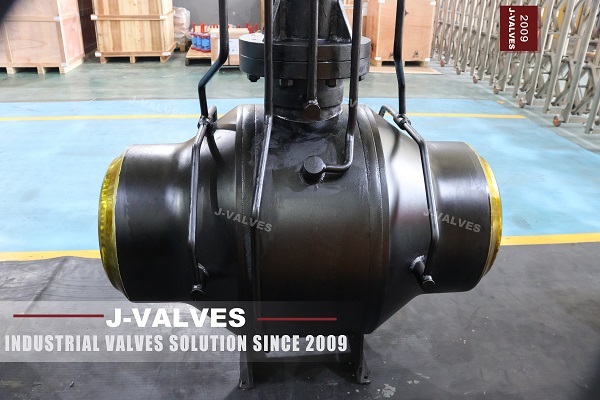
A Fully Welded Ball Valve uses a welded connection between the valve body and pipeline. The valve body is manufactured through a welding process that permanently integrates the valve into the pipeline system.
Typical structural features include:
Welded valve body construction
Reduced number of external sealing points
Compact and lightweight design
High structural strength
Suitable for buried pipeline installation
Because the valve body is fully welded, there are no flange joints exposed to external environmental conditions.
Flanged Ball Valve Design
A flanged ball valve uses flange connections with bolts and gaskets to connect the valve to the pipeline.
Main characteristics include:
Easy installation and removal
Convenient maintenance access
Standardized connection dimensions
Suitable for above-ground systems
However, flange connections introduce additional sealing components, including:
Flange gaskets
Bolts and nuts
Multiple connection surfaces
These components require periodic inspection to maintain long-term reliability.
2. Leakage Risk Analysis
Leakage prevention is one of the most important factors when selecting pipeline valves.
Leakage Risk of Fully Welded Ball Valve
The welded structure significantly reduces potential leakage points.
Advantages include:
Elimination of flange gasket leakage
Reduced external leakage risk
Better resistance to vibration
Improved pipeline integrity
For buried natural gas pipelines, offshore pipelines, and high-pressure transmission systems, reducing external leakage risks is a major safety advantage.
Leakage Risk of Flanged Ball Valve
Although properly installed flanged ball valves can provide reliable performance, flange connections may experience leakage due to:
Aging gasket materials
Improper bolt tightening
Thermal expansion and contraction
Pipeline vibration
Installation errors
In long-term pipeline operation, flange sealing performance requires regular inspection and maintenance.
3. Installation and Maintenance Comparison
Installation Advantages of Fully Welded Ball Valve
Fully welded ball valves are particularly suitable for permanent pipeline installations.
Key benefits include:
Reduced Installation Space
The compact structure requires less installation space compared with traditional flanged designs.
Suitable for Underground Pipelines
Because there are no external flange connections, fully welded ball valves can be directly buried after installation.
Applications include:
Natural gas transmission pipelines
District heating systems
Long-distance oil pipelines
Improved Pipeline Reliability
The welded connection creates a continuous pipeline structure, reducing potential weak points.
Installation Advantages of Flanged Ball Valve
Flanged ball valves provide flexibility during installation and maintenance.
Advantages include:
Easier replacement
Simple disassembly
Convenient equipment modification
For systems requiring frequent valve replacement or inspection, flanged designs may provide practical advantages.
4. Service Life Comparison
The service life of a valve depends on material selection, operating conditions, sealing design, and maintenance quality.
Fully Welded Ball Valve Service Life
A high-quality fully welded ball valve can provide decades of reliable operation due to:
Strong welded body structure
Reduced corrosion exposure
Improved pressure resistance
Lower maintenance requirements
The absence of flange joints minimizes corrosion risks in harsh environments.
For buried pipelines, fully welded ball valves are often selected because they can maintain stable performance over long operating periods.
Flanged Ball Valve Service Life
Flanged ball valves can also provide long service life when properly maintained.
However, additional maintenance may be required for:
Flange gasket replacement
Bolt inspection
External corrosion monitoring
In aggressive environments, these additional components may influence overall service reliability.
5. Why Fully Welded Ball Valves Are Preferred for Long-Distance Pipelines
Long-distance pipelines require valves that can operate safely under continuous pressure, temperature changes, and environmental stress.
A Fully Welded Ball Valve offers several advantages:
Excellent Pressure Integrity
The welded body design improves resistance against:
Pipeline pressure fluctuations
Mechanical stress
External forces
Better Resistance to Environmental Conditions
For underground and outdoor installations, fully welded ball valves provide improved protection against:
Moisture
Soil corrosion
Temperature variation
External contamination
Lower Lifecycle Cost
Although the initial cost may be higher than some flanged designs, fully welded ball valves reduce long-term expenses through:
Less maintenance
Reduced leakage risk
Longer service intervals
Improved operational reliability
For critical pipeline systems, lifecycle performance is often more important than initial equipment cost.
6. Application Areas of Fully Welded Ball Valves
Due to their excellent reliability, fully welded ball valves are widely used in:
Natural Gas Transmission Pipelines
Applications include:
High-pressure gas pipelines
City gas distribution networks
Gas storage facilities
The welded design helps maintain pipeline safety and minimize leakage risks.
Oil Transportation Systems
Fully welded ball valves are suitable for:
Crude oil pipelines
Refined product pipelines
Pump stations
Their robust construction supports continuous operation in demanding environments.
Heating and Energy Infrastructure
Fully welded designs are also used in:
District heating systems
Steam-related applications
Energy transportation networks
7. J-VALVES Advantages in Fully Welded Ball Valve Manufacturing
As an experienced industrial valve manufacturer, J-VALVES provides reliable fully welded ball valve solutions designed for critical pipeline applications.
Professional Fully Welded Valve Design Capability
J-VALVES focuses on optimized valve structures including:
Fully welded body design
Trunnion mounted ball structure
Double sealing systems
Anti-static devices
Fire-safe design
These features ensure reliable operation in oil, gas, and energy systems.
High-Quality Material Selection
J-VALVES selects suitable materials according to operating conditions, including:
Carbon steel
Stainless steel
Low-temperature steel
Corrosion-resistant alloys
Material selection is optimized according to:
Pressure rating
Temperature range
Pipeline medium
Environmental conditions
Advanced Welding and Manufacturing Technology
Fully welded ball valves require strict welding quality control.
J-VALVES applies professional manufacturing procedures including:
Precision machining
Qualified welding processes
Non-destructive testing
Pressure testing
Dimensional inspection
These processes ensure structural reliability and long-term performance.
Compliance with International Standards
J-VALVES designs and manufactures fully welded ball valves according to international standards, including:
API 6D
ASME B16.34
ISO 14313
NACE MR0175 (when required)
This ensures compatibility with global pipeline projects.
Customized Solutions for Pipeline Projects
J-VALVES provides customized fully welded ball valve solutions including:
Different pressure classes
Large diameter designs
Underground pipeline applications
Gas transmission solutions
Special temperature service
Through professional engineering support, J-VALVES helps customers improve pipeline safety and efficiency.
Conclusion
The comparison of Fully Welded Ball Valve vs Flanged Ball Valve shows that both designs have their own application advantages. Flanged ball valves provide convenient installation and maintenance, while fully welded ball valves offer superior structural integrity, lower leakage risk, and longer service life.
For long-distance oil and gas pipelines, natural gas transmission systems, and underground applications, the Fully Welded Ball Valve is often the preferred choice due to its excellent reliability and reduced maintenance requirements.
With advanced manufacturing technology, strict quality control, and professional engineering capabilities, J-VALVES delivers high-performance fully welded ball valve solutions that support safe and efficient pipeline operation worldwide.


