


CHINA J-VALVES Offers Various High-quality I ndustrial Ball Valves
J-VALVES, a distinguished professional ball valve manufacturer rooted in China, takes pride in its extensive product portfolio. Our offerings span a wide range, including trunnion-mounted ball valves, floating ball valves, high-temperature ball valves, high-pressure ball valves, metal-sealed ball valves, ultra-low temperature ball valves, DBB ball valves, Three-way And Four-way Ball Valve, and fully welded ball valves. Each product is a testament to our commitment to precision engineering and reliable performance. Meticulously crafted, they are designed to not only meet but exceed the most stringent industrial demands, ensuring stable operation even under extreme conditions. This enables us to provide our clients with high-value services and makes our valves widely sought-after in industries.
Product Category
Contact Us


-
J-VALVES-Q41F
-
J-VALVES
Overview of the J-VALVES cast floating ball valve, half inch to eight inch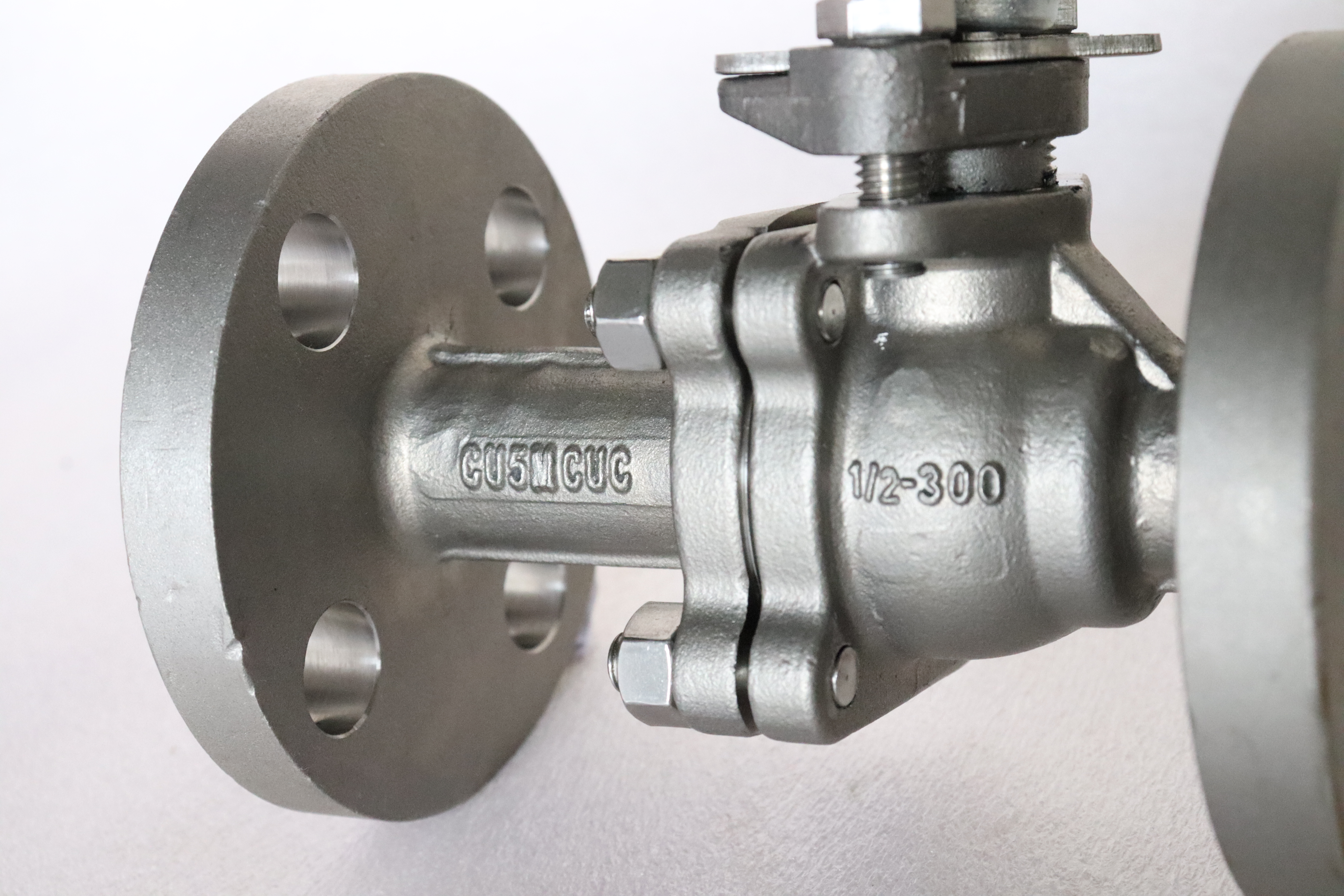
This page is a category rather than a single valve, and the honest way to write it is to say so at the start. The photographs show one build, a small cast floating valve with a lever, and the range it stands for runs from half inch to eight inch across Class 150 to Class 600. The photograph is the shape of the product and the range is what the works will pour.
That gap matters because it is where a buyer forms the wrong expectation. A half inch cast valve and an eight inch cast valve share a construction and share almost nothing else: the casting, the operator, the flange and the price are all different, and at the top of the size range the floating construction is at the edge of what it can do.
What follows is written at the level that holds across the range. The construction is a two piece bolted body with a floating ball, a soft seat, a manual operator, and an end connection that follows the size and the order rather than the photograph, and the material options are carbon steel or one of the two common austenitic stainless grades.
Design and Construction
The body is cast, in two pieces, a main body and one end cap, closed on a ring of studs with a gasket between them. Casting is what makes this valve cheap in the sizes that sell in volume: a two inch body or a three inch body is a straightforward pour, and the shape can be formed around the seat pocket rather than machined out of a solid block.
The ball floats, which means it is not held on a trunnion and is free to move downstream under pressure. It seals on the downstream seat, and the upstream seat is only loaded by its spring and its preload. That is the mechanism of every floating valve and it is the reason this construction is used at small sizes and replaced by a trunnion at large ones.
Two pieces rather than three is the right answer in this size band and it is worth saying why. A three piece body exists so that the trim can be reached from both ends, and at half inch to four inch a cap that comes off one side already gives access to one seat and the ball. The second seat is behind the ball and can be reached once the ball is out, so the third piece buys very little for its cost.
The seats are rings with a polymer insert and a spring behind them. The insert is what touches the ball and what makes the valve tight at ambient; the spring only holds it against the ball when there is no pressure. Above a few bar the line pressure does the loading and the spring's job is done.
The operator is a lever at the small sizes and a handwheel or a gear at the larger ones, and the stem is retained from inside the body so that pressure cannot eject it. The top of the stem carries a flatted end and a stop plate, and the stop is what makes the quarter turn a quarter turn rather than a guess.

Material Options
Three body materials are offered and the choice between them is about the medium rather than about the pressure. Carbon steel covers the water, air and steam duties, and the two stainless grades cover the corrosive ones. The ball and stem are stainless in every build, which is worth noticing because it means the wetted parts are not all the same grade.
| Component | Standard Build | Options | What It Decides |
|---|---|---|---|
| Body and cap | ASTM A216 WCB | CF8 or CF8M cast stainless | Corrosion resistance of the pressure boundary |
| Ball | 316 stainless | 304 for cost, or a plated carbon ball | Corrosion at the sealing surface |
| Stem | 316 stainless | 304 | Stem corrosion and strength |
| Seat insert | PTFE | Reinforced PTFE for less creep | The temperature ceiling of the valve |
| Packing | PTFE chevrons | Graphite where temperature requires | Stem seal |
| Body gasket | Spiral wound, graphite filled | PTFE envelope for chemical service | The single joint at line pressure |
| Bolting | A193 B7 with A194 2H | B8M with 8M for stainless bodies | Thermal and galvanic match |
| Operator | Lever | Handwheel, gear, actuator | Whether the valve can be turned by hand |
A stainless body with carbon steel bolting is a combination that appears on cheap valves and fails at the studs. The bolting is the smallest and most highly stressed part of the pressure boundary, and a B7 stud in a CF8M body is a galvanic couple with a small anode and a large cathode, which is the worst way round.
The temperature range on this page is narrower than on a trunnion valve and the reason is the seat. Minus 46 to plus 200 C is the range of the polymer insert, not of the body, and it is stated as the valve range because on a soft seated valve the insert is what stops you first. A buyer who needs more than 200 C needs a different seat rather than a different body, and at that point the valve on the trunnion page is the one to look at, because a metal seat on a floating ball is a compromise for temperature rather than an improvement in service.
Technical Specifications
The range is half inch to eight inch and Class 150 to Class 600, which is the volume band for a cast floating valve. Above eight inch the same duty is normally served by a trunnion valve, and above Class 600 the seat load on a floating ball becomes the problem rather than the body.
| Item | Value |
|---|---|
| Size range | Half inch to eight inch, DN 15 to DN 200 |
| Pressure class | Class 150 to Class 600, PN 20 to PN 100 |
| Body style | Two piece cast body, floating ball |
| Body materials | ASTM A216 WCB, cast 304, cast 316 |
| Ball and stem | 316 stainless as standard |
| Seat | PTFE or reinforced PTFE insert, spring loaded |
| Ends | Flanged raised face to ASME B16.5 |
| Face to face | ASME B16.10 for the size and class, confirmed on the drawing |
| Temperature | Minus 46 to plus 200 C, insert limited |
| Operator | Lever, handwheel, gear or actuator |
| Test | API 598 shell and seat, a result per seat |
| Fire test | API 607 where specified |
The size range and the temperature range together define the product honestly. This is a general service valve for water, air, steam below the insert limit, and mild chemicals, and it is not a high temperature valve and not a large bore valve. A page that sold it as either would be selling the trunnion valve next to it.
Standards and Compliance
Two standards apply at this level and one of them is the reason the valve is cheap. ASME B16.34 gives the wall and the rating, API 608 gives the product requirements for valves from DN 15 to DN 600 in Class 150 to Class 600, and API 598 gives the test. Every size and class on this page falls inside all three.
| Requirement | Document | What It Means Here |
|---|---|---|
| Wall and rating | ASME B16.34 group 1.1 | Rating by class and material group |
| Product requirements | API 608 | Covers this size and class range |
| Product requirements | API 6D where specified | Broader scope, often asked for anyway |
| Flange dimensions | ASME B16.5 | Raised face, size specific bolt circle |
| Face to face | ASME B16.10 | The dimension the spool is built to |
| Pressure test | API 598 | Shell 1.5 times, seat 1.1 times |
| Fire test | API 607 or ISO 10497 | Type test where specified |
| Material certificate | EN 10204 3.1 | Heat number matched to the plate |
The fire test line is worth a note because it is where a category page gets loose. A fire safe claim is a type test on a specimen, and on a soft seated valve what survives the fire is the metal backup behind the insert rather than the insert itself. A valve without that backup is not fire safe however the certificate is worded.
Manufacturing Process
The body is cast, cleaned and heat treated, then machined with the flange face, the bolt circle, the joint face and the seat pocket referenced to one centreline per part. On a small body the machining is done in a single setting per part where the machine allows it, which is what keeps the seat pocket square to the flange.
Casting quality on a body this size is checked visually and dimensionally rather than by radiography, and that is proportionate rather than lax. A two or three inch body has a simple section and a short solidification path, so the shrinkage risk that makes radiography necessary on a twenty four inch casting is not present. A buyer who wants a film on a three inch body can have one, and should expect to pay for a test that the design does not require.
The ball is machined and ground on its sphere, and on a soft seated valve the finish is what the insert conforms to. A ball that is out of round will seal at the contact band and leak around it, and no amount of insert preload will correct a sphere that is not a sphere.
The insert is fitted into the seat ring and the ring is assembled with its spring. The insert sits slightly proud of the ring face and that stand proud is the preload: too little and the valve is loose at low pressure, too much and the insert is compressed before the valve sees any pressure at all.

Quality Control and Testing
The heat number is cast into the body and repeated on the certificate, and on a small cast valve the identity check is quick and worth doing. A CF8 body supplied against a CF8M order is a corrosion failure waiting for a chloride duty, and the two are indistinguishable by eye.
| Step | Check | Acceptance |
|---|---|---|
| 1 Incoming | Heat number against the mill certificate | Grade chemistry as ordered |
| 2 Identity | Positive material identification on the body | Molybdenum present where 316 was ordered |
| 3 Machining | Seat pocket square to the flange face | Drawing tolerance |
| 4 Insert | Stand proud of the seat ring | Drawing figure |
| 5 Shell test | Body and cap joint at 1.5 times | API 598, no leakage |
| 6 Seat test | Each seat at 1.1 times, cavity vented | API 598, no visible leakage |
| 7 Torque | Lever torque at rated pressure | Drawing figure |
| 8 Final | Cavity drained, faces masked, marked, crated | Works standard |
The seat test on a soft seated valve has a binary acceptance, which is a luxury a metal seated valve does not have. No visible leakage is the criterion, and it is judged by eye against a defined observation period rather than against a measured rate.

Applications and Industry Service
Cast floating valves are the general service valve of a plant: water, plant air, steam below the insert limit, mild chemicals, and the small bore isolation around instruments and drains. They are bought in quantity, stocked, and replaced rather than repaired in most plants.
The economics of the valve are worth stating because they explain the construction. A cast floating valve in this size band is bought in quantity, stocked as a spare, and replaced rather than repaired when it fails. That is why the body is two pieces rather than three, why the seat is an insert rather than a lapped metal pair, and why the standard build is the cheapest combination that will hold water, air and steam.
The stainless versions are bought where the medium would corrode a carbon body but the pressure and temperature are still modest. That combination is common in food and beverage, in water treatment and in light chemical service, where a 316 body with a PTFE seat is the standard answer.
The valve is wrong at the top of its own size range when the duty is severe. An eight inch Class 600 floating valve is a heavy quarter turn against two loaded seats, and the same duty is better served by a trunnion valve that costs more and turns easily. It is also wrong above 200 C, where the insert rather than the body is the limit.

Installation, Operation and Maintenance
The valve can be installed either way round, and what changes with orientation is the cavity plug. On a line that will be drained the plug should end up at the lowest point, and on a line that will not be drained it does not matter.
Bring the mating flanges up parallel before tensioning and use the gasket that belongs to the size and class rather than one that fits the bore. A cap drawn up by tension alone is a cap that has been bent into place, and the joint will seep at the shell test while the gasket takes the blame.
Servicing is one sided by design: the line is blocked and drained, the cap studs are slackened in a pattern, and the cap lifts away carrying a seat with it. Both inserts are replaced as a pair, the gasket is never reused, and the studs return to the drawing figure in a cross pattern.
How to Specify and Order
Six lines fix the valve: size, class, body grade, insert, operator and whether the ends are flanged or threaded. The body grade is the line that is most often abbreviated to stainless, and stainless is not a specification: 304 and 316 are different valves for a chloride duty.
Four questions belong to the line rather than to the valve: the medium, the design temperature, the design pressure and the cycle count. The medium decides the body grade, the temperature decides the insert and therefore the whole rating, the pressure confirms the class, and the cycle count decides whether a floating seat is the right wear part.
Documents to name in the order: the EN 10204 3.1 certificate with the heat number matched to the plate, the shell and seat test record with a result per seat, the insert material certificate where the medium is aggressive, the fire certificate if one is required with its scope read, and the drawing carrying the face to face dimension.
FAQ
Q: Is this page one valve or a range?
A: A range. The photographs show a single small build with a lever, and the page covers half inch to eight inch across Class 150 to Class 600, which is what the works will pour rather than what the picture shows. Reading the picture as the product is how a buyer ends up expecting an eight inch valve to look and cost like a half inch one.
Q: At what size does a floating valve stop being the right answer?
A: Around eight inch, and the reason is torque rather than pressure. A floating ball is pushed into the downstream seat by the whole pressure load, so the friction the operator has to overcome grows with the square of the bore as well as with the pressure. At eight inch and Class 600 that load is at the edge of what a lever can move, which is why the trunnion construction takes over at the top of this range.
Q: Why does the photograph not match the range?
A: Because a category page needs one image and the range needs seven sizes. The build photographed is the smallest common pattern, and the differences that appear as the size grows are the operator, the flange drill and the wall thickness. A page that showed one large size would misrepresent the volume of the range just as badly, and in the other direction.
Q: Does Class 600 change the body or just the seats?
A: The body walls thicken and the flange drill changes, so it is a different casting rather than the same casting with a different trim. What does not change is the construction: still a two piece cast body with a floating ball and a soft seat. The seat insert is what limits the temperature, and it is the same list at every class on this page.
Q: Why does API 608 stop at Class 600?
A: Because that is its scope: DN 15 to DN 600 and Class 150 to Class 600. Above that class the product requirements come from API 6D, which is written for pipeline valves and carries the higher classes. A page that quoted 608 at Class 900 would be quoting a document that does not reach that class, and this range does not go there either.



Hot Products


News
Why A Ball Valve Gets Harder To Turn: Five Causes, And The Test That Tells Them Apart
A ball valve that stiffens over months points at one of five parts. Measure torque with the line pressurised and again vented, and the split becomes visible.
Read More
The Ball Valve at Four Thousand Bar: Seat Load, Erosion And Fatigue in Waterjet Circuits
At 4,000 bar a 10 mm bore puts 31 kN on the seat and a 0.1 mm leak cuts steel. What a ball valve must survive in a waterjet or intensifier circuit.
Read More
Large Diameter Ball Valves: Four Limits That Change The Design
Above a certain size a ball valve stops being a scaled one. Ball weight, operator torque, body split and the test bench each set a limit at a different size.
Read More
Cast Or Forged Ball Valve Body, And What A Radiography Acceptance Level Actually Buys You
Casting or forging is only half the decision. What RT, UT, MT and a proof test each find in a ball valve body, and where the geometry defeats all of them.
Read More