

CHINA J-VALVES Offers Various High-quality I ndustrial Ball Valves
J-VALVES, a distinguished professional ball valve manufacturer rooted in China, takes pride in its extensive product portfolio. Our offerings span a wide range, including trunnion-mounted ball valves, floating ball valves, high-temperature ball valves, high-pressure ball valves, metal-sealed ball valves, ultra-low temperature ball valves, DBB ball valves, Three-way And Four-way Ball Valve, and fully welded ball valves. Each product is a testament to our commitment to precision engineering and reliable performance. Meticulously crafted, they are designed to not only meet but exceed the most stringent industrial demands, ensuring stable operation even under extreme conditions. This enables us to provide our clients with high-value services and makes our valves widely sought-after in industries.
Product Category
Contact Us


-
J-VALVES-Q41F
-
J-VALVES
Overview of the J-VALVES JIS 150A 10K CF8 floating ball valve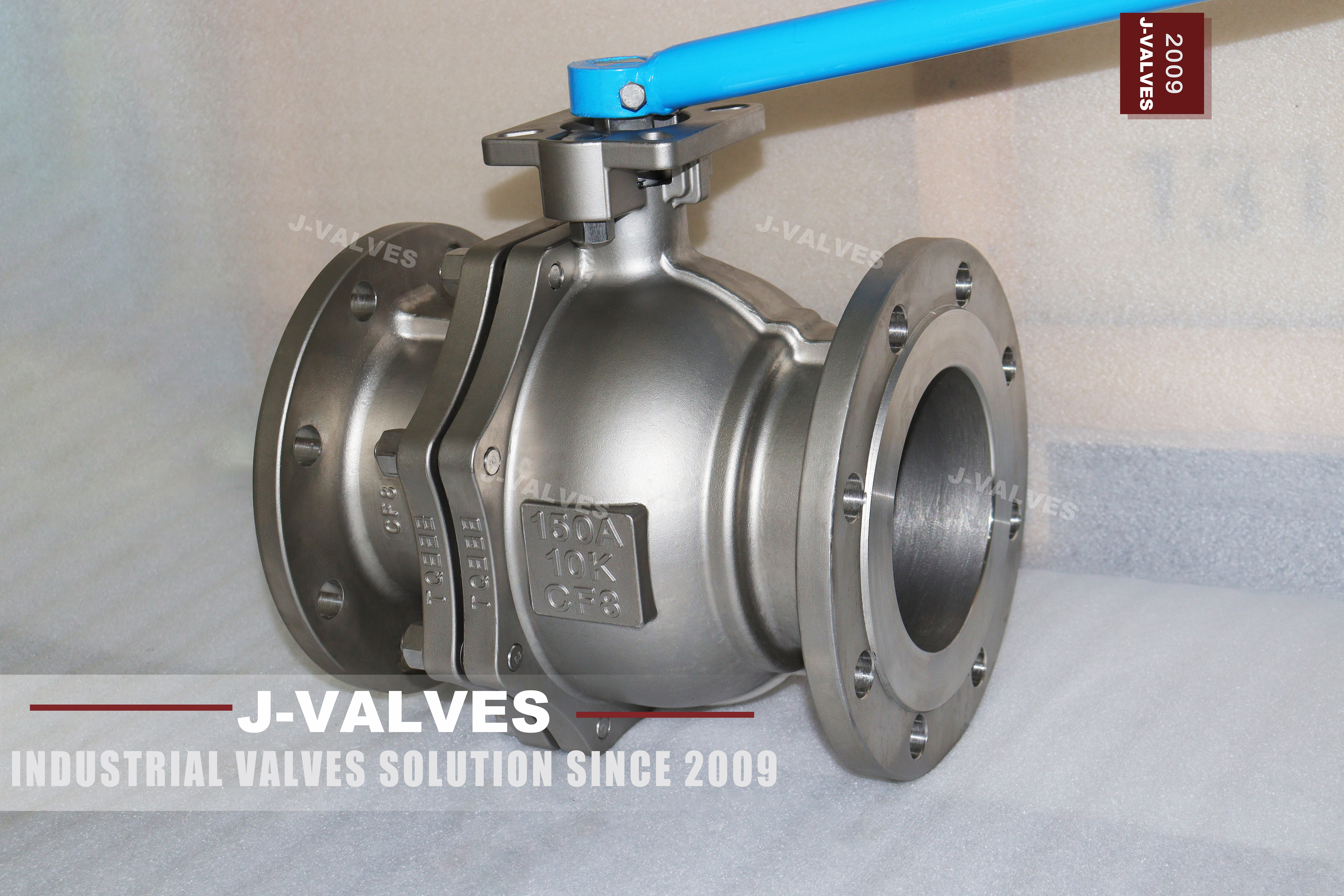
The plate cast into the side of this valve carries three lines: 150A, 10K, CF8. Read quickly, that looks like a 150 lb valve at 10K pressure in a 304 body. Read properly, it says a six inch valve, rated at one megapascal, cast in CF8 stainless steel, and none of those three things means what an ANSI-trained reader expects.
150A is a nominal size in the JIS schedule, and it is very close to six inch, because DN150 is six inch. 10K is a pressure designation of one megapascal, which is about half of what ASME Class 150 allows, and it is the reason a JIS valve cannot be substituted for an ANSI one on the strength of the flange looking similar. CF8 is the ASTM name for cast 304, and the same casting appears on a Japanese specification as SCS13.
That last point is where most of the correspondence on this page comes from. The material is not in doubt and never was; the name is. A buyer in Osaka writes SCS13, a buyer in Houston writes CF8, and both are asking for the same cast austenitic stainless with the same chemistry, so the page has to give both names or it will keep being asked.
Design and Construction
The body is two castings, a main body and one end cap, closed by four studs on this size. CF8 casts well and machines well, which is why a two piece stainless body at six inch is a sensible proposition: one joint, one gasket, and a cap that comes off with four nuts. Everything inside is reachable once that cap is released, and nothing is reachable until the line is isolated and the body vented, because the joint runs around the full circle and sees full line pressure.
The ball floats between two seats. There is no trunnion, no bearing and no separate ball support, because at one megapascal and six inch the force on the ball is small enough for the seat to absorb it. Pressure pushes the ball downstream into the seat, the seat deforms slightly against it, and that is the seal. The lever on top turns the ball through a quarter and stops.
The pad on top is square with four tapped holes, which is the mounting interface for a small pneumatic or electric actuator. On a lever-operated valve it is simply a stiff boss; on an automated one it is the datum that decides whether the actuator sits concentric with the stem. The plate above it holds the lever at a right angle to the bore, which is the only position indicator a lever valve has.

Material Options
CF8 is cast austenitic stainless, the casting equivalent of 304, and in the Japanese schedule it is SCS13. CF8M is the equivalent of 316 and is SCS14. The two are not interchangeable in a corrosive service: the molybdenum in CF8M is what resists chlorides and dilute acids, and a CF8 body bought for a 316 duty will pit where the 316 would not.
The third name worth knowing is CF3M, which is SCS16 in the Japanese schedule. It is the low carbon version of CF8M, used where weldability or intergranular corrosion matters, and it is not a higher grade in every respect: it is softer and slightly weaker, so it is chosen for a reason rather than as an upgrade.
| Component | Standard Build | JIS Name | Alternative |
|---|---|---|---|
| Body and cap | ASTM A351 CF8 | SCS13 | CF8M as SCS14, CF3M as SCS16 |
| Ball | CF8 or CF8M | SCS13 or SCS14 | Hard chrome plated |
| Stem | 304 or 316 bar | SUS304 or SUS316 | 17-4PH for an automated duty |
| Seat | PTFE, reinforced PTFE or PPL | — | Metal seat with hard facing |
| Packing | PTFE or flexible graphite | — | Braided graphite for the hot end |
| Body joint gasket | Spiral wound, graphite filled | — | PTFE envelope gasket |
| Bolting | A193 B8 with A194 8 | SUS304 equivalent | B8M with 8M |
| Lever | Ductile iron or stainless | — | Gear or actuator on the pad |
A stainless body with a stainless ball is the normal build here, and the reason is simple: both are in the flow and both are in the bore. A carbon body with a stainless ball is a sensible economy elsewhere; a stainless body with a carbon ball would be an oddity.
Technical Specifications
The specification is short because the standards fix most of it. Size 150A, which is DN150 and about six inch, pressure 10K which is one megapascal, flanged to JIS B2220 with a raised face, two piece body, floating ball, lever operation, and a temperature range printed on the data sheet as minus 2 to plus 425 C.
That minus 2 is worth flagging. A cast stainless floating valve with PTFE seats is normally quoted from around minus 29 C, and a figure of minus 2 looks like a typing slip rather than a design limit. Anyone ordering this valve for a cold service should confirm the low temperature figure in writing, because the number on the data sheet and the number the seat can actually take are two different things.
| Item | Value |
|---|---|
| Size | 150A, DN150, six inch nominal |
| Pressure | 10K, one megapascal |
| Body style | Two piece cast body, floating ball |
| Body material | ASTM A351 CF8, JIS SCS13 |
| Flange | JIS B2220 10K, raised face |
| Bore | Full port as photographed |
| Face to face | Per the JIS schedule for 150A 10K, confirmed on the signed drawing |
| Temperature | As stated on the data sheet; the low figure should be confirmed |
| Seat temperature | About 200 C for PTFE, 280 C for PPL |
| Operator | Lever as photographed; actuator on the square pad |
| Test | API 598 procedure, hydrostatic and seat |
| Product standard | JIS B2220 for the flange; ASME B16.34 as the rating reference |
Standards and Compliance
The flange is the standard that matters most on a JIS valve, and it is JIS B2220. The bolt circle, the bolt size, the number of holes and the raised face dimensions are all JIS figures, and they do not coincide with ASME B16.5 at the same nominal size. Two flanges can look alike across a table and still not bolt together, which is why a JIS valve is bought for a JIS line and an ANSI valve for an ANSI line, and why the two are never mixed on a spool without an adapter.
The material standards run in parallel. ASTM A351 defines CF8, CF8M and CF3M, and JIS G5121 defines SCS13, SCS14 and SCS16 with equivalent chemistry. A certificate may cite either system, and a buyer comparing two quotes should compare the chemistry rather than the letters, because the same casting can be certified under both names.
| Requirement | Document | What It Means Here |
|---|---|---|
| Flange dimensions | JIS B2220 10K | Bolt circle and facing are JIS, not ASME |
| Casting grade | ASTM A351 CF8 | JIS SCS13 is the equivalent designation |
| Rating reference | ASME B16.34 | Used for wall and the pressure-temperature shape |
| Pressure testing | API 598 | Shell at 1.5 times, seat at 1.1 times |
| Material certificate | EN 10204 3.1 | Heat number matched to the casting |
| Surface condition | Pickled and passivated | Free iron removed after machining |
| Product standard | Not API 608 | 608 calls up ASME flanges and classes |
That last line catches people out. API 608 is written around ASME flanged ball valves in classes 150 to 600, and a 10K JIS valve is neither. Citing 608 against it is a habit carried over from the ANSI pages rather than a statement about this valve, and a buyer who needs a product standard quoted should ask for JIS B2220 and A351 and leave 608 to the ANSI range.
The test basis follows the same logic. The procedure is the one everybody uses, with a shell test above the rating and a seat test just above it, but the pressures come from the 10K rating rather than from an ASME class, and the record should say which basis was used. A test certificate that quotes a class it is not built to is a certificate that will not satisfy an inspector who reads the first line and then looks at the plate.
One more document is worth knowing about, and it is the one that is specific to stainless. A certificate of passivation, or a note on the inspection sheet that the part was pickled and passivated after machining, is the only evidence that the surface was properly restored. On a carbon body nobody asks, because a painted carbon body has a coating doing the work. On a cast stainless body the passive layer is the coating.
Manufacturing Process
A CF8 casting is poured from a melt that has been refined to keep the carbon low, and the part is solution annealed afterwards: heated to a temperature that puts the carbides back into solution and then quenched, which is what makes the material austenitic and corrosion resistant rather than merely stainless in name. Skip or shorten that step and the casting will pass a chemical analysis and still corrode at the grain boundaries in service.
After machining the part is pickled and passivated. Pickling removes the heat tint and the embedded scale from casting and welding, and passivation restores the chromium oxide layer that makes the surface passive. Free iron left on a stainless surface from a carbon steel brush, a shared grinding wheel or a contaminated bench is the most common cause of a new stainless valve showing rust spots in its first month.
Assembly follows the same logic as any two piece body: a new gasket, studs brought up in a cross pattern, and a stem packed and adjusted so the lever turns without binding. The square pad is checked for being square to the stem, because an actuator fitted to a pad that is out of square will side load the stem every time it strokes.

Quality Control and Testing
Identity on a cast stainless body is a positive material identification reading rather than a visual check, because CF8 and CF8M look identical and both look like any other cast stainless. The reading confirms the chromium and molybdenum content, and the molybdenum figure is what separates a 316 casting from a 304 one when the paperwork has gone missing.
| Step | Check | Acceptance |
|---|---|---|
| 1 Incoming | Heat number against the mill certificate | A351 CF8 chemistry and tensile |
| 2 Identity | Positive material identification | Chromium and molybdenum match the grade |
| 3 Casting | Visual and penetrant on the machined faces | No porosity at the joint face |
| 4 Surface | Pickled and passivated, free iron removed | No rust bloom after the passivation test |
| 5 Dimensional | JIS B2220 bolt circle, facing, face to face | Drawing and JIS B2220 |
| 6 Shell test | Body and the single joint at 1.5 times | API 598, no leakage |
| 7 Seat test | Each seat at 1.1 times, cavity vented | API 598, zero visible on a soft seat |
| 8 Final | Bore dried, faces protected, lever fitted | Works standard |
The passivation check is worth a line of its own. A stainless valve that rusts in storage has almost always been contaminated rather than made from the wrong grade, and the fix is a pickling and passivation cycle at the works, not a claim against the mill.

Applications and Industry Service
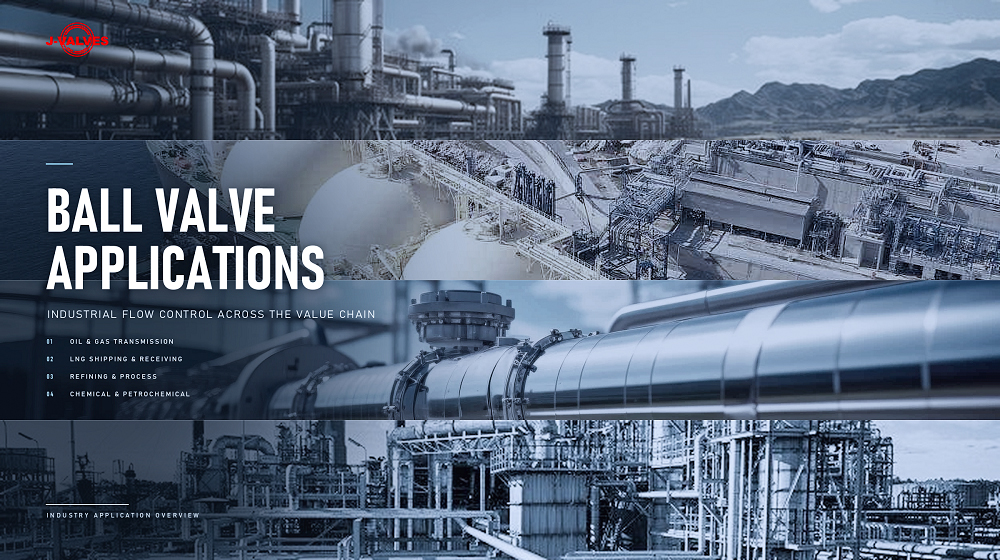
This valve is bought for JIS-specified plants and for the water and chemical duties where 304 is enough. Japanese and Korean designed process plants, shipbuilding and marine systems, water treatment and demineralisation, food and beverage lines where a stainless body is required for hygiene rather than for corrosion, and general chemical service where the medium is neutral or mildly aggressive.
At one megapascal the pressure is not the design driver; the medium is. That is why the grade conversation matters more than the class conversation on this valve: a CF8 body in a chloride service will fail while the pressure is nowhere near the rating, and the failure will be pitting rather than a burst.
Installation, Operation and Maintenance
Match the gasket to the flange standard before anything else. A JIS B2220 raised face takes a gasket sized to its own outside diameter, and an ASME gasket of the same nominal size will overhang or underhang. Bring the flanges up parallel, use a new gasket, and tighten in a cross pattern; on a four stud cap the sequence is short but it still matters.
The lever gives a quarter turn and no more. There is no gear and no stop beyond the machined stop in the stem, so a lever that is pushed hard against its stop with a cheater bar is a stem that will eventually twist. Where the valve needs more force than a hand can give, the answer is an actuator on the square pad rather than a longer lever.
For maintenance the line is isolated and vented, the four cap nuts are released, and the cap comes away with the ball and both seats reachable. The gasket is replaced, not reused. A stainless body should be washed down and dried before it is put back, because a wet stainless surface in a stagnant line is where the first pits appear.
How to Specify and Order
Six lines fix the valve: size in the JIS schedule, pressure designation, body grade by ASTM or JIS name, flange facing, seat material, and the operator. Naming the grade in both systems at the enquiry saves a round of questions, and it also prevents the substitution of CF8M for CF8 or the reverse on the assumption that the higher number is better.
Four questions are about the line: the medium with its chloride content, the design temperature, the operating pressure, and whether the plant standard is JIS or ASME. The medium decides between CF8 and CF8M, the temperature decides the seat, the pressure confirms that 10K is enough, and the plant standard decides whether this valve is the right one at all.
Ask for the certificate with the heat number, the positive material identification reading where the grade matters, and the test record. On a stainless valve the certificate is the only proof of grade that survives, because the part itself gives nothing away once it is painted, wrapped and on a shelf.
FAQ
Q: Is CF8 the same as SCS13?
A: Yes, for practical purposes. CF8 is the ASTM A351 designation and SCS13 is the JIS G5121 designation for the same cast austenitic stainless with equivalent chemistry. A Japanese specification will name SCS13 and a certificate may cite either, so the chemistry is what should be compared.
Q: What does 10K mean, and is it the same as Class 150?
A: 10K is a pressure designation of one megapascal. It is not Class 150: an ASME Class 150 carbon steel valve is rated at roughly double that, so a 10K valve cannot be substituted for a Class 150 valve on the strength of a similar flange size.
Q: Does 150A mean 150 lb?
A: No. 150A is a nominal size in the JIS schedule and corresponds to DN150, which is about six inch. The pressure designation on this valve is the 10K, and the two numbers on the plate are size and pressure rather than two pressures.
Q: Will a JIS flange bolt to an ASME flange of the same size?
A: Not reliably. JIS B2220 and ASME B16.5 have different bolt circles, bolt sizes and facing dimensions at the same nominal size, so the two are not interchangeable without an adapter. A JIS valve belongs on a JIS line.
Q: Why does the data sheet say minus 2 C?
A: That figure looks like a typing slip rather than a design limit, because a cast stainless floating valve with PTFE seats is normally quoted from around minus 29 C. Anyone ordering this valve for a cold service should confirm the low temperature figure in writing before the order is placed.


Hot Products


News
Reading A Ball Valve GA Drawing: The Five Dimensions That Decide Whether It Fits
A GA drawing is approved for its outline and lost on its section. The five dimensions that decide whether the valve fits, bolts and can be operated.
Read More
Stainless Steel Ball Valve Grades: 304, 316 And 316L, And What Actually Decides
Molybdenum is the difference that decides the duty, carbon is the difference that gets missed, and the chloride in the line matters more than the price.
Read More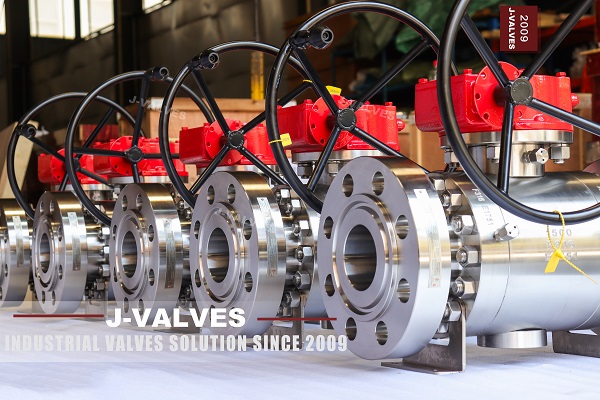
Ball Valve Spare Parts for Overseas Projects: The Wear Part List, The Quantity Math, And Four Traps
Why isolation valves fail on calendar time, not cycles. Wear part lists, Poisson stock maths, seat kit traps and the clauses that decide year six.
Read More
Ball Valves On A Bottom Loading Gantry: Creep, Dry Break And The Test That Proves Neither
A loading gantry cycles a ball valve far more than it is designed for and still cannot prove shut-off. Where creep starts, and what to specify.
Read More