


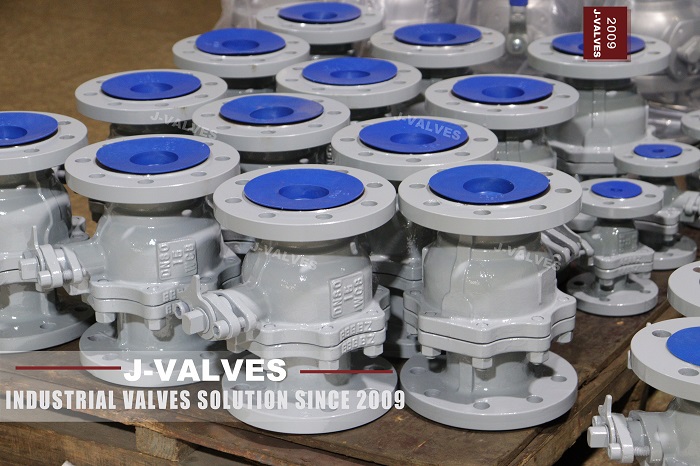
I. Why Reference API 608 for Process‑Plant Floating Ball Valve Selection
Within petrochemical, chemical and downstream oil‑gas facilities, DN25‑DN80 small‑to‑medium cast‑steel floating ball valves are widely deployed in process piping. Many engineering teams confuse API 608 with API 6D, which results in improper selection, on‑site leakage and safety risks.
API 608 is an authoritative API specification for floating ball valves intended for onsite process piping, while API 6D targets long‑distance transmission pipelines. API 6D mostly applies to trunnion‑mounted ball valves for pipelines; API 608 is optimized for floating‑ball designs for plant‑internal process lines. ASTM A216 WCB carbon steel is one of the most common body materials under API 608 scope. PN16 (equivalent to Class 150) and DN25‑DN80 fall right into API 608’s most typical application range. This article interprets API 608 requirements and delivers practical selection guidance for WCB floating ball valves in this size range.
II. Basic Definitions of DN25‑DN80 PN16 WCB Floating Ball Valves per API 608
Size & Pressure Boundaries
API 608 covers flanged‑end ball valves DN15‑DN600. For process‑plant mainstream sizes DN25, DN40, DN50, DN65, DN80, floating‑ball construction is the preferred option. PN16 (1.6 MPa) matches Class 150 pressure class. WCB cast‑steel bodies must follow ASME B16.34 pressure‑temperature rating charts. Do not apply full nominal pressure rating under high‑temperature service; allowable working pressure drops as operating temperature rises.
Key distinction: API 6D is for cross‑country pipelines, prioritizing trunnion‑mounted valves with mandatory full‑bore. API 608 serves plant‑process piping, favors floating‑ball design, and permits both full‑bore and reduced‑bore variants for isolation service.
WCB (ASTM A216) Body Material under API 608
ASTM A216 WCB carbon steel is an approved cast‑steel body material within API 608. It delivers good mechanical strength and weldability, compatible with non‑corrosive media including oil products, natural gas, water and steam. Operating temperature range:‑29℃ ~ +425℃.
1. Body: WCB cast steel
2. Ball: A105 hardened steel or CF8 stainless steel
3. Stem: API 608 mandates blow‑out‑proof stem design to prevent stem ejection under internal pressure, a non‑negotiable requirement.
4. Anti‑static feature: For flammable‑explosive media, anti‑static assembly shall be fitted to discharge static electricity from ball component and avoid ignition hazards.
III. Core Selection Criteria for DN25‑DN80 PN16 WCB Floating Ball Valves (API 608 Compliant)
Full‑Bore vs Reduced‑Bore
Unlike API 6D, API 608 does not enforce full‑bore construction.
1. Reduced‑bore: Lower cost, lighter weight. Most PN16 WCB floating ball valves DN25‑DN80 are reduced‑bore. Fit for general isolation service where pigging is not required and minor pressure drop is acceptable.
2. Full‑bore: Minimum flow resistance, permitting pig passage. Specify full‑bore when pipeline cleaning or particle‑laden media exists.
Selection note: Clearly state full‑bore or reduced‑bore in purchase specification to avoid mismatch with process requirements.
Sealing Pair & Fire‑Safe Compliance
1. Soft‑seat: PTFE / R‑PTFE provides bubble‑tight shut‑off for general‑purpose service, max service temperature ~150℃.
2. Fire‑safe requirement: API 608 references API 607 fire‑safe test standard. For oil‑gas and flammable service, valves shall pass API 607 fire‑safe qualification. Metal‑to‑metal backup sealing shall function during fire events to mitigate hazardous media release.
3. Seat performance: Floating‑ball valves rely on line pressure to push ball against outlet seat for sealing. API 608 defines strict seat load limits. Never over‑pressure floating‑ball valves.
Flange, Face‑to‑Face & Testing Requirements
1. Flange standard: ASME B16.5 for Class150 / PN16 flanged ends.
2. Face‑to‑face dimension: ASME B16.10.
3. Inspection & test: API 598 is the mandatory test standard under API 608. Shell test at 1.5×nominal pressure, seat leakage test at 1.1×nominal pressure shall be fully performed, no test‑procedure simplification is permitted.
IV. Suitable & Unsuitable Service Conditions for DN25‑DN80 PN16 WCB Floating Ball Valves
✅ Recommended Applications
1. Petrochemical process units
2. Chemical plant isolation for oil, cooling water, compressed air, steam
3. Natural‑gas station process piping
4. Power‑plant auxiliary fluid systems
❌ Not‑Recommended Scenarios
1. Continuous throttling service:Floating‑ball valves are designed for ON/OFF isolation only. Long‑term throttling will rapidly erode seat sealing surfaces and cause internal leakage.
2. High‑pressure service PN≥25: For DN80 size under higher pressure, switch to trunnion‑mounted ball valves instead of floating‑ball type.
3. Strong corrosive fluids: WCB carbon steel is not suitable for strong acid / alkali; upgrade body material to CF8 / CF8M stainless steel.
V. Common Project‑Sourcing Pitfalls
1. Misapplication of API 6D for small‑size plant‑process valves. API 6D pipeline valves cost more with mandatory full‑bore. API 608 floating‑ball valves deliver better cost‑efficiency for routine DN25‑DN80 plant isolation.
2. Specify only “WCB ball valve” without API 608 and API 598 test clauses. Suppliers may deliver general GB‑standard valves lacking blow‑out‑proof stem, anti‑static and fire‑safe verification.
3. Ignore pressure‑temperature derating. PN16 rating cannot be maintained across all operating temperatures. Always refer to ASME B16.34 pressure‑temperature tables for WCB bodies.
VI. Conclusion
DN25‑DN80 PN16 WCB floating ball valves are workhorse isolation components for process piping. API 608 sets complete design, material and test rules. Beyond nominal size, pressure and body material, validate blow‑out‑proof stem, anti‑static device (for flammable service), API 598 test reports and fire‑safe certification if applicable, plus explicit full‑/reduced‑bore definition. Strict compliance with API 608 minimizes operational failure risk and secures long‑term valve reliability.
CTA
If you need API‑608 compliant DN25‑DN80 WCB floating ball valve datasheets or quotation support for your project, please contact us for full technical proposals.


