
Ball Valve News & Technical Insights from J-VALVES
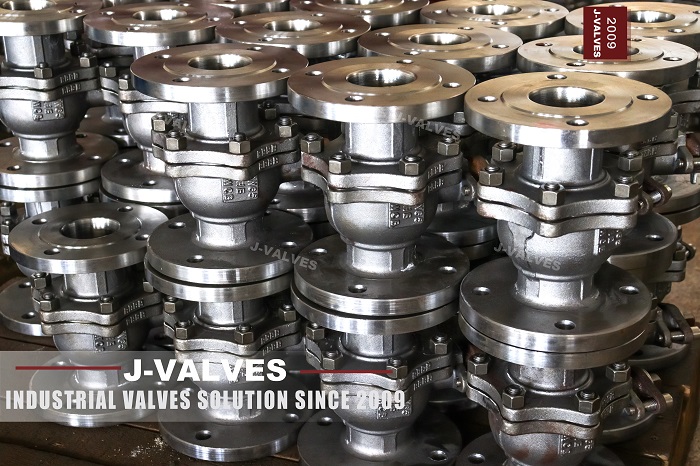
Ball Valves in Geothermal Brine: Silica Scale, Chloride Cracking And The Cooling Trap
Why geothermal brine destroys ball valves: retrograde silica scale, calcite at the flash point, chloride cracking above 60 C and the 250 C seat limit.
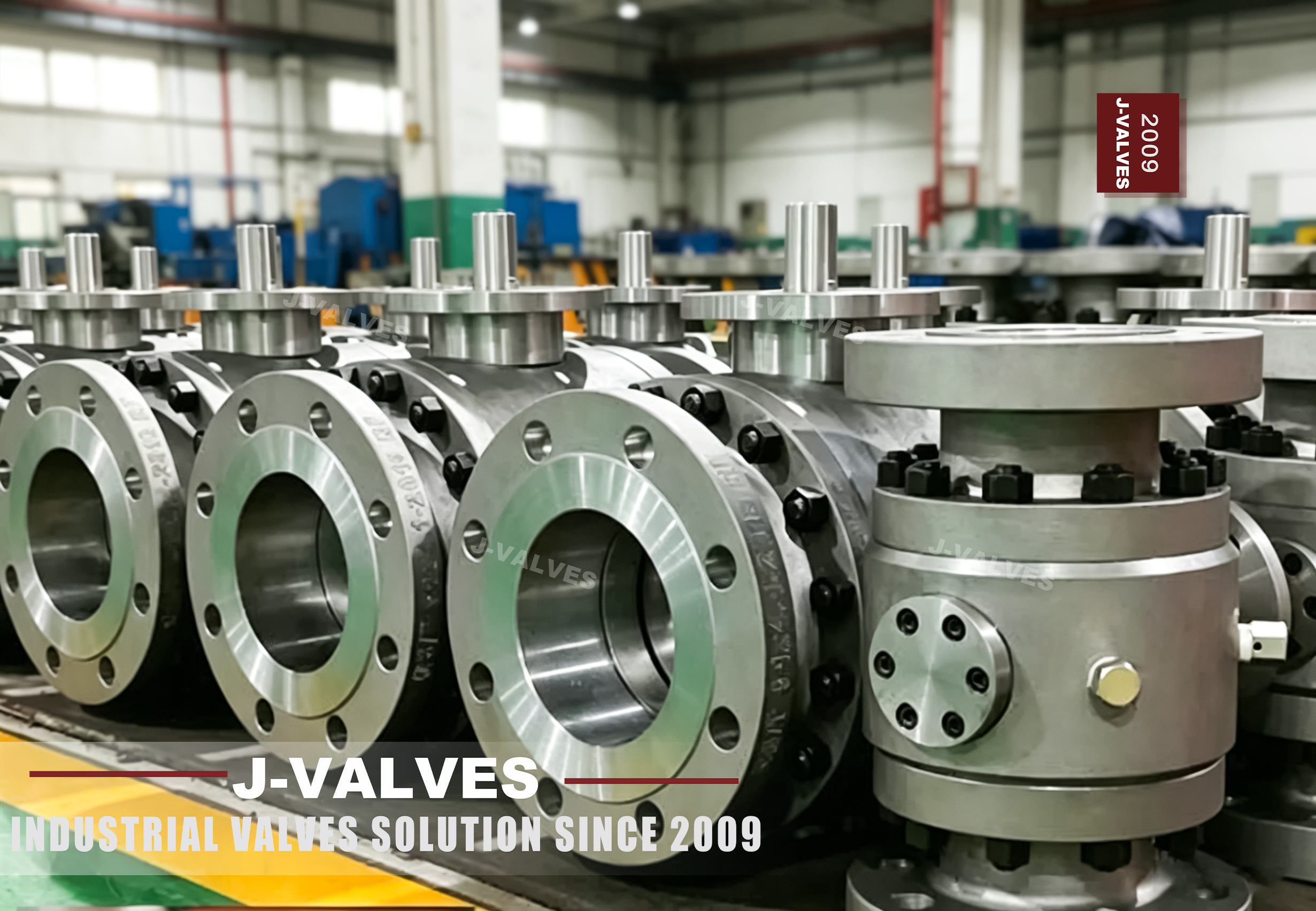
Ball Valve Face To Face Dimensions: Why A Correctly Ordered Replacement Still Does Not Fit
A 6 inch Class 150 ball valve can be 267 or 305 mm face to face and both are compliant. How B16.10, EN 558 and flange drilling decide whether it fits.

Ball Valve Stem Key And Keyway: What Gives Way First, And What The Handle Cannot Tell You
Between the handle and the ball there are four fits. Which one shears, which one cracks, and how a few degrees of lost motion hides a valve that never seated.

Ball Valve Datasheet: Six Blocks That Decide Whether Two Quotes Are Comparable
A ball valve datasheet only works when six blocks are fixed: pressure basis, bore, temperature ceiling, test, end connection, operator. How each is written.

Ball Valves in Coal Gasification Black Water: Erosion, Flash And The Isolation Only Rule
The valve that stopped a gasifier train was an 8 inch Class 900 ball valve on the black water letdown, seven months into service. It had not leaked. It had stopped turning. The actuator was delivering its rated torque, the stem was intact, and the ball would not move more than a few degrees. When th

Ball Valve Sealant Injection: What The Grease Fitting Actually Connects To
A 20 inch Class 600 ball valve on a natural gas export line developed a seat leak that measured 300 parts per million by volume on the ultrasonic meter at the downstream flange. The leak was not a safety emergency and it was not going to be fixed by anything short of a shutdown, which was fourteen m

Ball Valve Condition Monitoring: Which Signals Actually Predict A Failure
Torque signatures, acoustic emission, differential pressure and digital twin residuals: which measurements find a failing ball valve early.

Ball Valves in SWRO Desalination: The High Pressure Section Where Ordinary Seawater Valves Fail
Why SWRO high pressure valves fail early: recovery arithmetic, crevice temperature, ERD ripple, scale, letdown cavitation and surge.

Air Test And Water Test For Ball Valves: What Each Medium Can Prove
A ball valve can pass a hydrostatic seat test and still leak gas. Why air and water prove different things, and how to read a bubble, decay or helium test.
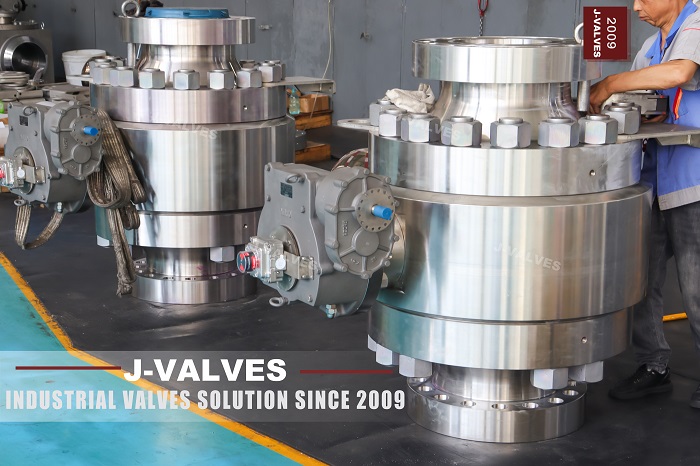
Ball Valve Flange Bolting: Preload, Relaxation And The Fasteners That Decide Leakage
A weeping flange is rarely the gasket. Preload, torque scatter, hardness limits and thermal relaxation decide whether the joint holds at 100 bar and 400 C.

Nominal Size: 1 inch / DN25, range 1/4 to 12 inch Pressure Class: ASME Class 150, 19.6 bar at 38°C; Class 300 optional Body Material: ASTM B148 C95800 nickel aluminum bronze Body Type: Two piece, bolted Ball: C95800, SS316 hard faced optional Stem: C95800 or SS316, blowout proof Seat: PTFE, RPTFE, PPL, or reinforced PTFE Packing: PTFE or graphite combined packing End Connection: Threaded NPT / BSPT, flanged RF to ASME B16.5 optional Service Temperature: -29°C to +150°C standard, +200°C high temperature version Seawater Velocity Limit: About 6 m/s clean, 4.5 m/s with sand Design Standard: API 608, ASME B16.34 Test Standard: API 598, ISO 5208 Operation: Lever standard, pneumatic or electric optional

Size Range: 2 to 56 inch (DN50 to DN1400) Pressure Class: ASME Class 150 to 2500 / PN20 to PN420 Body Material: WCB, LCB, CF8, CF8M, CF3M, duplex, alloy steel Ball: Stainless with hard chrome, ENP, Stellite or tungsten carbide overlay Seat: PTFE, RPTFE, PPL, or metal Stellite faced Seat Arrangement: SPE, DPE (DIB-1), or combination (DIB-2) Packing: Live loaded graphite, ISO 15848-1 qualified Fire Test: API 607, also API 6FA and ISO 10497 Fugitive Emission: ISO 15848-1 class B or A, with temperature and cycle class stated Face to Face: ASME B16.10 short or long pattern End Connection: Flanged RF / RTJ to B16.5 and B16.47, butt weld to B16.25 Features: Double block and bleed, sealant injection, anti-static, anti-blowout stem Design Standard: API 6D, API 608, ASME B16.34, ISO 14313 Operation: Lever, gear, pneumatic, electric, hydraulic, gas over oil Sour Service: NACE MR0175 available

Nominal Size: 1-1/2 inch / DN40 Pressure Rating: 1000 WOG (68.9 bar cold working, non-shock) Body Type: Three piece, bolted end caps, four body bolts Body Material: ASTM A351 CF8 (304), CF8M (316) optional Ball: CF8, polished Ra 0.4 µm, full or reduced bore Seat: PTFE, RPTFE, PPL, or Stellite faced metal Body Gasket: PTFE to 180°C, graphite above Packing: PTFE V-ring to 200°C, graphite above End Connection: NPT, BSP, socket weld B16.11, butt weld B16.25, flanged RF Actuator Mounting: ISO 5211 F05 / F07 pad Air Supply: 0.4 to 0.7 MPa clean dry air Service Temperature: -29°C to +260°C, seat dependent Design Reference: MSS SP-110 general purpose, ASME B16.34 body wall Test Standard: API 598, ISO 5208

Nominal Size: 3/4 x 1/2 inch (DN20 x DN15), reduced bore Pressure Class: ASME Class 600 / PN100, 102.1 bar at 38°C Body Material: ASTM A182 F51 forged duplex, UNS S31803 PREN: Approximately 35 Ball: F51 with HVOF tungsten carbide or Stellite overlay Stem: F51, SS316 or 17-4PH, blowout proof Seat: RPTFE, Devlon, PEEK, or Stellite faced metal Bolting: B8M Class 2, alloy 718, or B7M for sour service End Connection: NPT, BSP, socket weld ASME B16.11, butt weld ASME B16.25 Bleed Port: Cavity bleed with plug or needle valve, lockable option Service Temperature: -29°C to +300°C, seat dependent Design Standard: API 6D, API 608, ASME B16.34 Test Standard: API 598, ISO 5208, cavity test through bleed port Sour Service: NACE MR0175 available