

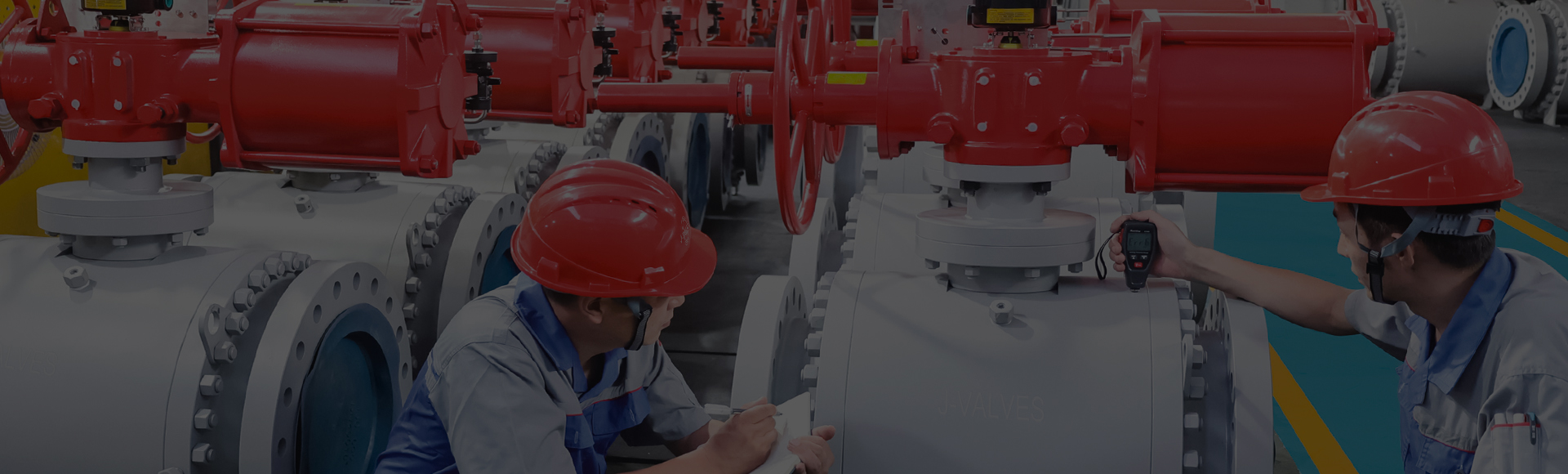
CHINA J-VALVES Offers Various High-quality I ndustrial Ball Valves
J-VALVES, a distinguished professional ball valve manufacturer rooted in China, takes pride in its extensive product portfolio. Our offerings span a wide range, including trunnion-mounted ball valves, floating ball valves, high-temperature ball valves, high-pressure ball valves, metal-sealed ball valves, ultra-low temperature ball valves, DBB ball valves, Three-way And Four-way Ball Valve, and fully welded ball valves. Each product is a testament to our commitment to precision engineering and reliable performance. Meticulously crafted, they are designed to not only meet but exceed the most stringent industrial demands, ensuring stable operation even under extreme conditions. This enables us to provide our clients with high-value services and makes our valves widely sought-after in industries.
Product Category
Contact Us

Pressure Class: Class 150 / 300, PN16 / 25 / 40, JIS 10K / 20K
Body Material: CF8, CF8M, 1.4308, 1.4408, WCB
Body Type: 2 piece, 3 piece, fully welded
Port: Full port or reduced port
Seat: PTFE, RPTFE, PPL, PEEK, metal
Flange Standard: ASME B16.5, EN 1092-1, JIS B2220
Design Standard: API 608, API 6D, EN 13709, JIS B2071
Test Standard: API 598, EN 12266-1, JIS B2003
Temperature Range: -29°C to 250°C depending on seat
Fire Safe: API 607 available
Operation: Lever, gear, pneumatic, electric
-
Q41F-16P
-
J-VALVES
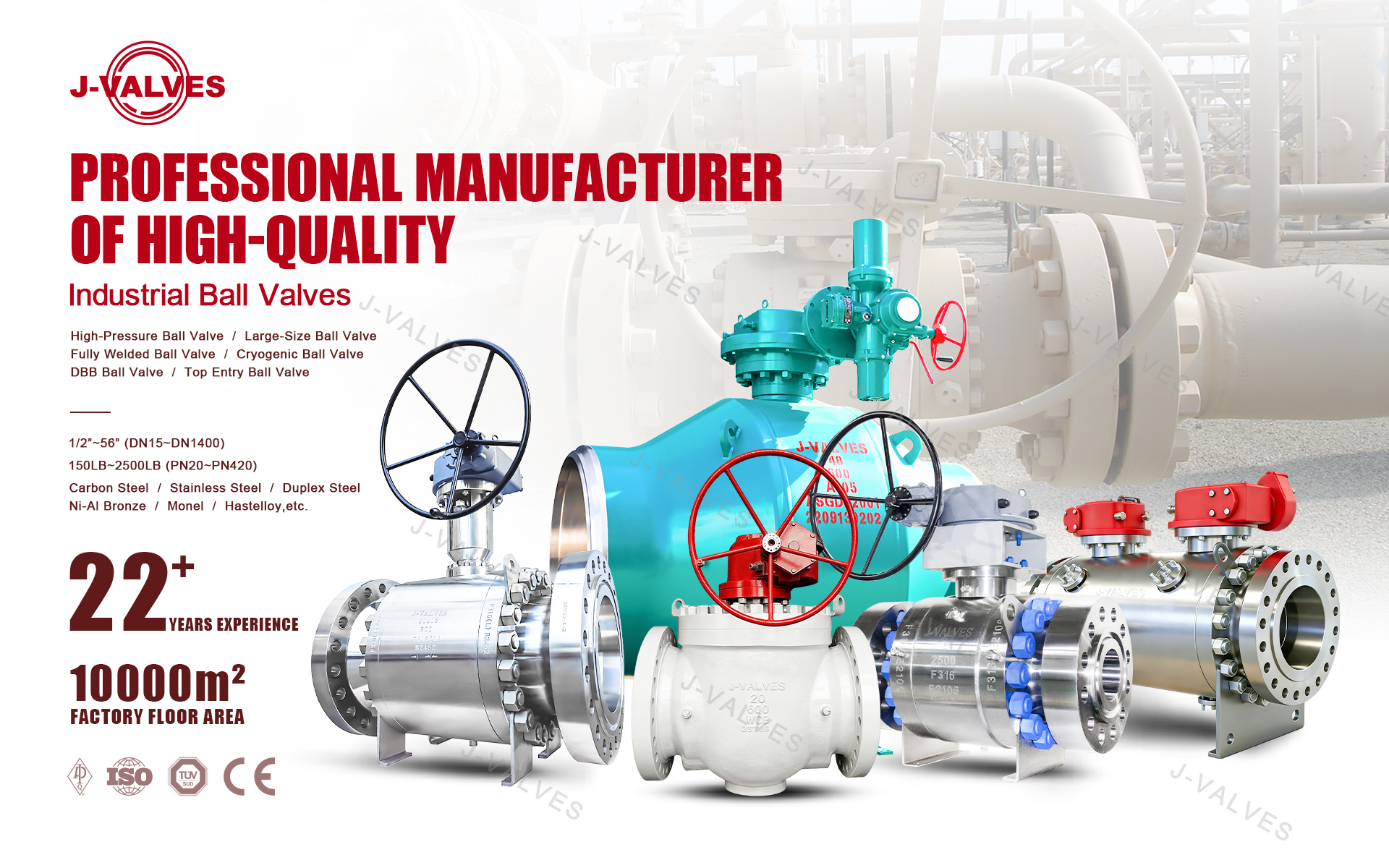
A stainless steel flange ball valve is a quarter-turn isolation valve whose body is bolted between two pipe flanges, with a stainless body, ball and stem and a soft seat. The four choices that define one are the number of body pieces, the flange standard, the pressure class and the seat material, and those four choices decide 80 percent of the price and almost all of the service life.
This page is the selection guide for the whole range: 1/2 to 8 inch, Class 150 to 300, PN16 to PN40, JIS 10K, 304 or 316, two piece or three piece, lever or actuated. Each section ends at the page that covers that variant in detail, so a buyer can stop reading at the decision they are actually making.

The Four Decisions, in the Order They Should Be Made
Buyers usually start with price and work backwards. The order below is the one that avoids a second quotation.
| Order | Decision | Options | Why it comes here |
|---|---|---|---|
| 1 | Flange standard | ASME B16.5, EN 1092-1, JIS B2220 | It is fixed by the pipe, and it cannot be changed later without a spool |
| 2 | Pressure class | Class 150/300, PN16/PN40, 10K/20K | Sets the flange drilling and the wall, and follows from the line class |
| 3 | Body construction | 2 piece, 3 piece, fully welded | Decides whether the valve can be repaired in line |
| 4 | Body grade and seat | 304 / 316, PTFE / RPTFE / PPL / metal | Decides corrosion life and the temperature ceiling |
The actuator comes last, but it should be decided at step 3, because the mounting pad is machined into the body and cannot be added afterwards without changing the valve.

Flange Standard: The Decision That Cannot Be Fixed Later
Three systems dominate export projects, and none of them interchange. The bolt circle, the bolt diameter and the raised face height all differ, and the differences grow with size.
| System | Standard | Common markets | Child page |
|---|---|---|---|
| ASME | B16.5, Class 150 / 300, raised face | North America, Middle East oil and gas, most EPC projects | 304 fire safe, Class 150 and Class 300 versions |
| EN / DIN | EN 1092-1, PN16 / PN25 / PN40, form B1 | Europe, North Africa, district heating | DIN PN16 / PN40 |
| JIS | JIS B2220, 10K / 20K | Japan, Korea, Taiwan, Japanese-owned plants in ASEAN | JIS 10K |
A useful sanity check: an ASME Class 150 and an EN PN16 flange are both rated near 16 to 20 bar and both look alike at 2 inch, but the bolt circles differ by under a millimetre at some sizes and by 15 mm at others. That is worse than an obvious mismatch, because it survives a visual check and fails at assembly.
Two Piece, Three Piece or Fully Welded
The body construction decides how the valve is serviced, and that is the whole argument.
| Construction | Static joints | Repair in line | Typical use | Relative cost |
|---|---|---|---|---|
| Two piece | 1 | No | Flanged lines 1/2 to 8 inch, general isolation | Base |
| Three piece | 2 | Yes, swing out centre | Small bore, skids, manifolds, instrument lines | +10 to 25 percent |
| Fully welded | 0 external | No | Buried, gas distribution, leak-critical | +30 to 50 percent |
On a flanged line above 2 inch the two piece body is the default, because the pipe has to be opened to service the valve anyway and the extra joint of a three piece buys nothing. Below 2 inch the arithmetic reverses: the labour to cut and remake a screwed joint is larger than the price difference, so the three piece wins.
Body Grade: 304, 316 or Duplex
The grade question is a chloride question, not a quality question. 304 (CF8) is correct for potable and process water below about 200 mg/L chloride. 316 (CF8M) is correct from 200 to 500 mg/L, and for coastal atmospheres and most chemical service. Neither is a seawater valve; above 500 mg/L, or in true seawater, a duplex body is the answer and it is a different product family.
| Grade | Cast / wrought | Chloride limit, approximate | Relative cost |
|---|---|---|---|
| 304 | CF8 / F304 | 200 mg/L | Base |
| 316 | CF8M / F316 | 500 mg/L | +15 to 25 percent |
| 316L | CF3M / F316L | 500 mg/L, welded bodies | +20 to 30 percent |
| Duplex 2205 | CD3MN / F51 | Seawater, high chloride | +80 to 120 percent |
The cost step from 304 to 316 is small compared with the cost of a pitted body at the seat pocket, which usually shows up as a weep at the body joint that no gland adjustment can stop. On a coastal site, 316 should be the default rather than the upgrade.
Port: Full Bore or Reduced Bore
A full port valve has a bore equal to the pipe inside diameter, so the pressure drop is close to that of a straight pipe. A reduced port valve has a bore one size down, which makes the body shorter, lighter and cheaper, at the cost of a permanent pressure drop and a pigging obstruction.
| Size | Full port Cv, approximate | Reduced port Cv, approximate | Face to face, Class 150 |
|---|---|---|---|
| DN15 (1/2 inch) | 20 | 13 | 108 mm |
| DN25 (1 inch) | 45 | 30 | 127 mm |
| DN50 (2 inch) | 190 | 130 | 178 mm |
| DN80 (3 inch) | 480 | 330 | 203 mm |
| DN100 (4 inch) | 750 | 520 | 229 mm |
| DN150 (6 inch) | 1700 | 1200 | 267 mm |
The Cv figures are indicative and move with the ball finish and the seat design; they are useful for comparing port options, not for sizing a control function. A ball valve is an isolation device, and using a reduced port valve as a throttle is a common and expensive mistake, because the partially open ball puts the seat edge directly in the highest velocity stream.

Seat: The Real Temperature Rating
Every stainless flange ball valve on the market quotes a temperature range, and the honest ones quote the seat rather than the body.
| Seat | Continuous | Torque | Where it belongs |
|---|---|---|---|
| PTFE | 180°C | Lowest | Cold water, air, clean service |
| RPTFE | 200°C | +15 to 30 percent | The default for most plants |
| PPL | 220°C | +40 percent | Hot water, low pressure steam |
| PEEK | 250°C | +60 percent | Cycling hot duty, better ball finish needed |
| Metal, Stellite | 450°C and above | Highest | Abrasive, high temperature, fire-critical |
Above 200°C the valve is no longer a standard product: the packing changes to graphite, the body gasket changes, the ball finish has to be finer, and the actuator has to be sized on a torque that may be double the ambient figure. That combination is covered on the high temperature threaded page, and the same logic applies to a flanged body.

Reading a Chinese Model Code: Q41F-16P
Most Chinese-made stainless flange ball valves carry a GB/T 21465 code, and once it is decoded it tells a buyer more than a paragraph of description.
| Position | Letter | Meaning |
|---|---|---|
| 1 | Q | Ball valve (qiu fa, 球阀) |
| 2 | 4 | Flanged connection (1 = screwed, 6 = welded) |
| 3 | 1 | Floating ball, straight through (7 = trunnion, 6 = three way) |
| 4 | F | PTFE seat (H = metal seat, Y = hard alloy) |
| 5 | 16 | Nominal pressure, PN16 (or 150 / 300 for ASME) |
| 6 | P | Body material: P = 304, R = 316, C = carbon steel |
So Q41F-16P is a flanged, floating, PTFE-seated, PN16, 304 ball valve. A Q41F-300LB-R would be the same valve in Class 300 with a 316 body. This code appears on almost every Chinese quotation, and a buyer who can read it catches a wrong material or a wrong seat before the order rather than after delivery.
Cost, Lead Time and What Moves Them
For a two piece flanged stainless valve in a stock size, the price is driven by four things in this order: body grade (304 or 316), pressure class, port, and test and documentation scope. The seat material is a small cost item. The certificate package is not: a 3.1 certificate, a fire test report and a dimensional report add work at the end of the line and are usually quoted separately.
Lead time is typically 4 to 6 weeks for stock sizes in 304 and 6 to 8 weeks for 316, PN40 or a PPL seat. A non-standard face-to-face or a special flange drilling adds a drawing approval cycle of about a week, and that week is worth planning for on a project schedule.
The Range, Page by Page
The pages below take one decision each, so that a buyer can read the one that matches the line in front of them. Every page carries the same structure: a definition, the standards, the limits, and a specification checklist.
| Page | Covers | Read it when |
|---|---|---|
| 304 fire safe, Class 150 | API 607, fire safe construction, 304 versus 316 | The line is fire water or the specification calls for API 607 |
| DIN PN16 / PN40 | EN 1092-1, EN 12266-1, 1.4408 | The pipe is EN drilled |
| JIS 10K | JIS B2220, SCS13 / SCS14, B2002 | The project is Japanese or the shipyard is JIS |
| ISO 5211 mounting pad | Pad sizing, actuator interface, high pad versus low pad | The valve will be actuated now or later |
| Q41F 300LB | Class 300, F05 / F07 pad, model code | The line class is 300 and the buyer reads Chinese codes |
| API 6D forged | Forged body, 2 piece, high pressure | The class is 600 and above, or the buyer requires API 6D |
| Socket weld 3 piece | ASME B16.11 ends, 1000 psi | The line is welded and small bore |
| Pneumatic 3 piece | Double acting actuator, torque, accessories | The valve is remote operated |
| 2 piece screwed | NPT / BSPP, full port, 1000 WOG | The line is threaded |
| High temperature threaded | PPL seat, graphite packing, 4 inch | The medium is above 200°C |
| 3 piece screwed | Swing out centre, in-line repair | The valve has to be serviceable in place |
FAQ
What is the difference between a flange ball valve and a flanged ball valve?
Nothing. Both describe a valve with flanged ends that bolts between two pipe flanges. Flange ball valve is the more common phrasing in catalogues and in search; flanged ball valve is more common in specifications.
Which is better, 304 or 316, for a stainless flange ball valve?
It depends on chloride, not on quality. 304 is correct for potable and process water below about 200 mg/L chloride. Above that, or on a coastal site, 316 is the safer default and costs 15 to 25 percent more. Neither is suitable for seawater.
Can a two piece valve be repaired in line?
No. The ball is inserted through the downstream end, so the pipe on that side has to be disconnected. If in-line repair matters, a three piece body is the correct choice, at 10 to 25 percent more cost and one additional static joint.
What is the pressure drop of a full port ball valve?
Very low when fully open, close to a straight length of pipe, because the bore matches the pipe. The Cv for a 2 inch full port valve is roughly 190, against about 130 for a reduced port version. A partly open ball valve is not a throttling device and should not be used as one.
What does the P mean in Q41F-16P?
P is the body material code in the GB/T 21465 system, and it means 304 stainless. R would mean 316, and C would mean carbon steel. The 16 is the nominal pressure, PN16, and F is the PTFE seat.
How long does delivery take?
Typically 4 to 6 weeks for stock sizes in 304, and 6 to 8 weeks for 316, PN40 or a PPL seat. A non-standard face-to-face or flange drilling adds about a week for drawing approval, which is issued before machining.
Hot Products


News
Ball Valves in Amine CO2 Capture: Heat Stable Salts, Rich Amine, And The Three Places The Body Thins
Rich amine at 110 C with heat stable salts is where capture plant ball valves fail. Materials, velocity limits, cavity gas and seat choice, with numbers.
Read More
Fail-Safe Ball Valve Actuators: Spring Return, Stored Air, And The Torque Nobody Checks
Spring return or stored air? The answer is a torque curve, not a datasheet box. Sizing, receiver volume, closing time and four silent failures.
Read More
Ball Valve Stem Leak: The Gland, The Backseat And The Repair That Cannot Be Done Live
A stem leak on a quarter turn valve is four different failures. What gland tightening buys you, why the backseat is usually absent, and what needs a shutdown.
Read More
Ball Valves in A Kraft Pulp Mill: Black Liquor, Green Liquor And The Cost of Choosing The Alloy by Habit
White liquor at pH 14 cracks carbon steel welds, black liquor sets solid below 100 C, green liquor dregs grind seats: alloy choice and torque in a kraft mill.
Read More