

CHINA J-VALVES Offers Various High-quality I ndustrial Ball Valves
J-VALVES, a distinguished professional ball valve manufacturer rooted in China, takes pride in its extensive product portfolio. Our offerings span a wide range, including trunnion-mounted ball valves, floating ball valves, high-temperature ball valves, high-pressure ball valves, metal-sealed ball valves, ultra-low temperature ball valves, DBB ball valves, Three-way And Four-way Ball Valve, and fully welded ball valves. Each product is a testament to our commitment to precision engineering and reliable performance. Meticulously crafted, they are designed to not only meet but exceed the most stringent industrial demands, ensuring stable operation even under extreme conditions. This enables us to provide our clients with high-value services and makes our valves widely sought-after in industries.
Product Category
Contact Us


Pressure Class: ASME Class 150LB ~ 2500LB
Bore: Reduced port, one nominal size below pipe
Body Material: A105, A350 LF2, F316, F51 duplex (forged)
Ball & Stem: F316 / F316L forged with ENP
Seat Material: PTFE, RPTFE, PEEK or metal
End Connection: Flanged RF / RTJ, butt weld
Operation: Lever up to 6 inch, gearbox above
Torque: Lower than full bore in the same size and class
Design Standard: API 6D, ASME B16.34
Face to Face: ASME B16.10
Test Standard: API 598, API 607 fire safe
-
TBV Reduced Bore
-
J-VALVES
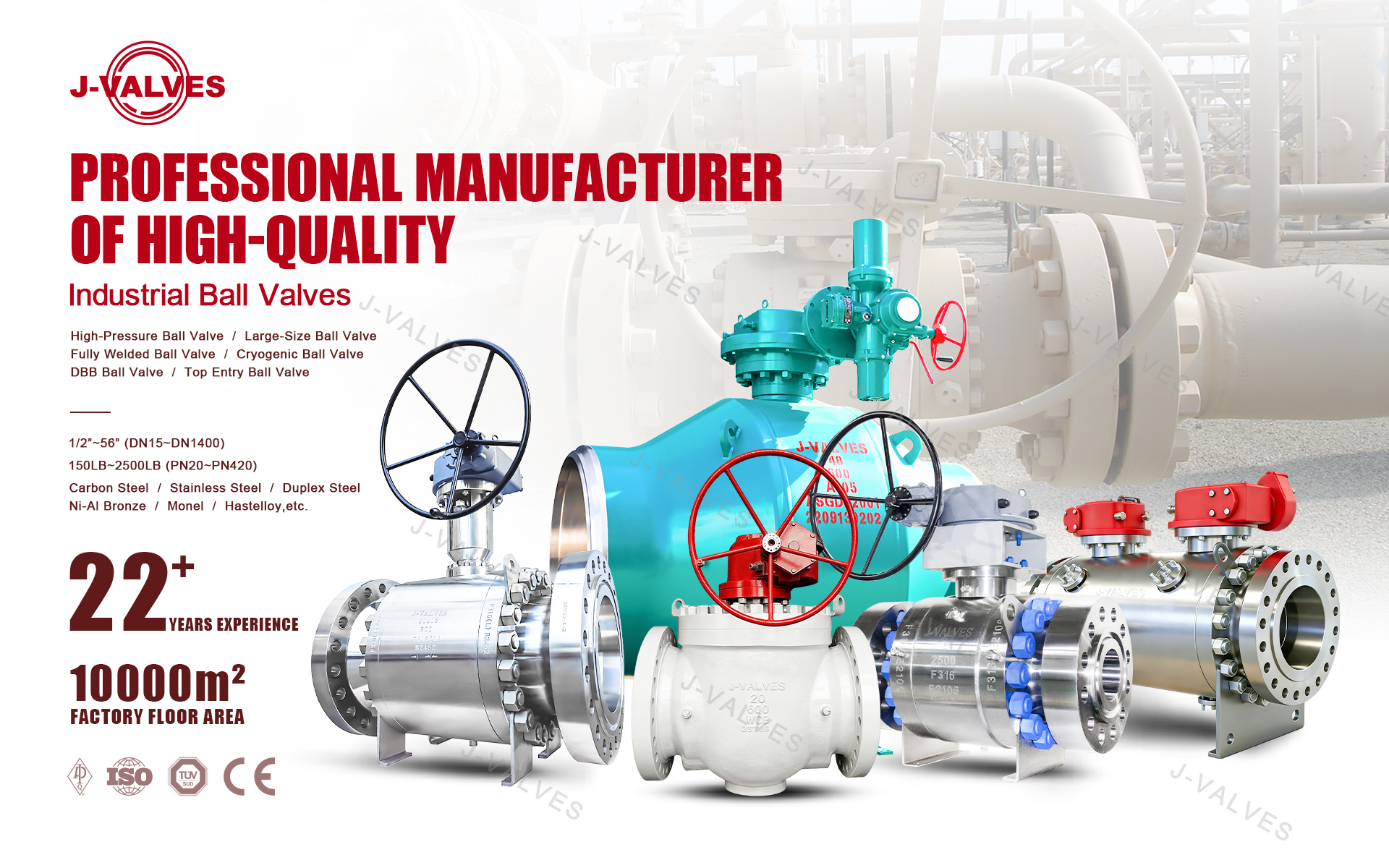
Overview of the J-VALVES Reduced Bore Trunnion Mounted Ball Valve, Reduced Port, Lower Torque
The reduced bore trunnion mounted ball valve is sized so the flow passage is one nominal pipe size smaller than the connecting line. A 6 inch (DN150) valve fits a 6 inch (DN150) flange yet presents a 4 inch (DN100) bore, so the ball, seats and body cavity all shrink with it. The result is a valve that weighs less, needs less operating torque and costs less than a full bore valve of the same size and class.
J-VALVES builds this reduced bore ball valve in sizes 2 inch to 24 inch (DN50 to DN600) and classes Class 150 to Class 900 (PN20 to PN150). It suits branch lines, blow-down, drain and bypass services. Design follows API 6D and ASME B16.34, tested to API 598 and API 607.
Because the bore is reduced, the valve cannot pass an in-line pig; services that may need pigging should use the full bore model at /products/full-bore-trunnion-mounted-ball-valve.html. The reduced bore trunnion ball valve is the leaner, economical ball valve where flow is intermittent.


Design and Construction
The reduced bore trunnion ball valve carries a ball bore one nominal size smaller than the line. A 10 inch (DN250) valve takes a 10 inch (DN250) flange and butt weld end, but the ball is machined to 8 inch (DN200).
The ball runs on lower and upper trunnions instead of hanging from the stem. Trunnion support stops line pressure from forcing the ball into the downstream seat, so seat load comes from spring force and line pressure on the seat insert. This holds shut at Class 900 (150 bar) without the torque rise of a floating ball valve.
The ball and stem are CF8M or F316 with an electrolytic nickel plating (ENP) on the ball. ENP gives a hard, low-friction face that cuts breakaway torque and resists galling. The smaller seat contact area raises contact stress at a given line pressure.
Seat material is chosen by service: PTFE for general duty, RPTFE where thermal cycling or permeation matters, PEEK for higher temperature, and metal seat for abrasive or hot duty. Operation follows a fixed split. Valves up to 6 inch (DN150) use a lever; from 8 inch (DN200) up they carry a gearbox. The gearbox mounts to an ISO 5211 flange so a pneumatic or electric actuator can be added later.

Material Options
The reduced bore trunnion ball valve is offered with a carbon or stainless body and a trim matched to the fluid and temperature. The table lists standard and optional materials for each pressure-bearing part.
| Component | Standard Material | Optional Upgrade | Service Notes |
|---|---|---|---|
| Body | A105 forged | A350 LF2, F316, F51 | One-piece forged body; no cast porosity, no weld repair |
| Ball | F316 Forged with ENP | F51 with ENP | Forged bar stock; EMP lowers friction and breakaway torque |
| Stem | F316 | F316 with ENP | Trunnion-mounted, anti-blowout stem |
| Seat | PTFE | RPTFE, PEEK, metal | Soft seat for tight shutoff; metal for abrasive or hot duty |
| Body bolts | A193 B7 / A194 2H | B7M/2HM, B8M | Per ASME B16.5 and B16.47 flange design |
| End connection | Flanged RF / RTJ, butt weld | — | RTJ preferred at high class and sour service |
| Seat spring | Inconel X-750 | — | Spring-energized seat for low-pressure sealing |
Carbon steel bodies in A105 forged cover ambient utility and process duty down to −29 °C. Because the body is forged from a single billet rather than cast, there is no shrinkage porosity and no repair welding, and the wall stays homogeneous through its thickness. Below −29 °C, A350 LF2 — the forged counterpart of cast LCC — is Charpy impact tested at −46 °C and holds toughness through a cold upset; below that, austenitic F316 takes over and remains suitable into cryogenic service. Forged F316 also suits corrosive, marine and hygienic service, and F316L is specified where the body is fabricated or weld-overlaid, since its lower carbon limits sensitization. Above roughly 60 °C in chloride-bearing media F316 gives way to F51 duplex: its minimum yield strength is about double that of F316 (450 MPa against 205 MPa), and it resists chloride stress corrosion cracking where the austenitic grade does not. Seat choice follows temperature and fluid. PTFE gives bubble-tight shutoff at low torque across clean services. RPTFE adds filler that limits cold flow and lifts the pressure-temperature rating. PEEK extends the temperature band and resists most chemicals, while a metal seat serves slurries and steam.
Technical Specifications
The table lists the primary ratings of the reduced bore trunnion mounted ball valve, stated per the referenced design and test standards.
| Item | Value |
|---|---|
| Size range | 2 inch ~ 56 inch (DN50 ~ DN1400) |
| Pressure class | Class 150LB ~ 2500LB (PN20 ~ PN420) |
| Bore type | Reduced bore (standard port), one nominal size below pipe |
| Body material | A105, A350 LF2, F316, F51 duplex (forged) |
| Ball and stem | F316 / F316L forged with ENP |
| Seat material | PTFE, RPTFE, PEEK, metal |
| End connection | Flanged RF / RTJ, butt weld |
| Operation | Lever (up to 6 inch), gearbox (8 inch and above) |
| Design standard | API 6D, ASME B16.34 |
| Face to face | ASME B16.10 |
| Fire safe | API 607, API 6FA |
| Test standard | API 598, API 607 |
| Torque | Lower than full bore; a low torque ball valve |
| Temperature | Set by body and seat: A105 to −29 °C, A350 LF2 to −46 °C, F316 into cryogenic; PTFE seat caps the upper end at +200 °C |
| Seat leakage | Zero leakage, ISO 5208 Rate A with soft seat |
Standards and Compliance
The table lists the pipeline and pressure-equipment standards referenced for this valve and whether they ship with it.
| Requirement | Standard | Supplied |
|---|---|---|
| Shell design | ASME B16.34 | Yes |
| Pipeline valve | API 6D | Yes |
| Face to face | ASME B16.10 | Yes |
| Flange dimensions | ASME B16.5, ASME B16.47 | Yes |
| Pressure test | API 598 | Yes |
| Fire safe | API 607, API 6FA | Yes |
| Material certificate | EN 10204 3.1 | Yes |
| Sour service | NACE MR0175 / ISO 15156 | On request |
| Fugitive emission | ISO 15848-1 | On request |
API 6D governs the pipeline valve as a product, with ASME B16.34 giving the shell wall thickness and rating basis and ASME B16.10 fixing face to face. API 598 is the basis for shell and seat leakage tests at zero leakage, and fire safety is verified to API 607 and API 6FA through the metal secondary seat. Where the fluid is sour, material selection and hardness follow NACE MR0175 / ISO 15156, written into the order.
Manufacturing Process
J-VALVES controls the full sequence from casting to packed valve in its Wenzhou plant. The body starts with casting mould preparation and pour control so the reduced bore cavity fills cleanly, with pour temperature watched to limit shrinkage and inclusions. Castings are heat treated and rough machined, then finished on CNC.
CNC machining brings the seat pockets, ball cavity, stem bore and flange faces to drawing. The reduced bore is cut into the ball on the same cycle that holds sphericity and the seat contact band, since the smaller ball is what lowers the torque. Flange drilling follows ASME B16.5 for Class 150 to 600 and ASME B16.47 for larger diameters.
Assembly joins ball, trunnion bearings, seat inserts and stem, then the valve is filled for the hydrostatic shell and seat tests. Torque is measured on the finished valve so breakaway and running torque are recorded against the class and bore. Painting and marking follow the order, and the valve is closed, capped and packed in a wooden case with ends plugged and flange faces protected.

Quality Control and Testing
Every valve passes an eight-step check before dispatch, recorded in the test report that ships with the valve.
| Step | What Is Checked | Standard or Acceptance |
|---|---|---|
| Incoming material | Chemistry and mechanical cert of castings | EN 10204 3.1 |
| Machining dimension | Bore, seat pocket, stem alignment | Per drawing, ASME B16.34 |
| Assembly and function | Open and close, torque check | Smooth travel, torque recorded |
| Shell strength | Hydrostatic body test | 1.5 times rated, no leakage, API 598 |
| Seat test | High and low pressure seat | Zero leakage, ISO 5208 Rate A |
| NDT and hardness | MT or PT, hardness review | Per procedure, NACE if specified |
| Fire safe | Soft seat fire test | API 607, API 6FA |
| Painting and marking | Coating thickness, nameplate | Per purchase order |
| Final inspection | Documents and packing | Dossier complete |
Incoming control confirms the foundry certificate against the ordered grade before machining. The machining check verifies the reduced bore, seat pocket depth and stem concentricity within drawing tolerance. The shell test pressurizes the body with water to 1.5 times rated working pressure and holds it while joints are inspected for weep or bulge.
The seat test runs from both directions at the specified pressure, and a soft-seated valve shows zero leakage to ISO 5208 Rate A. The dossier carries the material certificate, dimensional report, test report with torque records, painting report and packing list.

Applications and Industry Service
The reduced bore valve is typically 20 to 35 percent lighter than a full bore valve of the same size and class, and it fits services where a small pressure drop is traded for a lighter, cheaper and lower-torque valve. It is placed on branch lines drawing from a main, on blow-down and drain connections, and on bypass loops where flow is intermittent.
The valve also suits locations short on weight and space. Skids and packaged units gain from the smaller body and shorter actuator moment, and the lower torque can keep a manual valve on a lever at sizes where a full bore unit needs a gearbox. Where an actuator is needed, the lower torque can permit a smaller unit, cutting air use and bundled cost.
It should not be specified for crude or gas trunk lines, nor for any segment that may later pass a pig, because the reduced bore blocks free pig travel. It is also poor on a line whose hydraulic design is already tight, since the added drop can push the system outside its rated head. When the service is uncertain, the full bore valve at /products/full-bore-trunnion-mounted-ball-valve.html is the safer default, and J-VALVES states this plainly.
Installation, Operation and Maintenance
Installation follows normal practice for a flanged or butt weld trunnion valve. Face to face comes from ASME B16.10 by nominal size and class, so the reduced bore valve drops into the same spool gap as a full bore valve of the same size; only the bore differs, not the end-to-end length. Flanged joints use a crossed bolt pattern to ASME B16.5 or B16.47, and butt weld ends are welded to the line procedure with the body shielded.
A lever valve up to 6 inch (DN150) turns by hand, while the gearbox on larger valves matches the recorded torque through its reduction. The ISO 5211 drive flange takes a stem adapter for a pneumatic or electric actuator, and the actuator torque must be checked against the valve torque record so it neither stalls nor over-torques the seat.
Maintenance is light because the trunnion design limits seat wear. Stem packing adjusts from the top without removing the valve, and the cavity vents so trapped pressure relieves before seal work. Seats are field-replaceable inserted rings, and a metal seat extends life where the fluid is abrasive or above the soft polymer range.
Use the valve fully open or closed; the small pressure drop suits isolation but makes throttling unattractive. A periodic function check records operating torque, and a rising trend points to seat wear or cavity debris before it leaks.
How to Specify and Order
State on the enquiry: nominal size and class, end connection (flanged RF or RTJ, or butt weld), body material, seat material and operation (lever, gearbox or actuator with torque). Mark the bore as reduced, and confirm whether NACE MR0175 sour limits apply, since these change the material and hardness needs.
Where the line may ever need pigging, specify the full bore version, because the reduced bore cannot pass a pig. If the hydraulic margin is unknown, the full bore valve is the safer choice and J-VALVES says so rather than accept an order that risks a restriction in the line.
Standard specifications are available from one piece, with normal delivery in 2 to 4 weeks. The shipment includes the EN 10204 3.1 material certificate, dimensional report, test report with torque records, painting report and packing list. Export packing is a wooden case with the bore plugged and flange faces protected, and third party inspection can be arranged on request.
FAQ
Q: When should I choose a reduced bore valve instead of a full bore valve?
A: Choose reduced bore when the valve is on a branch, vent, drain or general isolation duty, when the line will not be pigged, and when the small pressure drop has no real cost. Choose full bore for transmission lines, pigging duty and any section where the hydraulic design is tight.
Q: How much weight does a reduced bore valve save?
A: Typically 20 to 35 percent compared with a full bore valve of the same size and class, because the ball, seats and body cavity are all smaller. On large valves this can change the lifting and support arrangement and reduce the cost of the structure around the valve.
Q: Does a reduced bore valve have the same face to face dimension?
A: Yes. Face to face dimensions follow ASME B16.10 for the valve size and class, so a reduced bore valve will drop into the same pipe gap as a full bore valve. That makes it straightforward to standardise on one dimension even where the bore differs.
Q: Can a reduced bore valve be actuated?
A: Yes, and the lower torque makes actuation easier and cheaper. Because the breakaway torque is lower than on a full bore valve of the same size, a smaller actuator can often be used, which reduces air consumption and the cost of the actuation package.
Hot Products


News
Trunnion Mounted Ball Valves: Spring-Loaded Seats, Low Torque And Double Block Design
Trunnion ball valves hold the ball on bearings so pressure never loads the seats. Compare spring seats, low torque, DBB and body styles for large lines.
Read More
Ball Valve End Connections: Flanged, Butt Weld, Socket Weld And Threaded
Flanged, butt weld, socket weld or threaded ends change installation, leak risk and cost. Compare ball valve end connections and how to choose.
Read More
Cryogenic Ball Valve Design: Bonnet Length, Materials and Cold Testing
Cryogenic ball valve design for LNG: extended bonnet length, CF8M impact testing, PCTFE seats, cavity relief and the -196°C test that proves it.
Read More
Full Port Vs Reduced Port Ball Valves: Flow And Cost Trade-off
Full port and reduced port ball valves compared on Cv, pressure drop, pig passage and torque, with the numbers that decide the bore in a purchase order.
Read More