


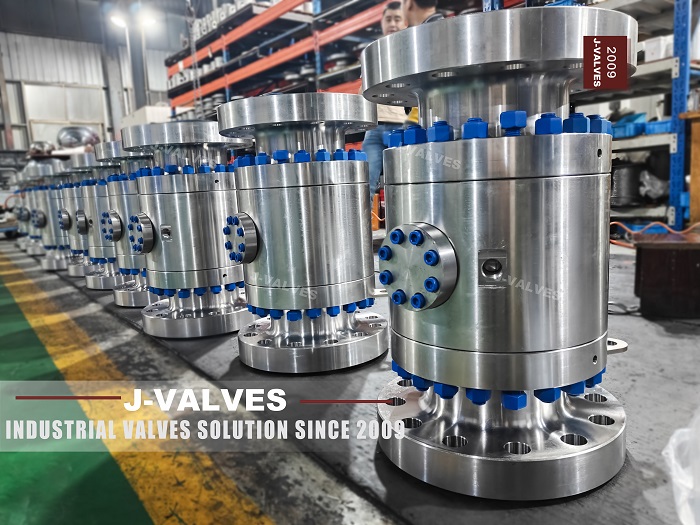
I. Why Stainless Steel Trunnion Mounted Ball Valves Are Preferred for High‑Pressure Pipelines
For oil & gas production, chemical processing and long‑distance high‑pressure transmission pipelines, industrial valves act as critical safety components within fluid handling systems. These operating conditions feature high working pressure, frequent temperature variation and corrosive process media. Conventional floating ball valves struggle under heavy pressure loads. Ball offset, seat leakage and external leakage are common failures which may endanger the whole pipeline operation.
Trunnion mounted ball valves feature a ball supported and fixed by upper and lower trunnion shafts. Pressure‑generated force is absorbed by bearing assemblies instead of being fully pressed onto valve seats. Compared with floating ball designs, trunnion ball valves perform far better for large‑size, high‑pressure pipeline applications. This makes them the preferred valve solution for heavy‑duty high‑pressure fluid lines.
Constructed in stainless steel, valve bodies deliver outstanding corrosion resistance and avoid rust‑related body damage. They are widely deployed for oil‑gas, petrochemical and coal‑chemical projects. The batch‑produced J‑VALVES trunnion ball valves shown in workshop photos are manufactured and delivered for high‑pressure pipeline projects, manufactured according to international industrial specifications.
II. API 6D: Authoritative Specification for Pipeline Valves
What is API 6D Standard
Published by American Petroleum Institute, API 6D is a globally‑recognized specification for pipeline valves. It covers design, material selection, manufacturing, testing and marking requirements for ball valves, gate valves, check valves and other pipeline valves. API 6D is widely specified for international oil and gas as well as chemical engineering projects.
API 6D‑compliant trunnion ball valves require more than basic dimensional compliance. Rigorous requirements cover body strength, fire‑safe test, hydro‑pneumatic test, seat tightness, operating torque and material traceability. Specifying API 6D certified valves helps end‑users reduce equipment failure risk and satisfy third‑party inspection & project acceptance requirements.
Core API 6D Requirements for Stainless Steel Trunnion Ball Valves
1. Mechanical Design: Trunnion‑supported ball construction, bi‑directional sealing capability, and optional cavity pressure relief for trapped media overpressure protection.
2. Material Control: Traceable stainless‑steel body, ball and stem materials for high‑pressure mechanical strength and corrosion resistance.
3. Qualification Testing: Mandatory shell strength test, seat leakage test and fire‑safe qualification. SIL safety certification is available for selected project requirements.
4. Documentation Traceability: Mill test reports and material certificates supplied for EPC contractor and end‑user record keeping.
III. Key Benefits of Stainless‑Steel Trunnion Mounted Ball Valves for High‑Pressure Service
1. Superior high‑pressure performance: Trunnion bearing structure prevents excessive seat load under high differential pressure. Stable operating torque even for large nominal sizes.
2. Robust stainless‑steel corrosion resistance: Resist sour oil‑gas media and aggressive chemical fluids. Lower maintenance frequency and extended service life for field operation.
3. Flexible bi‑directional sealing options: Soft‑seat for bubble‑tight shut‑off or metal‑to‑metal seat for high‑temperature abrasive working conditions.
4. API 6D compliant manufacturing & testing: Compatible with manual, pneumatic and electric actuators for automated pipeline control systems.
5. Full‑bore and reduced‑bore options: Full‑bore design enables pipeline pigging service, an essential feature for oil & gas transmission lines.
IV. Typical Applications for API 6D Stainless‑Steel Trunnion Ball Valves
‑ Oil & gas gathering pipelines and wellhead high‑pressure process lines‑ Petrochemical and coal‑chemical high‑pressure process piping‑ Long‑distance industrial fluid transmission pipelines‑ High‑pressure systems handling corrosive process fluids
‑ International EPC projects requiring third‑party certification and acceptance
CTA: If you are sourcing trunnion mounted ball valves complying with API 6D for your high‑pressure pipeline project, contact J‑VALVES for technical datasheets, quotation and customized industrial valve solutions.


