

CHINA J-VALVES Offers Various High-quality I ndustrial Ball Valves
J-VALVES, a distinguished professional ball valve manufacturer rooted in China, takes pride in its extensive product portfolio. Our offerings span a wide range, including trunnion-mounted ball valves, floating ball valves, high-temperature ball valves, high-pressure ball valves, metal-sealed ball valves, ultra-low temperature ball valves, DBB ball valves, Three-way And Four-way Ball Valve, and fully welded ball valves. Each product is a testament to our commitment to precision engineering and reliable performance. Meticulously crafted, they are designed to not only meet but exceed the most stringent industrial demands, ensuring stable operation even under extreme conditions. This enables us to provide our clients with high-value services and makes our valves widely sought-after in industries.
Product Category
Contact Us


-
J-VALVES-Q41F
-
J-VALVES
Overview of the J-VALVES DN80 WCB Two Piece Flanged Floating Ball Valve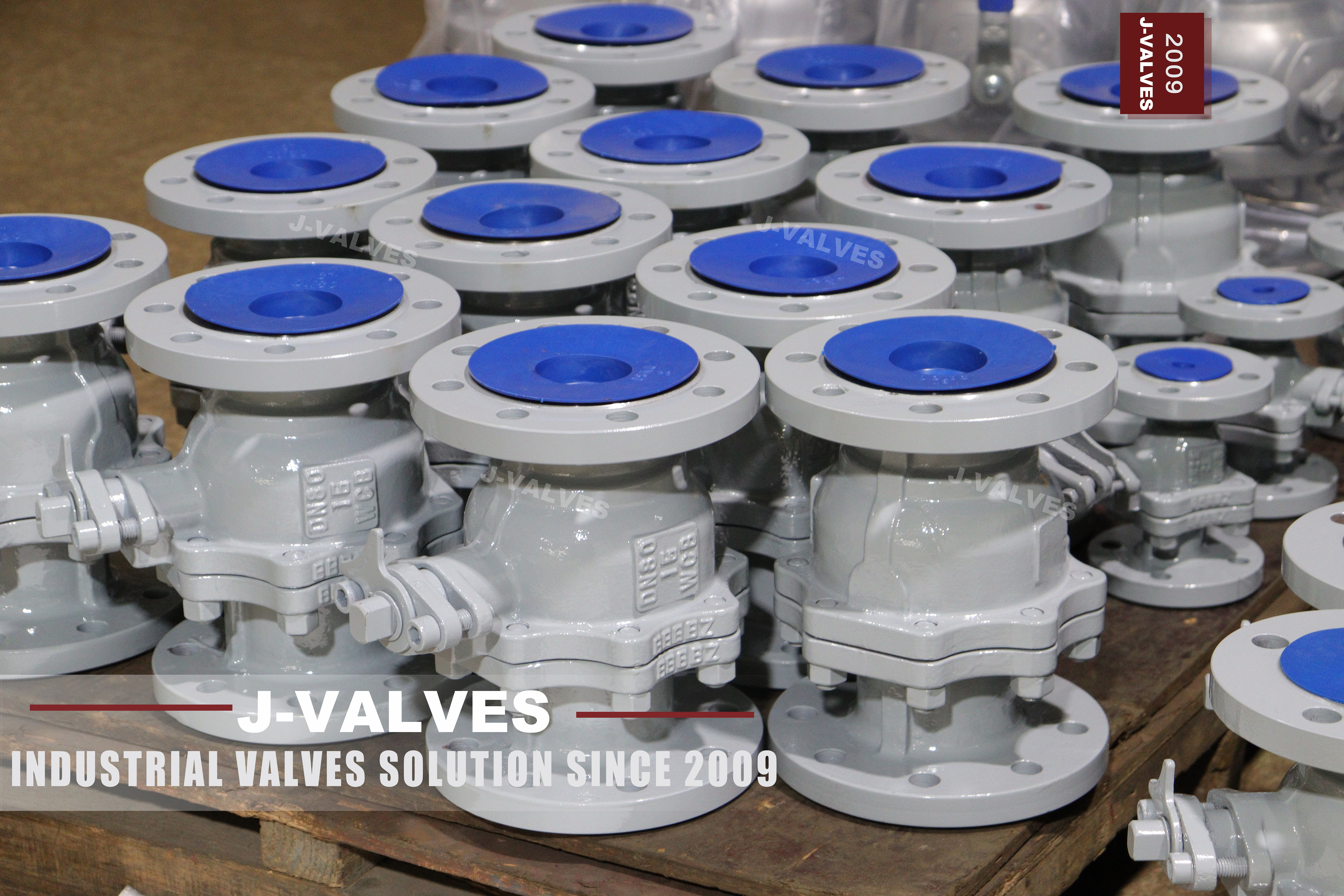
This is a three inch valve on a European pressure ladder rather than an American one: DN80, PN16 or PN25, cast carbon steel body in two pieces, raised face flanges to EN 1092-1, and a ball that floats onto the downstream seat. The bore is full, the operator is a lever with a locking hole, and the seat is PTFE or RPTFE. As a piece of hardware it is about as ordinary as an industrial valve gets.
What makes it worth a page is that the same valve has three names. The material is A216 WCB to an American standard and 1.0619 or GP240GH to a European one. The flange is EN 1092-1, which is not the same as ASME B16.5. The face to face is EN 558, which is not the same table as ASME B16.10. A drawing and a certificate that use different names for the same three things is the most common reason a shipment is held at goods inwards.
Design and Construction
The body is in two castings, a main body carrying the stem and one seat and an end cap carrying the other seat and one flange, closed on a single bolted joint with a gasket. The ball floats: line pressure pushes it onto the downstream seat and the harder the pressure, the tighter the seal, which is why this design is used up to the sizes where the force on the ball becomes more than a lever can turn.
PN16 and PN25 at DN80 are close enough that the same body casting is often used for both, with the difference carried in the flange thickness and the stud size rather than in the shell. That is a manufacturing fact, not a rule: the drawing governs, and a buyer who assumes the two are identical should check the flange table for the PN ordered before accepting a delivery against the other one.

Material Options
WCB is the cast carbon steel grade, and its European identity is 1.0619 under EN 10213, written as GP240GH. Those are the same material under two numbering systems, and a European buyer will look for the EN number or a cross reference table, not for the letters WCB. The same pairing runs through the family: A105 is 1.0460, CF8M is 1.4408, and a certificate that carries only the American designation is incomplete for that market.
Cast carbon steel also allows weld repair, and a European specification will ask for the repair to be done to a qualified procedure and to be recorded, with radiography on the repaired area where the service requires it. That is a real difference between suppliers: the material is the same, the paperwork behind the casting is not. Where the buyer specifies NORSOK or a refinery specification on top of EN 10213, the repair limits tighten further and the mill has to be chosen for it.
| Component | Standard Material | Optional Upgrade | Service Notes |
|---|---|---|---|
| Body and end cap | ASTM A216 WCB, EN 1.0619 / GP240GH | A105 forged, EN 1.0460 | two pieces, one bolted joint |
| Ball | A105N with hard chrome plating | WCB, 304, 316 | floats onto the downstream seat |
| Stem | 410 or 420 stainless | 17-4PH precipitation hardening | blowout proof shoulder, anti static |
| Seat | PTFE | RPTFE, PPL | backed by body and cap |
| Packing | PTFE | flexible graphite | adjustable gland |
| Body gasket | PTFE | spiral wound stainless with graphite filler | EN 1514-1 for the PN and facing |
| End connection | RF flanged to EN 1092-1 | flat face where ordered | drilled from the PN table, not B16.5 |
| Operator | Lever with a locking hole | worm gear, pneumatic, electric | quarter turn, travel stops set |
| Marking | DN, PN, body grade, manufacturer, cast number | EN 19 marking requirements | read back against the certificate |
Technical Specifications
The envelope is DN80, PN16 to PN25, two piece cast body in WCB, full bore, raised face flanges to EN 1092-1 at the PN ordered, face to face to EN 558 basic series, PTFE or RPTFE seat, lever with a locking hole, and testing to EN 12266-1 rate A. A three inch valve that has to drop into an existing European installation is bought on the face to face series and the flange drilling, not on the pressure class.
Two numbers in this block cannot be carried over from the American equivalent. The face to face length comes from the EN 558 series and is not the ASME B16.10 figure for a Class 150 valve of the same size, and the flange drilling comes from EN 1092-1 and does not share a bolt circle with B16.5. Those two are where a substitution fails, even when the bore and the pressure rating are right.
| Item | Value |
|---|---|
| Nominal bore | DN80 (3 inch) |
| Pressure rating | PN16 to PN25 |
| Body construction | two piece, one bolted joint |
| Body | ASTM A216 WCB cast carbon steel |
| European designation | EN 1.0619, GP240GH |
| Body option | A105 forged, EN 1.0460 |
| Ball | A105N with hard chrome plating |
| Ball options | WCB, 304, 316 |
| Stem | 410 or 420 stainless, blowout proof |
| Stem option | 17-4PH |
| Seat | PTFE |
| Seat options | RPTFE, PPL |
| Packing | PTFE, adjustable gland |
| Packing option | flexible graphite |
| Body gasket | PTFE |
| Gasket option | spiral wound stainless with graphite filler |
| End connection | RF flanged to EN 1092-1 |
| Face to face | EN 558 basic series |
| Bore | full bore, DN80 |
| Operator | lever with a locking hole |
| Operator options | worm gear, pneumatic, electric |
| Shell design standard | EN 12516-1 |
| Pressure test | EN 12266-1, shell 1.5 times, seat 1.1 times |
| Test acceptance | rate A for a soft seated valve |
| Flange standard | EN 1092-1, not ASME B16.5 |
| Face to face standard | EN 558, not ASME B16.10 |
| Gasket standard | EN 1514-1 |
| Marking | DN, PN, body grade, manufacturer, cast number |
| European market | PED classification, CE marking, declaration of conformity |
| Material certificate | EN 10204 3.1 with both designations |
Standards and Compliance
The shell design is checked to EN 12516-1, which is the European standard for valve shell strength and works in PN terms. ASME B16.34 is written around Class ratings and a PN valve quoted against it ends up with a rating that no table supports, which is why the two are not interchangeable even though both are about wall thickness. The flange standard is EN 1092-1 and the test standard is EN 12266-1.
For the European market there is a second layer that has nothing to do with the valve design: the pressure equipment directive. The valve has to be classified, and it ships with a CE marking and a declaration of conformity for that classification, or it cannot legally be put into service. A valve delivered with a test certificate and no CE documentation is a valve the installer cannot use.
| Requirement | Standard | What J-VALVES Supplies |
|---|---|---|
| Shell design strength | EN 12516-1 | the European standard for a PN rated shell |
| Flanges | EN 1092-1 | raised face, PN16 or PN25 |
| Face to face | EN 558 | basic series for the size, not ASME B16.10 |
| Pressure testing | EN 12266-1 | shell at 1.5 times, seat at 1.1 times, rate A |
| Cast steel grade | EN 10213 | GP240GH, numeric designation 1.0619 |
| Gaskets | EN 1514-1 | for the PN and facing ordered |
| European market access | Pressure Equipment Directive | classification, CE marking, declaration of conformity |
| Material certificate | EN 10204 3.1 | per heat, with both designations |
Manufacturing Process
Both castings are normalised before machining, and the flange facing and the bolt holes are cut from the EN 1092-1 table for the PN ordered rather than from a drilling pattern carried over from another job. The joint face on the body and the matching face on the cap are machined as a pair so that the gasket sits between two parallel surfaces, and the seat pockets are cut from that joint face as the datum.
The ball is machined, ground and polished, then plated where hard chrome is specified, and matched to the seat rings. The stem is fitted with its blowout shoulder and the anti static contact before the gland is assembled, because neither can be added afterwards. The valve is assembled with the gasket, tested, and only then fitted with the lever. The order of those three steps is written on the route card, and a valve assembled out of sequence is stripped rather than reworked.

Quality Control and Testing
Every valve is shell tested at one and a half times the PN rating and seat tested at one point one times, to EN 12266-1, with rate A as the normal acceptance for a soft seated valve. The casting is checked on the pressure retaining areas, weld repairs are recorded against the serial number, and the flange is measured for bolt circle, thickness and facing finish against the EN 1092-1 table.
The dimensional check is where this valve earns its price in Europe. The face to face, the flange outside diameter and the bolt circle are measured and written on the inspection sheet, because those are the three figures the installer will measure on arrival. A valve that is dimensionally correct but documented against a different standard still gets rejected. It is also the sheet that settles arguments six months later, when the installer reports that the valve did not fit.
| Step | What Is Checked | Standard or Acceptance |
|---|---|---|
| Casting | chemical composition, mechanical properties, soundness of pressure retaining areas | EN 10204 3.1 against 1.0619 |
| Weld repair | qualified procedure, extent recorded, radiography where specified | repair map against the serial number |
| Flange | outside diameter, thickness, bolt circle, facing finish | EN 1092-1 table for the PN ordered |
| Face to face | measured between flange faces | EN 558 series stated on the order |
| Joint faces | flatness and parallelism of the pair | machined as a pair, checked on a plate |
| Ball and seat | sphericity, plating thickness, seat interference | checked with the ball in the pocket |
| Shell test | body and joint at 1.5 times the PN | EN 12266-1, no leak |
| Seat test | both directions at 1.1 times | EN 12266-1 rate A, no visible leak |
| Documentation | CE marking, declaration of conformity, 3.1 certificate, test record | checked as a set before packing |

Applications and Industry Service
The duty is isolation on water, air, oil and low pressure steam in plant and utility piping built to European standards: heating and cooling distribution, water treatment, compressed air, general process service in chemical and food plants, and the isolation valve in front of pumps, strainers and heat exchangers. Most of those lines run for decades with the valve operated a few times a year, so the things that matter are the flange fit and the corrosion allowance, not the speed of the quarter turn.
It is the wrong valve for a fire protection line, which needs a listed product rather than a general purpose one, and it is the wrong valve for chlorides, acids or any medium that attacks carbon steel, where the body moves to CF8M or to a coated valve. Above the seat temperature the seat moves to PPL before the body moves to another grade. That order of substitution is deliberate: a seat change is cheap and reversible, a body change is neither, so the seat is always the first thing to move.
Installation, Operation and Maintenance
Check the flange facing against the gasket, use a gasket to EN 1514-1 for the PN and facing, and draw the studs up in a cross pattern to the torque for the size. Do not fit a PN16 valve into a PN25 joint with adaptor flanges: the adaptor adds two joints that nobody has rated, and the valve also ends up the wrong length in the gap, which is how a flange gets cracked on installation.
Operate a quarter turn, fully open or fully closed, and use the locking hole where the valve must not be moved. For a seat change, isolate, vent and drain, take the cap studs out in the reverse of the tightening order, and renew the body gasket and both seat rings. The cap is the only joint, so the job is short but it is still a shutdown.
How to Specify and Order
An order needs the size, the PN, the flange standard and type, the face to face series, the body grade in both numbering systems, the seat compound, the operator, the test standard and the acceptance rate. A typical line reads: DN80, PN16, body A216 WCB to 1.0619, RF flanges to EN 1092-1, face to face EN 558 series 14, RPTFE seat, lever with locking hole, EN 12266-1 rate A.
Add the directive documentation if the valve is going into the European market: the classification, the CE marking and the declaration. And say whether the valve replaces an existing one, because in that case the face to face and the flange drilling are measured off the old valve and stated on the order, which removes the one argument that is worth having before the castings are poured.
FAQ
Q: Is WCB the same as 1.0619?
A: Yes, for practical purposes: WCB under ASTM A216 and 1.0619 or GP240GH under EN 10213 describe the same cast carbon steel for pressure service. The difference is the paperwork and the testing route around it. A European buyer will look for the EN designation or a cross reference table on the certificate, and a certificate that carries only the American letters is treated as incomplete.
Q: Why is the face to face not the ASME B16.10 figure?
A: Because this is a PN valve with EN 1092-1 flanges, so its length comes from EN 558, and the two tables do not give the same dimension for the same size. A valve built to the B16.10 figure will not fit the gap that a European installation left for it. Where a valve replaces an existing one, measure the old valve and put the figure on the order.
Q: Can a PN16 valve be used in a PN25 line?
A: No. The flange rating is a property of the joint at temperature, and a PN16 flange does not become a PN25 flange because the line runs at lower pressure than its rating. Fitting one with adaptor flanges adds two joints nobody has rated and puts the wrong length in the gap. Order the valve at the rating of the line.
Q: What does the CE marking on the valve actually cover?
A: It covers the pressure equipment directive classification for that valve, which is set by the fluid, the pressure and the size. The valve ships with a declaration of conformity for that classification. It is not a statement about the material or the testing; those are covered by the 3.1 certificate and the test record, and all three documents are needed together.
Q: Which test acceptance applies to the seat?
A: Rate A to EN 12266-1 is the normal acceptance for a soft seated valve and is what this product is tested to. A buyer who writes zero leakage is asking for something the standard does not define, and the usual outcome is a valve held in inspection for a leak nobody can measure.
Q: Does the valve need a weld repair record?
A: For a European order, yes. Cast carbon steel may be weld repaired, but the repair has to be made to a qualified procedure and recorded, with radiography on the repaired area where the service requires it. Two suppliers can deliver the same grade with very different amounts of paperwork behind the casting, and that is the difference the record exists to show.


Hot Products


News
Ball Valves in A Kraft Pulp Mill: Black Liquor, Green Liquor And The Cost of Choosing The Alloy by Habit
White liquor at pH 14 cracks carbon steel welds, black liquor sets solid below 100 C, green liquor dregs grind seats: alloy choice and torque in a kraft mill.
Read More
Slug Flow And Ball Valves: What Actually Arrives At The Seat
A slug is liquid mass with momentum, not a pressure spike. What changes at the seat, in the cavity and at the actuator when liquid reaches a ball valve.
Read More
Ball Valves in Direct Lithium Extraction: PH 1 Eluate, Gypsum Scale And 438,000 Cycles in Twenty-Five Years
Direct lithium extraction swings valves from pH 1 eluate to pH 12 caustic, 48 column switches a day and gypsum scale. Materials, seats and torque.
Read More
Ball Valves in Geothermal Brine: Silica Scale, Chloride Cracking And The Cooling Trap
Why geothermal brine destroys ball valves: retrograde silica scale, calcite at the flash point, chloride cracking above 60 C and the 250 C seat limit.
Read More