

CHINA J-VALVES Offers Various High-quality I ndustrial Ball Valves
J-VALVES, a distinguished professional ball valve manufacturer rooted in China, takes pride in its extensive product portfolio. Our offerings span a wide range, including trunnion-mounted ball valves, floating ball valves, high-temperature ball valves, high-pressure ball valves, metal-sealed ball valves, ultra-low temperature ball valves, DBB ball valves, Three-way And Four-way Ball Valve, and fully welded ball valves. Each product is a testament to our commitment to precision engineering and reliable performance. Meticulously crafted, they are designed to not only meet but exceed the most stringent industrial demands, ensuring stable operation even under extreme conditions. This enables us to provide our clients with high-value services and makes our valves widely sought-after in industries.
Product Category
Contact Us


-
J-VALVES-Q41F
-
J-VALVES
Overview of the J-VALVES 2x1.5 Inch Class 150 Floating Ball Valve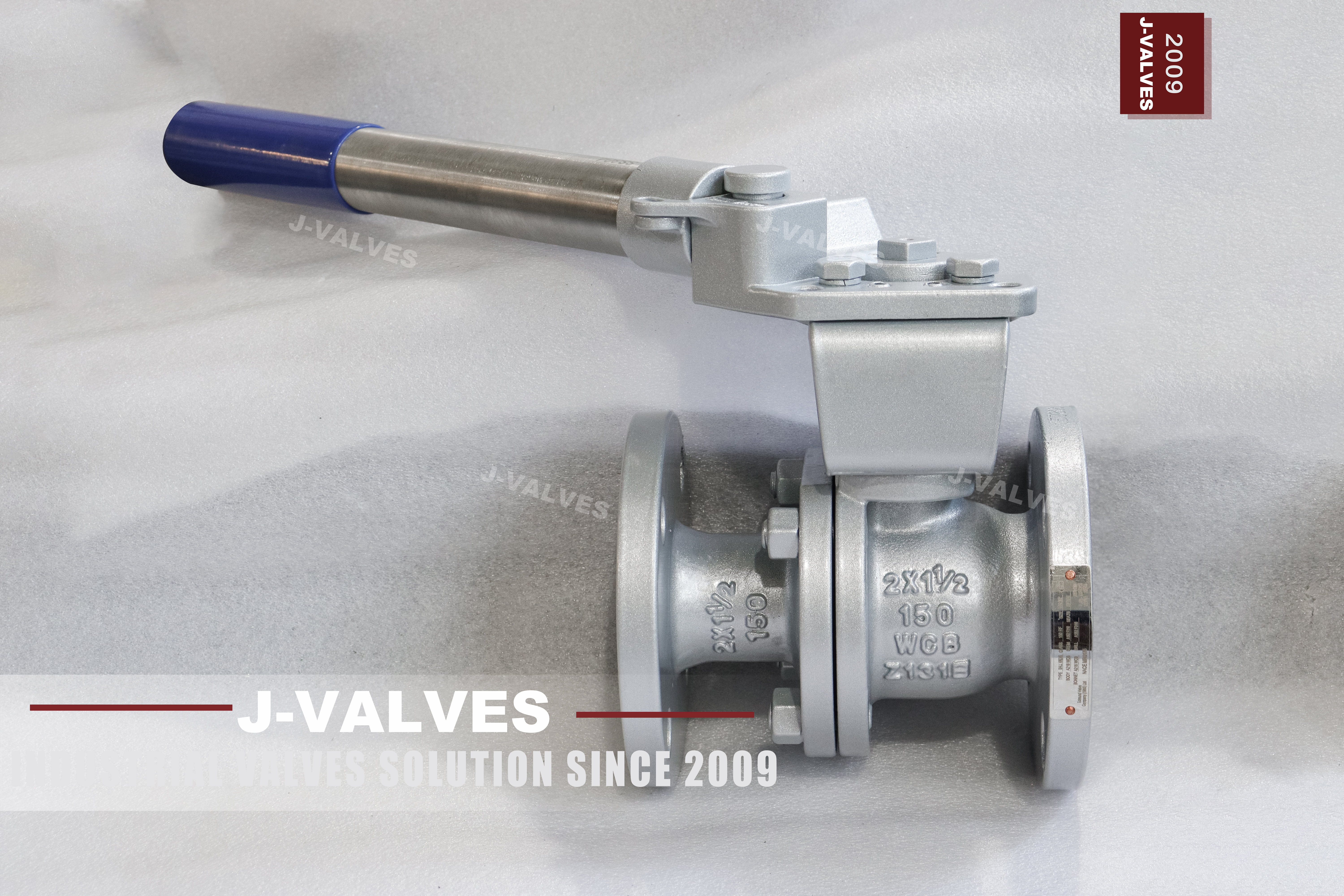
This is a small two piece floating ball valve with a two inch flange and a one and a half inch bore, Class 150, cast WCB body, flanged to ASME B16.5. The marking 2x1.5 describes a DN50 body around a DN40 bore. The version shown in the photograph carries a single spring return handle, often called a deadman handle: the lever is held against the spring to open the valve and returns to the closed position when it is released. That handle, rather than the body, is what most of these valves are bought for.
A valve that closes itself when the operator lets go is a different safety argument from a valve that stays where it is put. On a loading arm, a sampling point, a drain or a burner line, the failure that matters is the one where someone opens the valve, is interrupted, and walks away with the line live. A spring return handle removes that failure by design rather than by procedure, and it costs far less than an actuated valve with a solenoid and a trip signal.
Design and Construction
The body is two piece with a bolted end cap, and the ball floats between two seats: line pressure pushes the ball onto the downstream seat and that is what seals it. At this size the floating design is entirely comfortable, because the ball area is small and the Class 150 pressure is low, so the seat load and the torque stay inside what a hand lever can deliver without a gear.
The spring return is built into the handle assembly rather than into the valve. The lever is fixed to the stem through a spring cartridge, and the geometry is arranged so that the spring drives the stem towards the closed position; holding the lever at ninety degrees compresses the spring and holds the valve open. The spring is not a substitute for a locking device and the two are not interchangeable: a spring return valve is normally held open deliberately, a locking valve is normally held closed deliberately.

Material Options
The body is cast WCB, which is the right material for water, oil, air and gas at moderate temperature and is what the photograph shows. The ball is A105N or WCB with hard chrome plating as standard, with 304 or 316 stainless available where the product is corrosive or where a carbon steel ball would not stay clean. The stem is 304 or 316 stainless in this size, which is normal on a small valve because the stem load is modest.
The seat is PTFE, RPTFE or PPL, and in this size a soft seat is the correct choice: the pressures are low, the temperatures are moderate, and a soft seat gives the tight shutoff that small isolation points are expected to hold. A metal seat is not normally offered at this size because nothing in the duty asks for it, and a metal seat on a two inch valve would only make the handle harder to turn for no benefit.
| Component | Standard Material | Optional Upgrade | Service Notes |
|---|---|---|---|
| Body and end cap | ASTM A216 WCB cast carbon steel | A105 forged | WCB is the normal choice at this size |
| Ball | A105N or WCB with hard chrome | 304 or 316 stainless | stainless ball where the product must stay clean |
| Stem | 304 or 316 stainless | 17-4PH for a harder stem | blowout proof, retained by the body |
| Seat ring | PTFE or RPTFE | PPL | soft seat is correct at this size and class |
| Body gasket | PTFE | Spiral wound for higher temperature | replaced whenever the end cap is opened |
| Stem packing | PTFE V-ring | Graphite for higher temperature | matched to the seat |
| Handle | Lever, 90 degree on off | Single spring return, locking lever with hole | the handle type is the build decision on this valve |
| Spring cartridge | Stainless spring in a plated housing | Not applicable | checked to return the ball from any point in the turn |
Technical Specifications
The envelope is two by one and a half inch, Class 150 which is PN20, two piece cast body, flanged to ASME B16.5 raised face, face to face to ASME B16.10, and a seat of PTFE, RPTFE or PPL. The bore is DN40 inside a DN50 body, which is a reduced port: the valve passes less than the pipe it sits in, and the flow velocity through the valve is higher than in the line either side of it.
That reduction is a decision rather than a defect. A reduced port body is smaller and cheaper than a full port body of the same end size, and on a short branch where the valve is not the limiting resistance it changes nothing. Where the line has to be pigged, or where the pressure drop across the valve matters, this valve is the wrong choice and a full port valve of the same end size is needed. The two are often confused because both are called two inch.
| Item | Value |
|---|---|
| Nominal size | 2 x 1.5 inch (DN50 body, DN40 bore) |
| Pressure rating | Class 150 (PN20) |
| Body construction | two piece, bolted end cap |
| Ball support | floating, no trunnion |
| Bore type | reduced port, DN40 in a DN50 body |
| Body material | ASTM A216 WCB cast carbon steel |
| Body option | A105 forged |
| Ball | A105N or WCB with hard chrome plating |
| Ball options | 304 or 316 stainless |
| Stem | 304 or 316 stainless steel |
| Seat | PTFE or RPTFE |
| Seat option | PPL reinforced PTFE |
| Body gasket | PTFE |
| Packing | PTFE V-ring |
| End connection | flanged raised face to ASME B16.5 |
| Face to face | ASME B16.10 |
| Wall thickness | ASME B16.34 |
| Standard handle | lever, 90 degree on off |
| Handle option | single spring return, closes when released |
| Handle option | locking lever with lock hole |
| Spring return direction | returns to closed |
| Anti static | spring loaded path from ball to stem to body |
| Stem retention | blowout proof, retained by the body |
| Pressure testing | API 598 shell and seat, both directions |
| Design standard | ASME B16.34 and API 608 |
| Body cavity | self relieving through the seat |
| Temperature basis | set by the seat compound ordered |
| Pigging | not suitable, reduced port |
| Marking | size, class, WCB and heat number on the nameplate |
| Documentation | EN 10204 3.1, test record, general arrangement drawing |
Standards and Compliance
The valve is built to ASME B16.34 for the wall and the rating and API 608 for the ball valve specifics, with the flange to ASME B16.5, the face to face length to ASME B16.10 and the pressure test to API 598. The anti static path from ball to stem to body and the blowout proof stem are required by API 608 at every size, and they are present on this valve even though the valve is small enough that they are easy to leave out.
The spring return handle sits outside the valve standards, which is worth knowing when a specification is being written. No ball valve standard requires a self closing handle, and none defines the closing torque or the closing time, so those have to be stated by the buyer if they matter. Where the valve is part of a loading or sampling procedure, the procedure is what defines the requirement and the handle is ordered to meet it.
| Requirement | Standard | What J-VALVES Supplies |
|---|---|---|
| Wall thickness and rating | ASME B16.34 | wall calculation for DN50 Class 150 |
| Ball valve specifics | API 608 | anti static path, blowout proof stem, nameplate content |
| Flange dimensions and facing | ASME B16.5 | raised face as standard |
| Face to face length | ASME B16.10 | length confirmed on the drawing |
| Pressure testing | API 598 | shell at 1.5 times, seat at 1.1 times, both directions |
| Material certificate | EN 10204 3.1 | certificate per heat number |
| Spring return handle | No ball valve standard defines it | closing effort and return position stated on the order |
Manufacturing Process
The body and the end cap are cast in WCB and machined, with the seat pocket and the joint face cut in the same setting so the seat sits square to the ball. The ball is machined, ground, polished and plated, and the plating is checked because a small carbon steel ball with a patchy nickel layer will corrode in storage before it ever reaches a line. The stem is machined in stainless with the anti blowout shoulder and assembled through the gland.
The handle assembly is where this valve differs from a standard build. The spring cartridge is fitted to the lever, the lever is mounted on the stem and the assembly is checked so that the spring returns the ball to the closed position from any point in the quarter turn, not only from fully open. The return is checked with the valve dry and again after the seat test, because a spring that is correct on a dry valve can be marginal once the seat is wet and the torque has risen.

Quality Control and Testing
Each valve is shell tested at one and a half times the rating and seat tested at one point one times in both directions to API 598. On a small valve the test is quick, which is exactly why it is worth insisting that it is done per valve rather than per batch: a two inch valve is cheap enough that batch testing looks reasonable and is the reason a leaking valve reaches a site.
For the spring return build there is an additional functional check. The valve is opened against the spring, released, and observed to confirm that it returns to the closed position and that the ball reaches the seat rather than stopping short. The handle travel, the spring effort and the closed position are recorded. Where a locking device is also fitted, both features are checked together because a lock that engages with the spring partly compressed will not hold the valve shut.
| Step | What Is Checked | Standard or Acceptance |
|---|---|---|
| Incoming casting | heat number and chemical composition | EN 10204 3.1 against A216 WCB |
| Machining | seat pocket squareness to the ball axis, joint face flatness | drawing tolerance |
| Ball plating | thickness and adhesion of the chrome layer | no blistering, thickness within the drawing range |
| Flange gauge | outside diameter, bolt circle, bolt hole diameter, facing | ASME B16.5 Class 150, gauged |
| Shell test | body and the end cap joint at 1.5 times | API 598, no leak |
| Seat test | each seat in both directions at 1.1 times | API 598, no visible leak |
| Spring return | open against the spring, release, confirm closed | returns to the seat from any point in the quarter turn |
| Locking device where fitted | lock engages with the valve fully closed | no spring preload when locked |
| Marking | nameplate against the order | size, class, WCB, heat number |

Applications and Industry Service
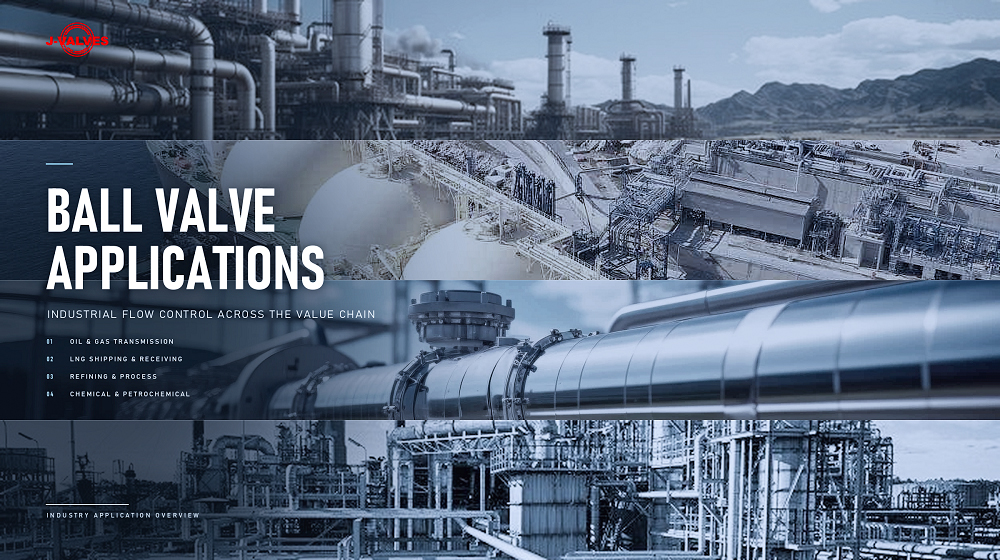
The classic duty is a point where a line is opened for a short operation and then has to be left safe: tank truck and rail car loading arms, drum and IBC filling points, sampling valves on a header, drain and vent points, and burner or pilot gas lines. In all of those the spring return is doing the same job, which is to make the safe state the default state rather than something an operator has to remember.
It is also used on small utility branches where the valve is opened to take a reading or to fill a container and closed again immediately, and on equipment skids where a valve left open would be a hazard rather than an inconvenience. It is not the right product for a line that has to stay open unattended, because the spring will close it, and it is not a substitute for a proper emergency shutdown valve on a process line.
Installation, Operation and Maintenance
Fit the valve so that the lever can swing freely through the quarter turn and so that the released position is the safe one for the installation; on a vertical line check which way the lever falls before tightening the flanges. Leave access to the lever, because a spring return valve that is jammed against a pipe or a bracket will not close and the whole point of the build is lost. Use a gasket suitable for the fluid and tighten the studs evenly.
Do not defeat the spring by tying the lever open. If a line has to stay open for a long period, fit a valve with a locking lever instead, because a tied lever is both a hazard and a way of over-stressing the spring until it no longer returns. Check the return action at each turnaround by opening and releasing the valve dry, and replace the spring cartridge if the valve stops reaching the seat rather than adjusting the lever.
How to Specify and Order
State size and end size, class, body material, ball and seat trim, flange facing, face to face standard, and the handle type. For this valve a typical line reads: two by one and a half inch, Class 150, WCB body, ball A105N with hard chrome, RPTFE seat, raised face to ASME B16.5, face to face to ASME B16.10, single spring return handle. The handle type is the field that decides whether the valve does the job, so it belongs on the first line of the order rather than in a note.
Send the fluid, the pressure and temperature, and how the valve will be used: held open briefly, or left open for a shift, or locked closed as part of a permit. That last question decides between a spring return handle, a locking lever and an actuated valve, and it is worth asking at enquiry stage because changing the handle later means changing the whole top assembly rather than a part.
FAQ
Q: What does a spring return handle do?
A: It closes the valve when the operator lets go of the lever. The lever is held against a spring to keep the valve open, and releasing it lets the spring drive the ball back to the closed position. That makes the safe state the default state, which is why the build is used on loading arms, sampling points and drains where a valve left open is the hazard that matters.
Q: Is this the same as a locking lever valve?
A: No, and the two are not interchangeable. A spring return handle holds the valve open only while it is held, and closes on release. A locking lever stays wherever it is put and can be locked in the open or the closed position. One makes closing automatic, the other makes a chosen position tamper proof, and a line that needs both usually needs an actuated valve instead.
Q: What does 2x1.5 mean?
A: It describes a two inch body with a one and a half inch bore, so the flange is DN50 and the flow passage is DN40. The valve is a reduced port design: it passes less than the pipe it sits in, and the velocity through the valve is higher than in the line either side. That is normal on a short branch and unsuitable for a line that has to be pigged.
Q: Can this valve be pigged?
A: No. A reduced port valve leaves a step at the seat and a pig will not pass. Where the line has to be pigged or cleaned, order a full port valve of the same end size instead, which has a bore matching the pipe. The two look similar on a photograph and are different products, which is why the end size and the bore are written separately on this page.
Q: What happens if the spring gets weak?
A: The valve stops reaching the seat when released, which is a slow failure rather than a sudden one and is easy to miss because the lever still feels normal. Check the return action at each turnaround by opening and releasing the valve dry, and replace the spring cartridge rather than adjusting the lever to compensate. Tying the lever open is what wears the spring out in the first place.
Q: Which seat should I order?
A: PTFE or RPTFE as standard for water, oil, air and gas at normal temperature, and PPL where the temperature is higher. At this size and class a soft seat gives the tight shutoff these small isolation points are expected to hold, and a metal seat is not normally offered because nothing in the duty asks for one.


Hot Products


News
Ball Valves in A Kraft Pulp Mill: Black Liquor, Green Liquor And The Cost of Choosing The Alloy by Habit
White liquor at pH 14 cracks carbon steel welds, black liquor sets solid below 100 C, green liquor dregs grind seats: alloy choice and torque in a kraft mill.
Read More
Slug Flow And Ball Valves: What Actually Arrives At The Seat
A slug is liquid mass with momentum, not a pressure spike. What changes at the seat, in the cavity and at the actuator when liquid reaches a ball valve.
Read More
Ball Valves in Direct Lithium Extraction: PH 1 Eluate, Gypsum Scale And 438,000 Cycles in Twenty-Five Years
Direct lithium extraction swings valves from pH 1 eluate to pH 12 caustic, 48 column switches a day and gypsum scale. Materials, seats and torque.
Read More
Ball Valves in Geothermal Brine: Silica Scale, Chloride Cracking And The Cooling Trap
Why geothermal brine destroys ball valves: retrograde silica scale, calcite at the flash point, chloride cracking above 60 C and the 250 C seat limit.
Read More