

CHINA J-VALVES Offers Various High-quality I ndustrial Ball Valves
J-VALVES, a distinguished professional ball valve manufacturer rooted in China, takes pride in its extensive product portfolio. Our offerings span a wide range, including trunnion-mounted ball valves, floating ball valves, high-temperature ball valves, high-pressure ball valves, metal-sealed ball valves, ultra-low temperature ball valves, DBB ball valves, Three-way And Four-way Ball Valve, and fully welded ball valves. Each product is a testament to our commitment to precision engineering and reliable performance. Meticulously crafted, they are designed to not only meet but exceed the most stringent industrial demands, ensuring stable operation even under extreme conditions. This enables us to provide our clients with high-value services and makes our valves widely sought-after in industries.
Product Category
Contact Us


-
J-VALVES-Q41F
-
J-VALVES
Overview of the J-VALVES C95500 Nickel Aluminum Bronze Floating Ball Valve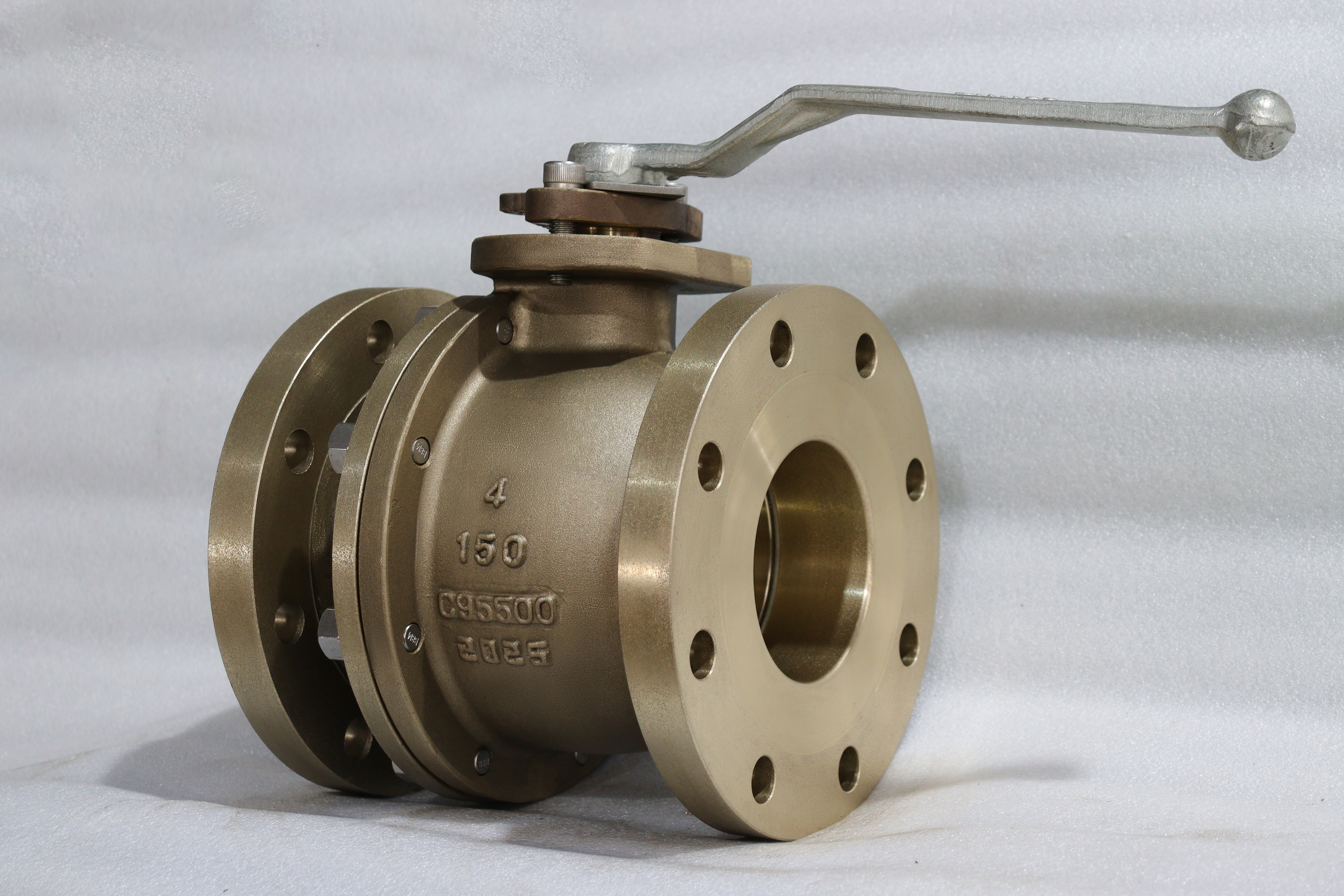
This is a two piece floating ball valve with a cast nickel aluminum bronze body, ordered as C95500 to ASTM B148. The size range is half inch to twelve inch, the rating is Class 150, the stem is a nickel copper alloy, and the ends are flanged to ASME B16.5 in raised face or ring joint form. The ball floats against the downstream seat under line pressure. It is a seawater and marine valve, and the reason to buy it is not that bronze is old fashioned but that it survives a set of conditions stainless does not.
The distinction that matters is not bronze against stainless in general, it is nickel aluminum bronze against 316 in salt water. Austenitic stainless relies on a passive oxide film, and in seawater that film breaks down locally in crevices and under deposits, which is chloride stress corrosion cracking and crevice attack rather than uniform wastage. Nickel aluminum bronze does not depend on a passive film in the same way and it work hardens under impingement, so it holds up in moving seawater where 316 pits.
Design and Construction
The body is two piece: one end cap bolts to the main body and the ball, seats and stem are reached from that joint. The ball is not carried on trunnions. It sits between the two seats and the line pressure pushes it downstream onto the seat ring, which is what produces the seal. That is the whole floating principle, and it is why a floating valve is limited in size and class while a trunnion valve is not: the seat load grows with the pressure and the bore area, and the torque grows with it.
At Class 150 and up to twelve inch the floating design is still comfortable, because the pressure is low and the seat load stays inside what a lever or a small gear can break away from. Above two inch the standard operator becomes a worm gear rather than a lever, not because the valve is stiff in normal service but because the breakaway torque after a long closed period is beyond what a lever should be asked to deliver by hand. The seats are a reinforced PTFE as standard, with PEEK and a metal option above that.
Material Options
C95500 is one of two cast nickel aluminum bronzes used for valves, the other being C95800. Both are copper alloys with aluminium, iron and nickel, and both form a hard, adherent surface layer in seawater; C95500 is the higher strength of the two and is the grade chosen where the valve has to take more mechanical load or a higher seawater velocity. Neither is a bearing bronze and neither should be read as a general purpose brass substitute, because the aluminium is what gives the seawater performance.
The trim is where the seawater decision continues. The stem is a nickel copper alloy, which is chosen because it is galvanically close to the bronze body and does not set up a corrosion cell inside the packing; 316 and 17-4PH are offered for less aggressive duties. The ball is bronze with a polished or hardened surface. Fasteners and springs are selected so that no small steel part becomes the anode for a large bronze body, which is how a bronze valve usually fails when it fails.
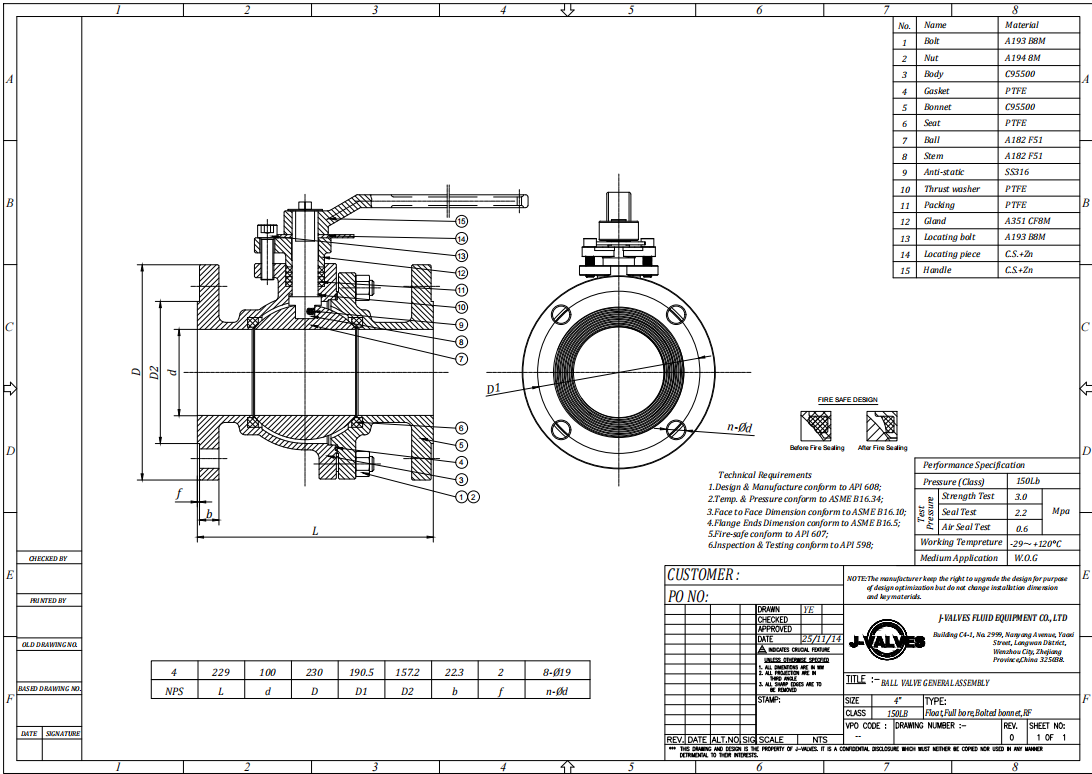
| Component | Standard Material | Optional Upgrade | Service Notes |
|---|---|---|---|
| Body and end cap | ASTM B148 C95500 cast nickel aluminum bronze | C95800 | C95500 for higher strength and higher seawater velocity |
| Ball | C95800 or C95500, polished | Surface hardened | the ball sees the same seawater as the body |
| Stem | UNS N05500 nickel copper alloy | 316 stainless, 17-4PH | chosen galvanically close to the body |
| Seat ring | Reinforced PTFE | PEEK, metal with cobalt alloy facing | metal seat only where temperature rules out PTFE |
| Packing | PTFE V-ring | Graphite for higher temperature | renewed whenever the stem is disturbed |
| Body gasket | PTFE or fibre, seawater compatible | Spiral wound with a bronze-compatible winding | replaced every time the body is opened |
| Fasteners | Bronze-compatible or isolated steel | Duplex where the project requires it | no small steel anode against a large bronze body |
| Operator | Lever up to 2 inch | Worm gear from 2.5 inch, pneumatic, electric | gear is standard above 2 inch |
Technical Specifications
The envelope is half inch to twelve inch, Class 150 which is PN20, flanged to ASME B16.5, face to face to ASME B16.10, with a reinforced PTFE seat as standard and a lever up to two inch and a worm gear from two and a half inch. The rating is the number to read carefully: Class 150 is where this material family sits, and a bronze body is not offered at the higher classes however the enquiry is written.
That is a material limit rather than a manufacturing one. A cast nickel aluminum bronze body at Class 300 and above needs wall sections and bolting that make the casting uneconomic and the valve heavy, and the seawater advantage does not improve as the pressure rises. Where a line needs Class 300 in seawater, the answer is a super duplex or a lined steel valve, not a thicker bronze one, and this page is the wrong product for that duty.
| Item | Value |
|---|---|
| Size range | 1/2 inch to 12 inch (DN15 to DN300) |
| Pressure rating | Class 150 (PN20) |
| Body construction | two piece, bolted end cap |
| Ball support | floating, no trunnion |
| Body material | ASTM B148 C95500 cast nickel aluminum bronze |
| Body option | ASTM B148 C95800 |
| Ball | C95800 or C95500, polished or surface hardened |
| Stem | UNS N05500 nickel copper alloy |
| Stem options | 316 stainless, 17-4PH |
| Seat | reinforced PTFE |
| Seat options | PEEK, metal with cobalt alloy facing |
| Packing | PTFE V-ring |
| Body gasket | PTFE or fibre, seawater compatible |
| End connection | flanged raised face or ring joint to ASME B16.5 |
| Face to face | ASME B16.10 |
| Wall thickness | ASME B16.34 |
| Operator up to 2 inch | lever |
| Operator from 2.5 inch | worm gear with handwheel |
| Operator options | pneumatic, electric, hydraulic |
| Design standard | ASME B16.34 and API 608 |
| Pipeline documentation | API 6D on request |
| Pressure testing | API 598 shell and seat, both directions |
| Body cavity | self relieving through the seat |
| Anti static | spring loaded path from body to stem to ball |
| Stem retention | blowout proof, retained by the body |
| Temperature basis | set by the seat compound ordered |
| Sour and sulphide service | not recommended in sulphide polluted seawater |
| Marking | size, Class 150, C95500 and heat number on the nameplate |
| Documentation | EN 10204 3.1 against ASTM B148, test report, GA drawing |
| Typical duty | seawater cooling, brine, fire water, deionized water |
Standards and Compliance
The valve is designed to ASME B16.34 for the wall and the rating, with API 608 covering the ball valve specifics and API 6D where the buyer wants the pipeline documentation set. Testing is to API 598, shell at one and a half times and seat at one point one times, and the face to face length follows ASME B16.10. The material certificate is to EN 10204 3.1 against ASTM B148, which is the standard the casting is bought to rather than a steel specification.
Two project standards sit outside that list and decide most marine orders. NORSOK M-630 and the various class society rules constrain the material selection and the documentation for offshore and shipboard service, and they usually ask for traceability on the casting and for a hardness or a chemical analysis rather than a generic certificate. Where the valve goes into a fire water system, the fire safe question is asked of the seats and the packing, and a bronze body does not make a soft seated valve fire safe.
| Requirement | Standard | What J-VALVES Supplies |
|---|---|---|
| Wall thickness and rating | ASME B16.34 | wall calculation for Class 150 bronze |
| Ball valve specifics | API 608 | anti static path, blowout proof stem, nameplate content |
| Pipeline documentation where requested | API 6D | design document and test record |
| Flange dimensions and facing | ASME B16.5 | raised face or ring joint as ordered |
| Face to face length | ASME B16.10 | length confirmed on the drawing |
| Pressure testing | API 598 | shell at 1.5 times, seat at 1.1 times, both directions |
| Casting material | ASTM B148 | chemical analysis per heat number |
| Material certificate | EN 10204 3.1 | certificate against B148, not against a steel grade |
| Offshore material and documentation | NORSOK M-630 and class rules where named | traceability and analysis as the project specifies |
Manufacturing Process
The body and the end cap are sand cast in nickel aluminum bronze, then machined. Casting quality matters more here than on a steel valve because a bronze casting can carry porosity that only shows up as a weep after the valve has been in seawater for a season, so the pressure boundary sections are inspected before machining and the seat pockets are checked after. The flange faces are machined to ASME B16.5 and the gasket surface is checked for flatness rather than just for finish.
Assembly is conventional: the ball and seats go into the body, the end cap closes on a gasket, the stem goes in from the top through the packing, and the lever or the gear is fitted last. What is specific to bronze is the avoidance of mixed metal contact. Where a steel stud, a steel spring or a steel nameplate screw touches the bronze in a wet area, it is either isolated or made from a compatible alloy, because a small anode against a large cathode is the fastest way to lose a bronze valve at sea.

Quality Control and Testing
Each valve is shell tested and seat tested to API 598, and the seat test is done in both directions because a floating ball seals on the downstream seat and the upstream seat is only proven when the flow is reversed. The casting is checked for chemical composition against ASTM B148 C95500, which is the point where a substituted grade is caught, and the certificate is issued per heat number rather than per shipment.
The dimensional checks are the flange and the face to face length. A bronze valve is often a replacement for an older one, and the installed length and the bolt circle have to match because a bronze body cannot be re-machined to recover a mismatch. Where the valve is for a shipyard or an offshore project, the inspection is witnessed against the project specification and the report goes out with the valve rather than after it.
| Step | What Is Checked | Standard or Acceptance |
|---|---|---|
| Incoming casting | chemical composition against B148 C95500 | certificate per heat number, no grade substitution |
| Casting soundness | pressure boundary sections before machining | no porosity open to the surface on the seat pocket or the joint |
| Machining | flange face flatness and the body joint face | ASME B16.5 facing, joint face flat within drawing tolerance |
| Assembly | ball free float and seat contact | ball turns by hand, seat contact band continuous |
| Shell test | body and the end cap joint at 1.5 times Class 150 | API 598, no leak |
| Seat test | each seat in both directions at 1.1 times | API 598, no visible leak |
| Stem seal | packing and the stem O-ring at rated pressure | no weep at the gland over the hold time |
| Flange gauge | outside diameter, bolt circle and bolt holes | ASME B16.5 Class 150, gauged |
| Marking | nameplate against the order | size, class, C95500, heat number |

Applications and Industry Service
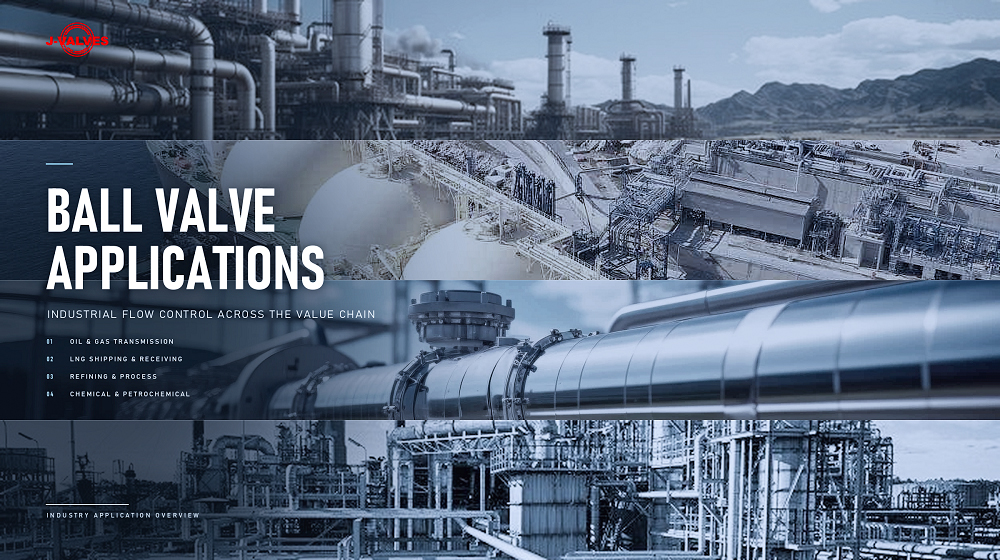
The service is seawater and everything close to it: cooling water systems on ships and onshore plants, desalination pre-treatment and brine circuits, fire water ring mains, fish farms and aquaculture, and marine terminal utilities. In those systems the failure mode of a stainless valve is not general wastage but pitting in a crevice or under a deposit, and that is the failure this material is chosen to avoid.
It is also used on deionized and demineralized water, where a carbon steel body would rust and a stainless body can still suffer from chlorides picked up in service, and on some chemical duties where the aluminium oxide layer is stable. It is not the right choice for strong acids, for dry chlorine, or for seawater that is heavily polluted with sulphides, where the protective layer does not form and the alloy behaves far worse than its reputation suggests.
Installation, Operation and Maintenance
Bolt the valve with the stem up or sideways, use a gasket that is compatible with both the bronze flange and the steel pipe flange, and isolate the valve from the steel pipe where the pipe is cathodically protected, because the bronze will otherwise collect the protection current and the steel adjacent to it will not be protected. Support the pipe either side of a large gear operated valve rather than letting the valve carry the line load.
Operate a floating bronze valve through its full quarter turn at intervals rather than leaving it in one position for years, and do not force a lever that has become stiff: on a seawater valve that usually means the seat has picked up deposit rather than that the valve needs more force. When the seats are changed, change the body gasket at the same time and check the stem packing, because the joint that was disturbed is the one that will weep first.
How to Specify and Order
State the size, the class, the body grade, the stem alloy, the seat compound, the flange facing, the face to face standard and the operator. For this family an order reads: four inch, Class 150, C95500 body to ASTM B148, nickel copper alloy stem, reinforced PTFE seat, raised face to ASME B16.5, ASME B16.10, worm gear. The two decisions that need the enquiry to state the fluid are the stem alloy and the seat compound, because both change with the seawater chemistry and the temperature.
Send the chloride level, the temperature, the flow velocity and whether the line is treated with chlorine or hypochlorite, because those four decide whether nickel aluminum bronze is the right answer at all. Send the mating flange standard as well: a bronze valve bolted to a steel line is the normal case, and the gasket and the isolation decision follow from what the pipe is made of rather than from what the valve is made of.
FAQ
Q: Why nickel aluminum bronze instead of 316 stainless in seawater?
A: Because 316 relies on a passive oxide film, and in seawater that film breaks down in crevices and under deposits, which produces pitting and chloride stress corrosion cracking rather than even wastage. Nickel aluminum bronze does not depend on that film and it work hardens under impingement, so it holds up in moving seawater. A stainless valve can look fine for a season and then fail at a crevice that was never visible.
Q: What is the difference between C95500 and C95800?
A: Both are cast nickel aluminum bronzes with aluminium, iron and nickel, and both are used for seawater valves. C95500 is the higher strength grade and is chosen where the valve has to take more mechanical load or a higher seawater velocity; C95800 is the more common general purpose grade. Neither is a bearing bronze, and neither should be treated as a substitute for brass.
Q: Can this valve be supplied above Class 150?
A: No. Class 150 is where this material family sits, and a bronze body at Class 300 and above needs wall sections and bolting that make the casting uneconomic and the valve heavy, without improving the seawater performance. Where a seawater line needs a higher class, the answer is super duplex or a lined steel valve rather than a thicker bronze one.
Q: Is a two piece floating design suitable at twelve inch?
A: At Class 150, yes, though a worm gear becomes the standard operator from two and a half inch because the breakaway torque after a long closed period is beyond what a lever should be asked to deliver. The floating design is limited by the seat load growing with the pressure and the bore area, which is why the same construction above Class 150 moves to a trunnion.
Q: Which seat compound should I order?
A: Reinforced PTFE is the standard for seawater at normal temperature. PEEK is chosen where the temperature is higher or where the valve is cycled often, and a metal seat with a cobalt alloy facing is available where the temperature rules out a polymer. The seat, not the body, sets the real service temperature of this valve.
Q: What should the enquiry state?
A: Size, class, body grade, stem alloy, seat compound, flange facing, face to face standard and operator, plus the chloride level, the temperature, the flow velocity and whether the line is chlorinated. The last four decide whether nickel aluminum bronze is the right answer at all, and they decide the stem alloy and the seat compound.


Hot Products


News
Ball Valves in A Kraft Pulp Mill: Black Liquor, Green Liquor And The Cost of Choosing The Alloy by Habit
White liquor at pH 14 cracks carbon steel welds, black liquor sets solid below 100 C, green liquor dregs grind seats: alloy choice and torque in a kraft mill.
Read More
Slug Flow And Ball Valves: What Actually Arrives At The Seat
A slug is liquid mass with momentum, not a pressure spike. What changes at the seat, in the cavity and at the actuator when liquid reaches a ball valve.
Read More
Ball Valves in Direct Lithium Extraction: PH 1 Eluate, Gypsum Scale And 438,000 Cycles in Twenty-Five Years
Direct lithium extraction swings valves from pH 1 eluate to pH 12 caustic, 48 column switches a day and gypsum scale. Materials, seats and torque.
Read More
Ball Valves in Geothermal Brine: Silica Scale, Chloride Cracking And The Cooling Trap
Why geothermal brine destroys ball valves: retrograde silica scale, calcite at the flash point, chloride cracking above 60 C and the 250 C seat limit.
Read More