CHINA J-VALVES Offers Various High-quality I ndustrial Ball Valves
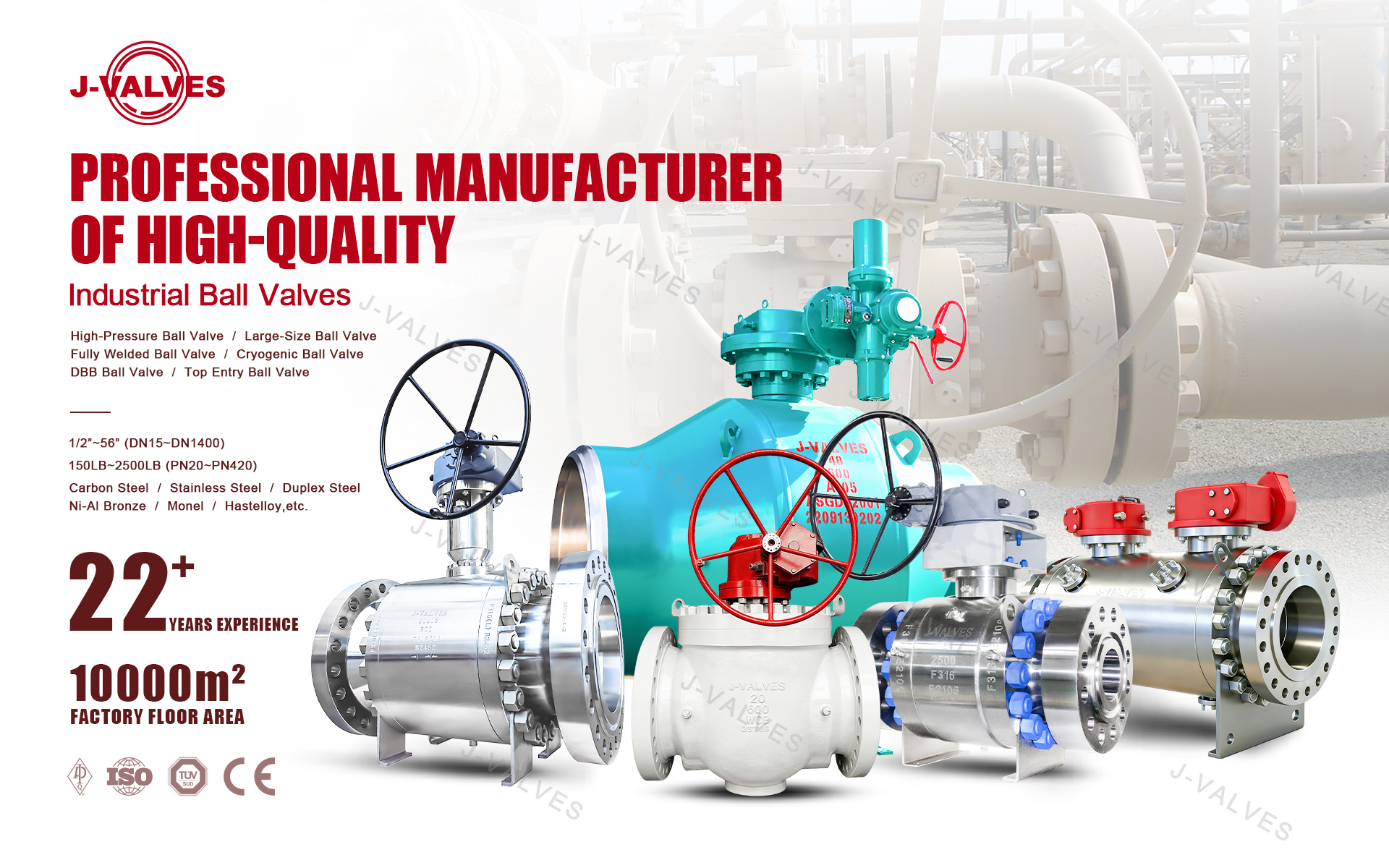
J-VALVES, a distinguished professional ball valve manufacturer rooted in China, takes pride in its extensive product portfolio. Our offerings span a wide range, including trunnion-mounted ball valves, floating ball valves, high-temperature ball valves, high-pressure ball valves, metal-sealed ball valves, ultra-low temperature ball valves, DBB ball valves, Three-way And Four-way Ball Valve, and fully welded ball valves. Each product is a testament to our commitment to precision engineering and reliable performance. Meticulously crafted, they are designed to not only meet but exceed the most stringent industrial demands, ensuring stable operation even under extreme conditions. This enables us to provide our clients with high-value services and makes our valves widely sought-after in industries.
Product Category
Contact Us


Pressure Class: ASME Class 600 (PN100), about 10.2 MPa at 38°C
Temperature Range: -29°C to +425°C
Body Material: ASTM A105N normalized forged carbon steel
Ball: A105N + ENP, F304 or F316
Seat: RPTFE, Devlon, PEEK, or metal seat with Stellite
Stem: F6a, F304 or F316, anti blowout
Packing: PTFE V rings or pure graphite, low emission
Bleed Port: 1/4 inch NPT plugged, or needle valve
End Connection: Threaded NPT / BSP, socket weld, butt weld to ASME B16.25
Design Standard: API 6D, ASME B16.34, API 608
Test Standard: API 6D, API 598, each seat tested separately
Emission Class: ISO 15848-1 Class BH
Operation: Lever, mini gearbox, mini pneumatic or electric actuator
-
DBBQ11F
-
J-VALVES
A DBB ball valve is a single valve body with two independent seats and a bleed port between them. Close the valve, open the bleed, and the space between the two seats vents to atmosphere: if the upstream seat is passing, the gauge or the vent shows it, and the downstream side stays isolated. That is a double block and bleed in one body instead of three separate valves.
This page covers the 1/2 inch Class 600 build in normalized A105N, with threaded NPT or BSP ends, socket weld or butt weld, PTFE or graphite packing and a graphite body seal. It is the standard isolation valve in front of a pressure gauge, a transmitter, a sample point or an instrument root valve, where the requirement is not flow control but a verifiable barrier.

How a DBB Valve Is Built
Two seat rings sit one on each side of the ball, and each seals independently against it. Between them is the body cavity, and the cavity has a port to the outside, fitted with a plug or a small needle valve. When the ball is closed, both seats are in contact, so the cavity is isolated from both the upstream and the downstream side. Opening the bleed proves whether either seat is passing.
The detail that decides whether this works is the seat design. With single piston effect seats the cavity is self relieving, so trapped pressure escapes past the upstream seat rather than through the bleed, and the bleed may show nothing even when the seat is worn. With double piston effect seats the cavity holds pressure in both directions, and the bleed is a true indication. For instrument isolation the DPE arrangement is the one that gives a meaningful test.

DBB and DIB Are Not the Same Thing
Feature | DBB, double block and bleed | DIB, double isolation and bleed |
|---|---|---|
Number of barriers in one direction | Two, one upstream and one downstream | Two, both acting in the same direction |
Cavity behaviour | Vented through the bleed to prove both seats | Vented or relieved depending on seat type |
Typical use | Instrument isolation, gauge root valve, sample point | Pipeline where double isolation is required by code |
Seat arrangement | One seat each side, usually DPE for verification | Two seats in series, DIB 1 or DIB 2 |
What it proves | That neither seat is passing at the moment of test | That two independent barriers exist against the upstream pressure |
In practice, a single ball with two seats is a DBB. A DIB is a different requirement, usually satisfied by two valves in series or by a specific seat arrangement that gives two barriers against the same pressure source. Buying a DBB and calling it a DIB is a documentation error that surfaces during a hazard review, not during installation.
Why 1/2 Inch Is the Size That Matters
Half inch is the size of instrument root valves, gauge isolation, transmitter block valves and sample points. There may be two thousand of them on a process unit, they are bought in bulk, and they are the valves that are operated most often by people wearing gloves in a hurry. That combination makes the small details matter more than the pressure class.
The three details are the bleed port, the packing and the handle. The bleed port should be a 1/4 inch NPT plugged port or a small needle valve, accessible with a wrench without removing the valve. The packing should be graphite if the line can be hot, and the gland should be adjustable. The handle should be a lever long enough to be operated with a glove, and short enough not to be knocked open by a passing tool bag.
Class 600 in a Half Inch Body
Class 600 at 38°C is about 10.2 MPa, and in a half inch forged body the wall thickness is generous. The limitation is not the body, it is the end connection. A threaded joint at 10 MPa is acceptable in NPT or BSP, but it is the threaded joint, not the body, that limits cycling: every make and break wears the thread, and a tapered thread that has been tightened too often will leak.
That is why socket weld and butt weld ends are offered on the same body. A socket weld is the usual choice for a permanent instrument installation, and a butt weld for a line that will be radiographed. For a valve that will be removed for calibration, a threaded end with a welded nipple is the practical compromise.
Low Emission: ISO 15848 Class BH
Instrument valves are the most common source of fugitive emissions on a plant, simply because there are so many of them and they are operated so often. ISO 15848-1 Class BH is the tight class for a quarter turn valve, and it is achieved with a graphite packing set, a polished stem at 0.4 micrometres or better, and a gland that can be re-tightened without disassembly.
The claim is only worth what the test report says. A certificate should name the valve size, the packing arrangement and the number of cycles tested, because a class BH result obtained on a 6 inch valve with a different packing does not transfer to a half inch instrument valve. Ask for the report, not the logo.
End connection | Standard | Typical use | Watch out for |
|---|---|---|---|
NPT threaded | ASME B1.20.1 | Gauge and instrument root valve | Taper thread needs sealant, limited make and break |
BSP / BSPT | ISO 228 / ISO 7 | Export and marine projects | 55 degree thread, not interchangeable with NPT |
Socket weld | ASME B16.11 | Permanent instrument installation | Leave a gap at the socket bottom for expansion |
Butt weld | ASME B16.25 | Lines that will be radiographed | Needs purge and a qualified procedure |

Operating a DBB Correctly
The sequence is always the same: close the valve, then open the bleed, then read the bleed. Opening the bleed first, before the ball is fully closed, vents the line rather than the cavity and tells you nothing. On a gauge root valve the correct procedure is close, bleed, watch the gauge fall, and leave the bleed open while work is done.
Two operational habits are worth writing into the procedure. The bleed plug should be refitted and tightened after use, not left finger tight, because a plug that vibrates loose on a 10 MPa cavity is a small but real hazard. And the cavity should be vented before the valve is opened again if the line is hot, because trapped liquid that has been heated in a closed cavity will flash through the seat when the ball turns.

Testing
Shell test at 1.5 times the rating, and a seat test at 1.1 times on each seat separately, with the bleed open to prove that the two seats are independent. That last point is what separates a DBB test from an ordinary seat test, and it should appear on the test record as two results, not one.
The document package for this size is short: a 3.1 certificate, the shell and seat records, and the emission test report if class BH is claimed. Fire safe to API 607 is available and is normally specified for hydrocarbon service, even at half inch, because the consequence of a gauge line fire is out of proportion to the size of the valve.

DBB Ball Valve FAQ
What does DBB mean on a ball valve?
Double block and bleed. The valve has two independent seats, one on each side of the ball, and a bleed port into the cavity between them. With the valve closed, opening the bleed proves whether either seat is passing, and the downstream side stays isolated.
What is the difference between DBB and DIB?
DBB gives one barrier in each direction plus a vented cavity, and it is used mainly for instrument isolation. DIB gives two barriers against the same pressure source, either as two valves in series or a specific double isolation seat arrangement, and it is used where a code or a hazard study requires double isolation.
Why is a DBB valve used for instrument isolation?
Because it lets an instrument be removed and proven isolated without shutting down the line. Close the valve, open the bleed, and if nothing comes out, both seats are holding. That test takes seconds and can be repeated before every maintenance task.
What size and class is this valve?
1/2 inch, Class 600, about 10.2 MPa at 38°C, in normalized A105N forged carbon steel with threaded, socket weld or butt weld ends. The body is not the limiting item at this size, the end connection is.
What is ISO 15848 Class BH?
It is the tight fugitive emission class for a quarter turn valve under ISO 15848-1, achieved with graphite packing, a fine finished stem and an adjustable gland. The certificate should name the size, packing arrangement and cycle count, because a result on one size does not transfer to another.
In what order should a DBB valve be operated?
Close the valve first, then open the bleed, then read the bleed. Opening the bleed before the ball is closed vents the line rather than the cavity and gives no indication of seat integrity. Refit and tighten the bleed plug after use.
Hot Products


News
Ball Valves in A Kraft Pulp Mill: Black Liquor, Green Liquor And The Cost of Choosing The Alloy by Habit
White liquor at pH 14 cracks carbon steel welds, black liquor sets solid below 100 C, green liquor dregs grind seats: alloy choice and torque in a kraft mill.
Read More
Slug Flow And Ball Valves: What Actually Arrives At The Seat
A slug is liquid mass with momentum, not a pressure spike. What changes at the seat, in the cavity and at the actuator when liquid reaches a ball valve.
Read More
Ball Valves in Direct Lithium Extraction: PH 1 Eluate, Gypsum Scale And 438,000 Cycles in Twenty-Five Years
Direct lithium extraction swings valves from pH 1 eluate to pH 12 caustic, 48 column switches a day and gypsum scale. Materials, seats and torque.
Read More
Ball Valves in Geothermal Brine: Silica Scale, Chloride Cracking And The Cooling Trap
Why geothermal brine destroys ball valves: retrograde silica scale, calcite at the flash point, chloride cracking above 60 C and the 250 C seat limit.
Read More