


CHINA J-VALVES Offers Various High-quality I ndustrial Ball Valves
J-VALVES, a distinguished professional ball valve manufacturer rooted in China, takes pride in its extensive product portfolio. Our offerings span a wide range, including trunnion-mounted ball valves, floating ball valves, high-temperature ball valves, high-pressure ball valves, metal-sealed ball valves, ultra-low temperature ball valves, DBB ball valves, Three-way And Four-way Ball Valve, and fully welded ball valves. Each product is a testament to our commitment to precision engineering and reliable performance. Meticulously crafted, they are designed to not only meet but exceed the most stringent industrial demands, ensuring stable operation even under extreme conditions. This enables us to provide our clients with high-value services and makes our valves widely sought-after in industries.
Product Category
Contact Us


Pressure Class:ASME Class 150 to 600
Mounting Pad:ISO 5211 F03 to F12 depending on size, high pad standard
Stem Drive:Square drive to ISO 5211, blowout proof
Body Material:CF8M, CF8, WCB
Ball:CF8M or F316, mirror polished
Seat:PTFE, RPTFE, PPL, PEEK
Bore:Full port
Operating Torque:Stated at 38 °C and at maximum temperature on request
Actuator Options:Double acting, spring return, electric
Accessories:Solenoid, limit switch box, positioner, filter regulator
Design Standard:API 608, ASME B16.34, ISO 5211
Test Standard:API 598Size Range:1/2 to 8 inch (DN15 to DN200)
Pressure Class:ASME Class 150 to 600
Mounting Pad:ISO 5211 F03 to F12 depending on size, high pad standard
Stem Drive:Square drive to ISO 5211, blowout proof
Body Material:CF8M, CF8, WCB
Ball:CF8M or F316, mirror polished
Seat:PTFE, RPTFE, PPL, PEEK
Bore:Full port
Operating Torque:Stated at 38 °C and at maximum temperature on request
Actuator Options:Double acting, spring return, electric
Accessories:Solenoid, limit switch box, positioner, filter regulator
Design Standard:API 608, ASME B16.34, ISO 5211
Test Standard:API 598
-
Q41F
-
J-VALVES
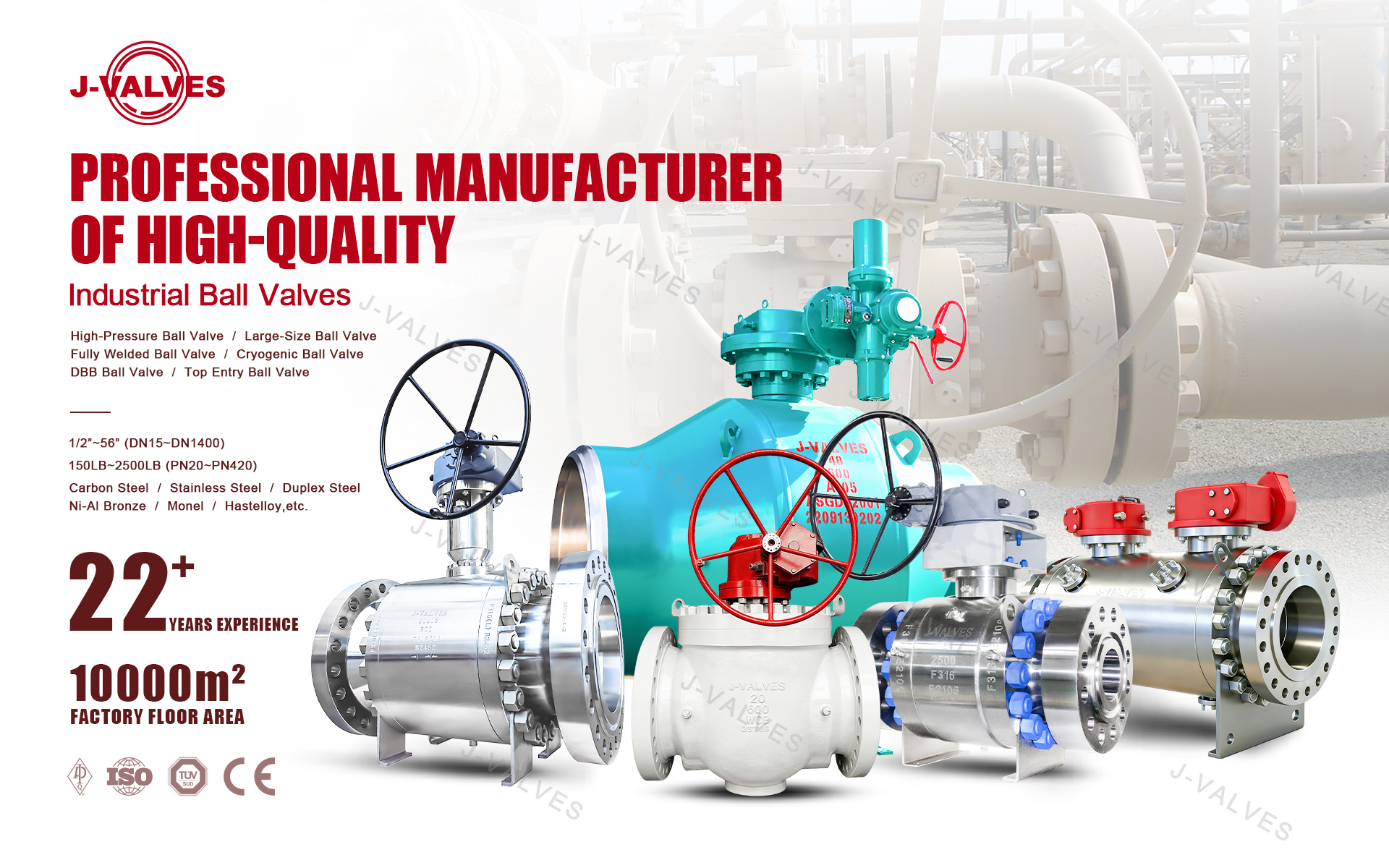
An ISO 5211 mounting pad is the machined flange on top of a ball valve body that lets an actuator bolt directly to the valve. The standard fixes the bolt circle, the thread, the square drive and the spigot, so any compliant actuator fits any compliant pad of the same size without a bracket, an adapter or a measurement taken on site.
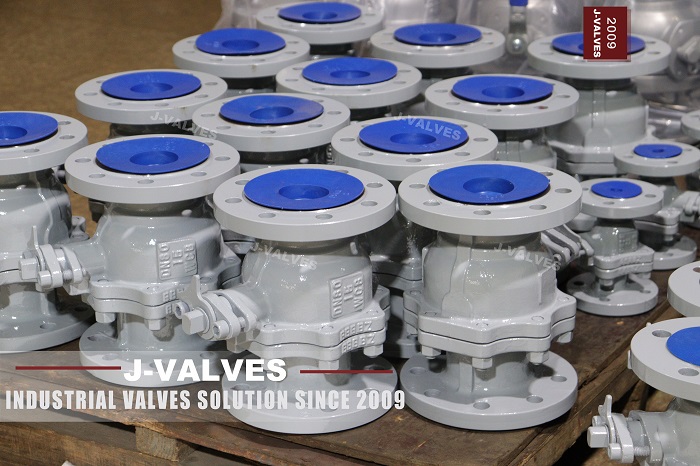
J-VALVES casts a high pad as standard on the 1/2 to 8 inch flanged range in Class 150 to 600, with F03 to F12 pads depending on size, in CF8M, CF8 and WCB. The pad is the cheapest option on the whole valve and the one most often left off the enquiry, which is why a valve that was meant to be automated ends up with a bracket and a stem extension instead. This page covers the F sizes, why pad height matters, and how the torque decides whether the actuator you picked will actually close the valve.
What the Pad Fixes
Four dimensions, all at once, so that an actuator can be treated as a catalogue item rather than a machined part.
| Pad | Bolt circle | Bolts | Square drive | Typical valve size |
|---|---|---|---|---|
| F03 | 36 mm | 4 × M5 | 9 mm | 1/4 to 3/8 inch |
| F04 | 42 mm | 4 × M5 | 11 mm | 1/2 inch |
| F05 | 50 mm | 4 × M6 | 14 mm | 3/4 to 1 inch |
| F07 | 70 mm | 4 × M8 | 17 mm | 1-1/2 to 2 inch |
| F10 | 102 mm | 4 × M10 | 22 mm | 3 to 4 inch |
| F12 | 125 mm | 4 × M12 | 27 mm | 6 to 8 inch |
| F14 / F16 / F25 | 140 / 165 / 254 mm | 4 × M16 / 4 × M20 / 8 × M16 | 36 / 46 / 55 mm | Trunnion sizes and above |
Two consequences follow. First, a valve can only take an actuator equal to or smaller than its pad, with a bush to reduce the square; it cannot take a larger one without an adapter plate, and an adapter plate is the bracket problem again. Second, the pad size is fixed by the body casting, so it has to be selected when the valve is ordered.

Pad Height: The Part Nobody Specifies
Three pad arrangements appear on the same valve pattern, and they are not interchangeable in service.
| Arrangement | What sits on top | Good for | Problem |
|---|---|---|---|
| Bare stem, no pad | Lever directly on the stem flats | Manual only, cheapest | Cannot be automated without a bracket |
| Normal pad | Locking plate and lever | Manual with padlock, low headroom | Actuator needs a coupling and often a bracket |
| High pad | Coupling plus actuator, direct | Automation now or later | Slightly taller, slightly more expensive |
The high pad exists because a direct mount needs vertical distance. The actuator's female drive has to engage the stem square over its full length, and the actuator body has to clear the pad bolts and the gland. A pad that is 10 mm too short forces a spacer or a bracket, and a bracket that is not machined parallel to the pad puts a bending load on the stem every time the actuator strokes. That load shows up as a packing leak, not as a bracket failure, which is why it takes a year to diagnose.

Torque Is the Only Sizing Number That Matters
Actuators are sized on break-to-open torque. The catalogue figure for a ball valve is measured at ambient, with a clean seat, and it is not the number the actuator will see in service.
Break torque rises with differential pressure across the closed ball and with the seat material. A PEEK seat can be two to three times the PTFE figure.
Running torque is lower and roughly constant; it sets the air consumption and the stroke time, not the actuator size.
Temperature moves both. A cold seat is stiffer, a hot seat may have crept into the ball.
Dry gas removes the film that lubricates the seat, and break torque can double.
The margin is not a rule of thumb to be trimmed. Use 1.3 on clean liquid, 1.5 on gas and on anything that will sit closed for long periods, and 2.0 where the fluid can deposit or polymerise. An actuator chosen at exactly the catalogue torque will work on the test bench and stall in the plant.

Spring Return: The Spring Decides, Not the Air
A double acting actuator is symmetric: the same air pressure opens and closes. A spring return unit is not, because the spring has to do the closing on its own, and the air has to both compress that spring and turn the valve.
Size the spring on closing torque at the maximum differential pressure, then check that the available air pressure can open the valve and compress the spring within the required time. Two failure modes follow from getting this wrong. A spring that is too weak leaves the valve part open on air failure, which is worse than a valve that stays where it was. A spring that is too strong needs more air than the plant supplies, and the valve opens slowly or not at all at low header pressure.
The spring return handle on a sampling valve is the same idea in miniature. The handle is turned against a spring to open, the spring closes it when released. It gives deadman behaviour without any air at all, and it is the right arrangement for sample points, drain points and hose stations where an unattended open valve is the hazard.

Accessories and What They Cost in Air
A solenoid valve, a limit switch box, a positioner and a filter regulator are normally mounted on the actuator, not on the valve, so they do not affect the pad choice. What they do affect is the air volume and the stroke time. A 5/2 solenoid with a quick exhaust will halve the closing time of a spring return unit, and a speed control on the exhaust is the only way to stop a small valve slamming.
The limit switch box has one requirement that is often missed: its shaft has to be aligned with the actuator shaft, and on a direct mounted assembly the two are concentric by construction. On a bracketed assembly they are not, and the box fails within a year.
Ordering Checklist
Pad size, stated as F07 or F10, not as "with mounting pad".
Pad height, high or normal, and whether a locking plate is needed as well.
Square drive size and whether the stem is bare, keyed or double-D.
Break torque at the design temperature and differential, in N·m.
Fail position: fail closed, fail open, or fail last.
Air supply pressure available on site, and the required stroke time.
Give all six and the actuator can be selected without a second email. Leave out the torque at temperature, which is the one that is always missing, and the selection will be based on a number that does not apply.
ISO 5211 Mounting Pad FAQ
What do the F numbers on an ISO 5211 pad mean?
They are size codes, and each one fixes four dimensions at once: the bolt circle diameter, the thread and number of the bolts, the square drive across flats, and the spigot diameter that centres the actuator. F05 is a 50 mm bolt circle with four M6 bolts and a 14 mm square; F07 is 70 mm, four M8 and 17 mm; F10 is 102 mm, four M10 and 22 mm. An actuator is described by the largest pad it will fit, so an F07 actuator mounts on an F07 pad and, with a reducing bush, on an F05 pad as well.
What is the difference between a high pad and a normal pad?
Height, and what that height lets you do. A normal pad is short and carries a locking plate so the handle can be padlocked in position. A high pad raises the mounting face so that a coupling can be fitted between the stem and the actuator without a bracket, which removes the bracket as a source of misalignment and lost motion. The high pad also clears insulation and gives room to unbolt an actuator without disturbing the valve.
Can an actuator be fitted to a valve that has no pad?
Only with a bracket and a stem extension, and both have to be made for that valve. It is done in the field, but every joint in the chain adds lost motion and every bracket that is not machined parallel puts a side load on the stem, which shows up as a packing leak within months. If actuation is possible at any point in the valve's life, order the pad. It is a small fraction of the valve price and it cannot be added later.
How much torque margin should an actuator have?
Size on break-to-open torque, not on running torque, and add a margin of at least 1.3 for clean service and 1.5 to 2.0 for dry gas, slurry, or a seat that will take a set. Break torque for a floating valve rises with differential pressure and with temperature, and on a cold or coked seat it can be several times the catalogue figure. Ask for the torque at the design temperature, not at 20 °C.
How is a spring return actuator sized differently?
The spring has to close the valve against the worst differential, and the air side has to open it against the same plus the spring. That makes the spring the limiting element: a unit chosen for its air torque will often fail to close on a line where the differential has risen. Size the spring on closing torque at maximum differential, then check that the air supply can both compress the spring and open the valve within the required time.
What does a spring return handle do on a sampling valve?
It closes the valve when the operator lets go. The handle is turned against a spring to open, a detent holds it while a sample is taken, and the spring returns the ball to closed when released. That gives a deadman behaviour: a valve left unattended fails closed rather than draining a line. The spring is sized on the seat friction and the line pressure, so the same valve body needs a different spring for different duties.
Hot Products


News
Stainless Steel Ball Valve Grades: 304, 316 And 316L, And What Actually Decides
Molybdenum is the difference that decides the duty, carbon is the difference that gets missed, and the chloride in the line matters more than the price.
Read More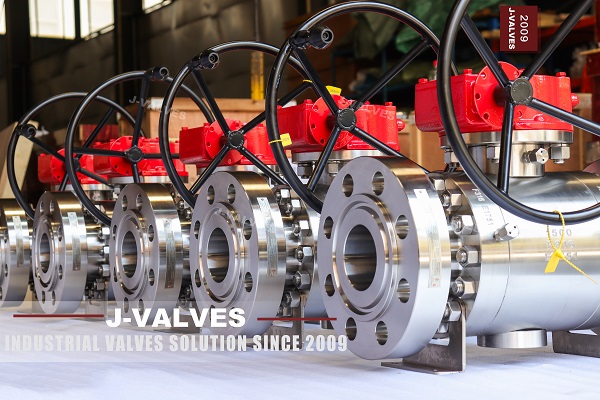
Ball Valve Spare Parts for Overseas Projects: The Wear Part List, The Quantity Math, And Four Traps
Why isolation valves fail on calendar time, not cycles. Wear part lists, Poisson stock maths, seat kit traps and the clauses that decide year six.
Read More
Ball Valves On A Bottom Loading Gantry: Creep, Dry Break And The Test That Proves Neither
A loading gantry cycles a ball valve far more than it is designed for and still cannot prove shut-off. Where creep starts, and what to specify.
Read More
Lined Ball Valves in Acid Service: The Liner Does Not Fail, The Steel Behind It Does
The valve came out of the line looking better than most valves that come out of a hydrochloric acid line. Three inch, PFA lined, cast body, Class 150, fourteen months in service on a 32 percent acid transfer duty at 55 to 60 degrees C, about forty open and close cycles a week. The paint was intact.
Read More