

CHINA J-VALVES Offers Various High-quality I ndustrial Ball Valves
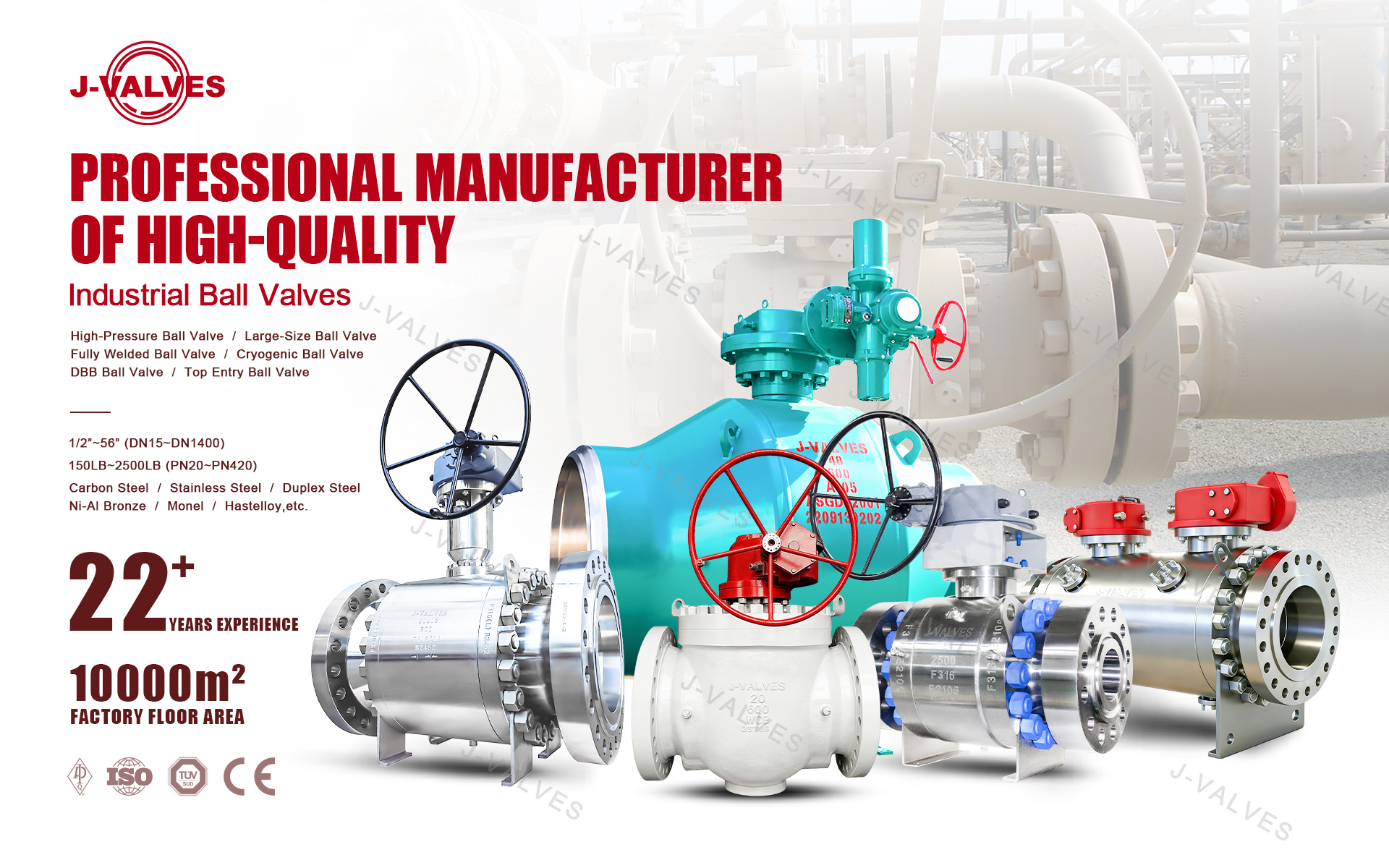
J-VALVES, a distinguished professional ball valve manufacturer rooted in China, takes pride in its extensive product portfolio. Our offerings span a wide range, including trunnion-mounted ball valves, floating ball valves, high-temperature ball valves, high-pressure ball valves, metal-sealed ball valves, ultra-low temperature ball valves, DBB ball valves, Three-way And Four-way Ball Valve, and fully welded ball valves. Each product is a testament to our commitment to precision engineering and reliable performance. Meticulously crafted, they are designed to not only meet but exceed the most stringent industrial demands, ensuring stable operation even under extreme conditions. This enables us to provide our clients with high-value services and makes our valves widely sought-after in industries.
Product Category
Contact Us

Pressure Rating:1000 psi WOG (68.9 bar at 38 °C)
Body Construction:Three piece, bolted centre section
Body Material:Stainless steel CF8M, CF8, F316
Ball:F316 or CF8M, mirror polished
Seat:PTFE, RPTFE
Bore:Full port
End Connection:Threaded NPT / BSP, clamp end, butt weld on request
Mounting Pad:ISO 5211 direct mounting pad, F03 to F07 on the centre section
Design Standard:ASME B16.34, MSS SP-110
Test Standard:API 598
Temperature Range:-20 to 180 °C
Operation:Lever, pneumatic or electric actuator
-
Q11F
-
J-VALVES
A 3 piece floating ball valve is a small quarter-turn valve whose body is split into two end pieces and a centre section held by four long bolts, with a floating ball that seals because line pressure pushes it into the downstream seat. The centre section carries the ball, the seats and the stem, and it can be lifted out between the end pieces without disturbing the pipe.
J-VALVES builds the type from 1/4 inch to 3 inch at 1000 psi WOG, in CF8M, CF8 and F316, with threaded or clamp ends and butt weld on request, and with an ISO 5211 pad machined on the centre section as standard. It is the pattern used on dosing skids, sampling points, chemical and pharmaceutical lines, and anywhere a seat change is a routine event rather than an emergency. This page covers the body joint, the bolts that hold it, and the assembly detail that decides whether a rebuilt valve seals.
What the Three Pieces Actually Do
The two end pieces are pipe connections. They carry the threads or the weld preparation, and once installed they never move again. The centre section is the working part: it holds the ball between two seats, carries the stem and the mounting pad, and it is the only part that has to come out for service.
| Part | Contains | Removed for service |
|---|---|---|
| End piece, inlet | Thread or weld end, one seat pocket | No |
| Centre section | Ball, stem, packing, mounting pad, one or both seats | Yes |
| End piece, outlet | Thread or weld end, one seat pocket | No |
| Four long bolts | Clamp the stack and set gasket preload | Yes, and they are the wear item |
Whether the seats live in the end pieces or in the centre depends on the pattern. Seats in the end pieces mean the centre comes out with the ball only, which is easier to handle; seats in the centre mean both seats travel with the assembly and are less likely to be lost or refitted the wrong way round. Ask which pattern before ordering spares.
The Floating Seal in One Paragraph
The ball is not fixed. It sits between two seats with a few tenths of a millimetre of freedom, and line pressure pushes it into the downstream seat, so the sealing force rises with pressure. A spring washer behind each seat holds the ball centred at low pressure and gives enough preload to seal on a few bar of air. That is why a floating valve seals in both directions and why its torque rises with differential: the same pressure that improves the seal also presses the ball harder into the seat.
Bolts: The Part That Decides Reliability
Four long bolts hold the whole pressure boundary together, and they behave differently from short bolts. They are slender for their length, so they stretch more under the same load, and a stainless bolt in a stainless body galls unless it is lubricated.
Grade. A2-70 for general service, A4-80 for chloride and marine. Plain stainless in a stainless thread without lubricant will seize, usually on the second reassembly.
Sequence. Star pattern, two stages, half torque then full torque. Going around the circle tilts the centre section and puts a bending load through the seats.
Preload loss. Thermal cycling relaxes the joint. Disc springs under the nuts keep the preload inside a working window; a thread locking compound stops the nuts backing off under vibration.
Reuse. Bolts that have been torqued several times have yielded and should be replaced with the gaskets. They are cheap and the joint is the pressure boundary.

Putting It Back Together
Most rebuilt three piece valves that leak are leaking because of assembly, not because of the new parts.
Clean the pockets. Every trace of the old seat, and any dried product, has to be out. A seat that sits on a fragment is a seat that is not square.
Seat the new seat fully. It should sit below the pocket face, with the spring washer behind it compressed slightly. If it stands proud, it is the wrong seat or it is in backwards.
Fit new gaskets, dry. No grease, no sealant, and located in the groove rather than resting on the face.
Bring the stack up evenly. Nip all four bolts, then torque in a star pattern in two stages.
Check the ball turns before the actuator goes on. A stiff ball at this point means a seat is misaligned, and finding that out with the actuator fitted is much more expensive.

The Pad on the Removable Part
Because the ISO 5211 pad is machined on the centre section, an actuated three piece valve has a specific dismantling order: isolate and vent, remove the actuator and its air lines, withdraw the body bolts, then lift the centre section. The centre section plus actuator is the heaviest part of the assembly and it has no support once the bolts are out.
Two practical points follow. Allow clearance above the valve for the actuator to come off, which on a skid means the valve cannot be under a shelf. And if the valve is actuated and the line is serviced regularly, consider a two piece body instead: the whole valve comes out as one piece and the actuator can stay fitted, which is often faster than stripping the assembly in place.
Where It Belongs
Dosing skids, sample points, chemical and pharmaceutical lines, food and beverage where the trim is cleaned on a schedule, and small manifolds where the pipe is welded and a seat change has to be possible without hot work. The pattern stops making sense around 4 inch, where the centre section needs lifting equipment and the long bolts become a pressure boundary in their own right.
Choose it when the valve will be opened more than twice in its life. If it will not, the two piece body is cheaper and has one fewer gasket to leak, and the third piece is paying for a service that never happens.
3 Piece Floating Ball Valve FAQ
Why is a three piece valve more expensive than a two piece?
One more casting, one more gasket, one more set of bolts, and a longer machining cycle because two joints have to be faced parallel to each other. In this size range the difference is usually 20 to 40 percent. What it buys is the ability to change a seat without breaking a pipe joint, which on a welded or a crowded skid is worth more than the premium within the first service.
Do the long body bolts come loose?
They can, especially on a valve that is cycled often or sits on a vibrating skid. The bolts are long and slender, so they store less preload than a short bolt of the same size, and thermal cycling works them. Two remedies are used: disc springs under the nuts to keep the preload inside a window, and a thread locking compound on assembly. Neither replaces checking the torque at the first maintenance, which is where a loose joint is normally found.
What happens to the actuator when the centre section comes out?
It comes with it, because the pad is machined on the centre section. That has two consequences. The actuator has to be removed or at least disconnected before the body bolts are withdrawn, and the assembly of centre section, actuator and accessories has to be supported while it is out. On a 1 inch valve that is a one-person job; on a 3 inch with a double acting actuator and a positioner it is not, and the pipe should not be used to take the weight.
Can the seats be changed with the valve in line?
Yes, and that is the point of the design. The pipe stays connected, the body bolts come out, the centre section is lifted out, the seats are prised from their pockets, new ones are fitted, and the assembly goes back with new gaskets. The valve does not have to be depressurised beyond the line being isolated, and no weld is cut. What it does need is enough space on one side to move the centre section out, roughly half its length.
Why does the valve leak after it has been reassembled?
In order of frequency: a seat not fully seated in its pocket, so it sits proud on one side and the ball is no longer square; a gasket pinched or installed dry; the bolts torqued around the circle instead of in a star pattern, which tilts the centre section; or debris left in the cavity. All four are assembly faults rather than material faults, which is why a rebuilt valve that leaks is usually rebuilt again correctly rather than replaced.
At what size does a three piece stop making sense?
Around 4 inch. Above that the centre section is heavy enough to need a lifting arrangement, the long bolts are large and expensive, and the two extra gaskets are a real leak risk on a large pressure boundary. At 6 inch a two piece is normally cheaper and better, and above 8 inch the floating design itself gives way to a trunnion valve where the seat load is set by a spring rather than by line pressure.
Hot Products


News
Stainless Steel Ball Valve Grades: 304, 316 And 316L, And What Actually Decides
Molybdenum is the difference that decides the duty, carbon is the difference that gets missed, and the chloride in the line matters more than the price.
Read More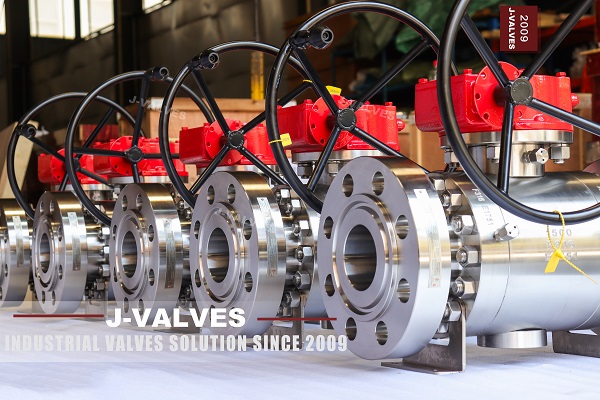
Ball Valve Spare Parts for Overseas Projects: The Wear Part List, The Quantity Math, And Four Traps
Why isolation valves fail on calendar time, not cycles. Wear part lists, Poisson stock maths, seat kit traps and the clauses that decide year six.
Read More
Ball Valves On A Bottom Loading Gantry: Creep, Dry Break And The Test That Proves Neither
A loading gantry cycles a ball valve far more than it is designed for and still cannot prove shut-off. Where creep starts, and what to specify.
Read More
Lined Ball Valves in Acid Service: The Liner Does Not Fail, The Steel Behind It Does
The valve came out of the line looking better than most valves that come out of a hydrochloric acid line. Three inch, PFA lined, cast body, Class 150, fourteen months in service on a 32 percent acid transfer duty at 55 to 60 degrees C, about forty open and close cycles a week. The paint was intact.
Read More